
Davidian
Description
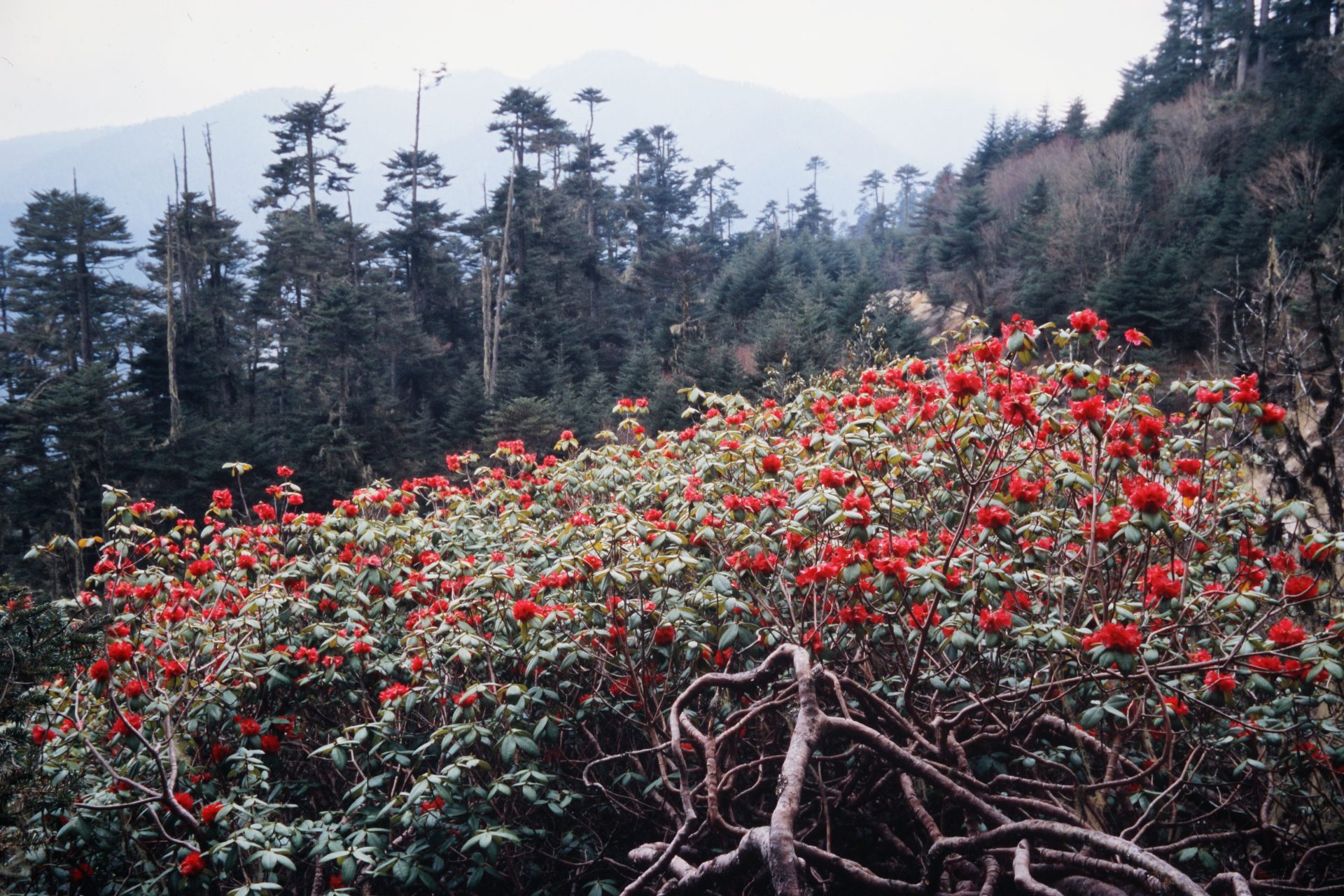
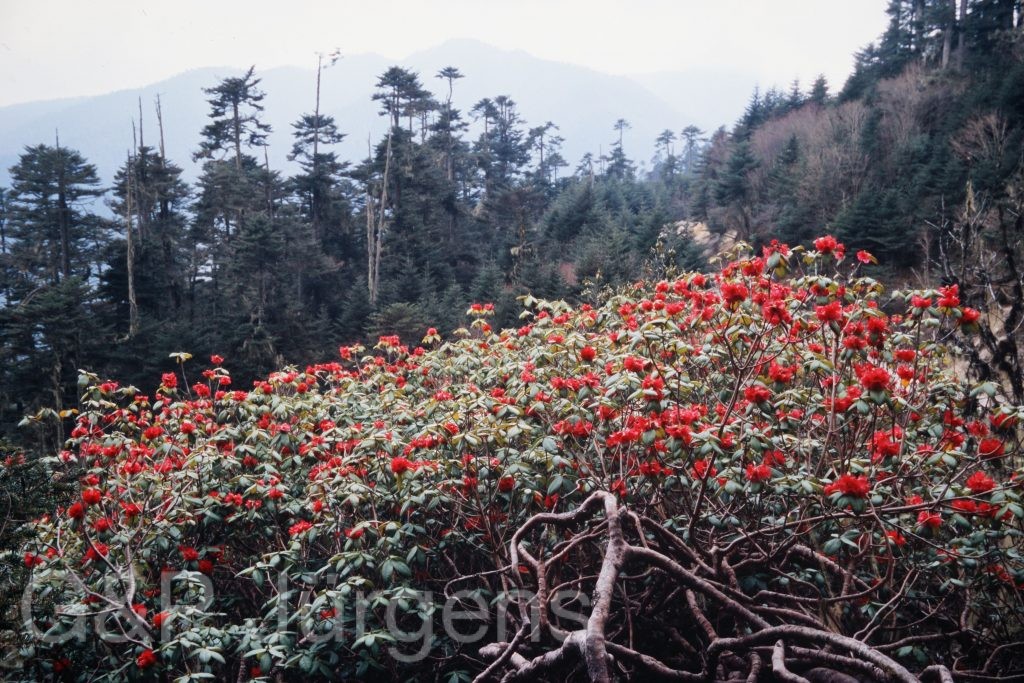
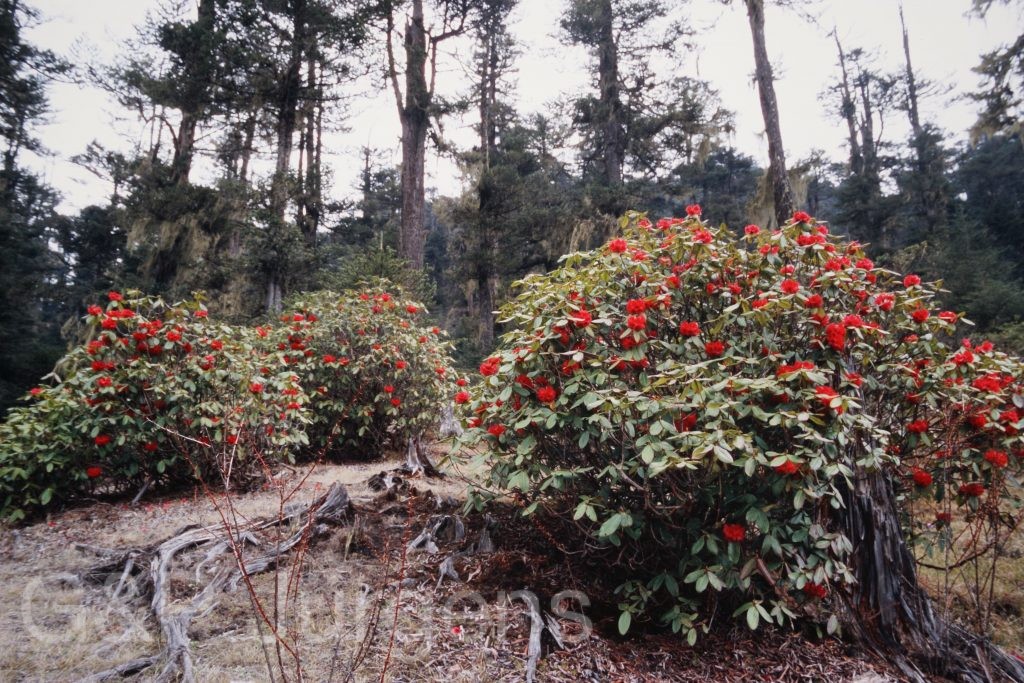
Rhododendron succothii is an eastern Himalayan rhododendron with a narrow native range centred on Bhutan and the adjacent Indian Himalaya (Arunachal Pradesh), the roughly sixty-five GBIF records (with cultivated entries from Canada and Britain) reflecting both its restricted distribution and its presence in specialist collections. It grows in temperate rhododendron and conifer forest, on forest margins and open rocky slopes, generally around 3000 to 4000 m. The photographed plant from the Tumching-La in Bhutan at 3800 m, flowering in April, exemplifies its early-spring flowering in the upper temperate forest belt where it forms part of the dense montane rhododendron thickets.
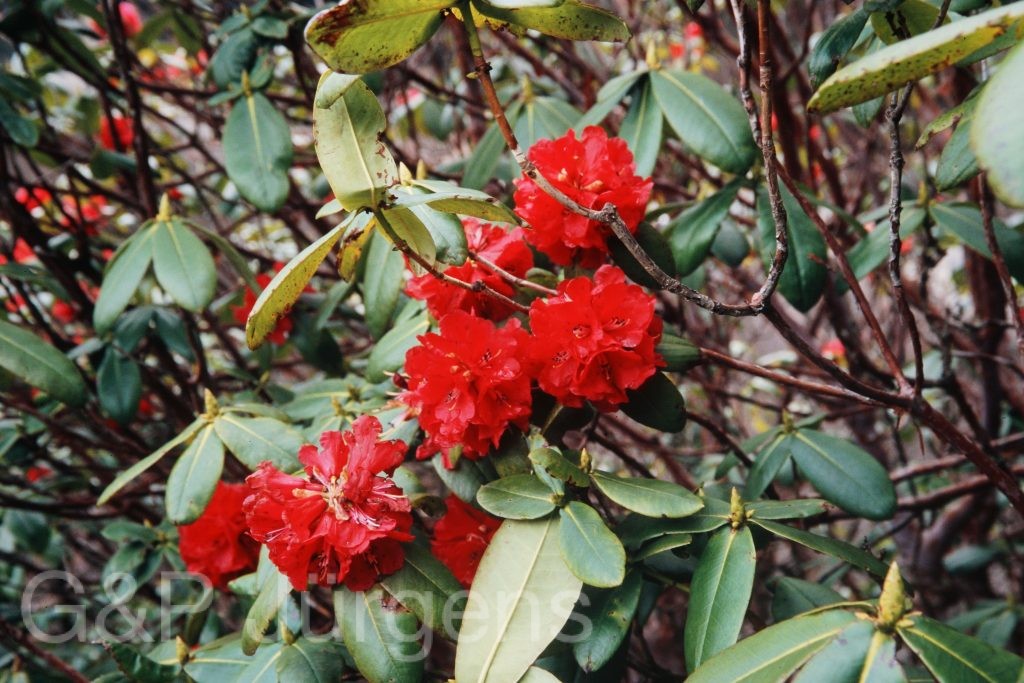
The species is an evergreen shrub or small tree with stout, glabrous branchlets. The leaves are coriaceous, broadly obovate to broadly elliptic with a rounded to retuse and apiculate apex, glabrous and glaucous beneath, the venation impressed above and prominent below. The flowers are borne in compact terminal trusses; the corolla is tubular-campanulate and fleshy, deep crimson to blood-red, with five lobes and dark nectar pouches at the base, and the stamens are typically ten with a glabrous ovary and stout style. The fruit is a woody, cylindrical, curved capsule dehiscing to release numerous small seeds.
Rhododendron succothii is an accepted species placed in subgenus Hymenanthes (the elepidote rhododendrons) within Rhododendron (Ericaceae), allied to the red-flowered Himalayan species. Its glaucous foliage, fleshy crimson corollas and early flowering reflect adaptation to cool, humid temperate forest and bird pollination. Given its narrow eastern Himalayan range and habitat dependence, the species is of conservation interest and merits monitoring against forest disturbance.
Author: Davidian · Sources: POWO (Kew), GBIF, Flora of Bhutan, Flora of China, Cullen & Chamberlain revision of genus Rhododendron (Ericaceae monograph)