
A. Berger
Description
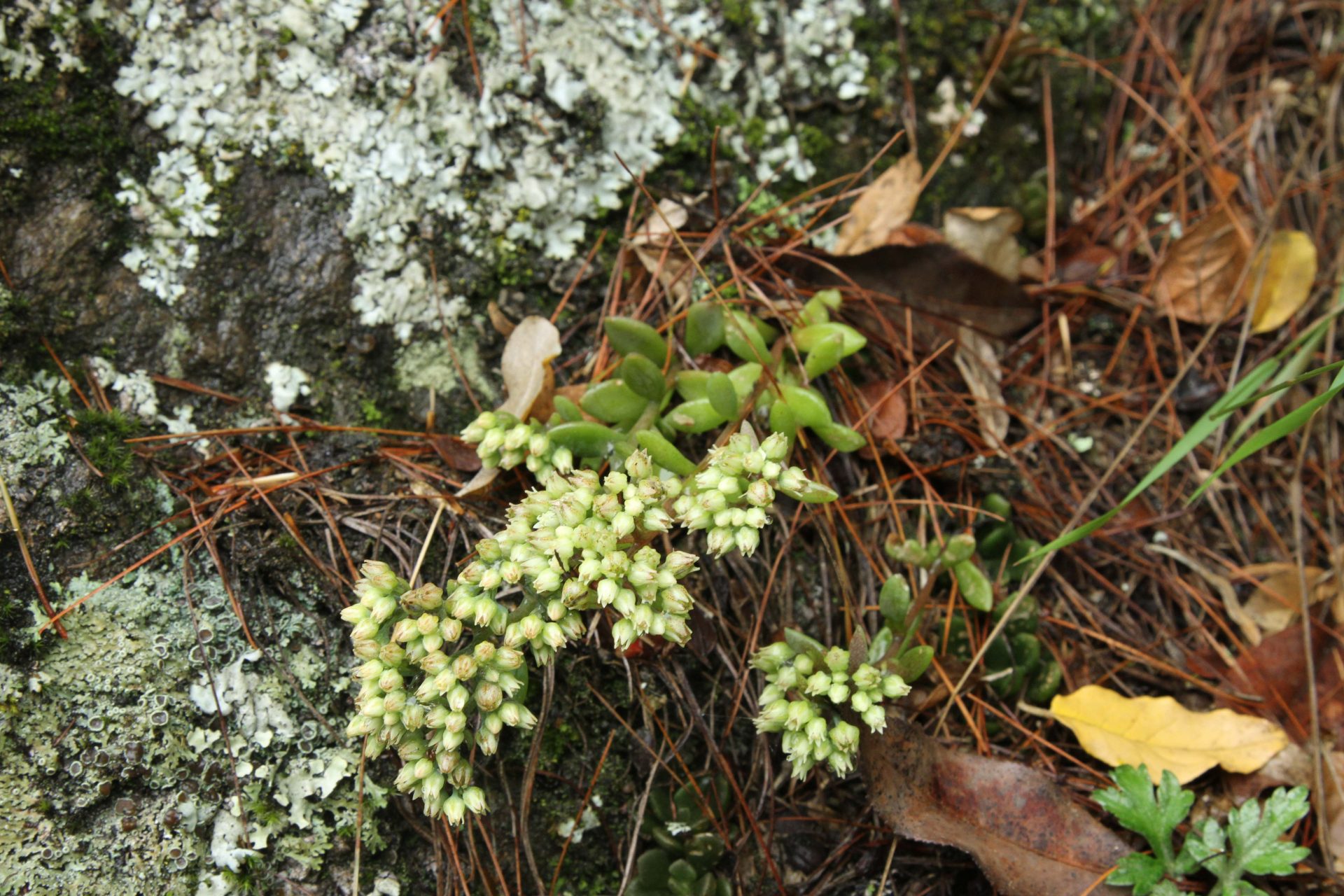
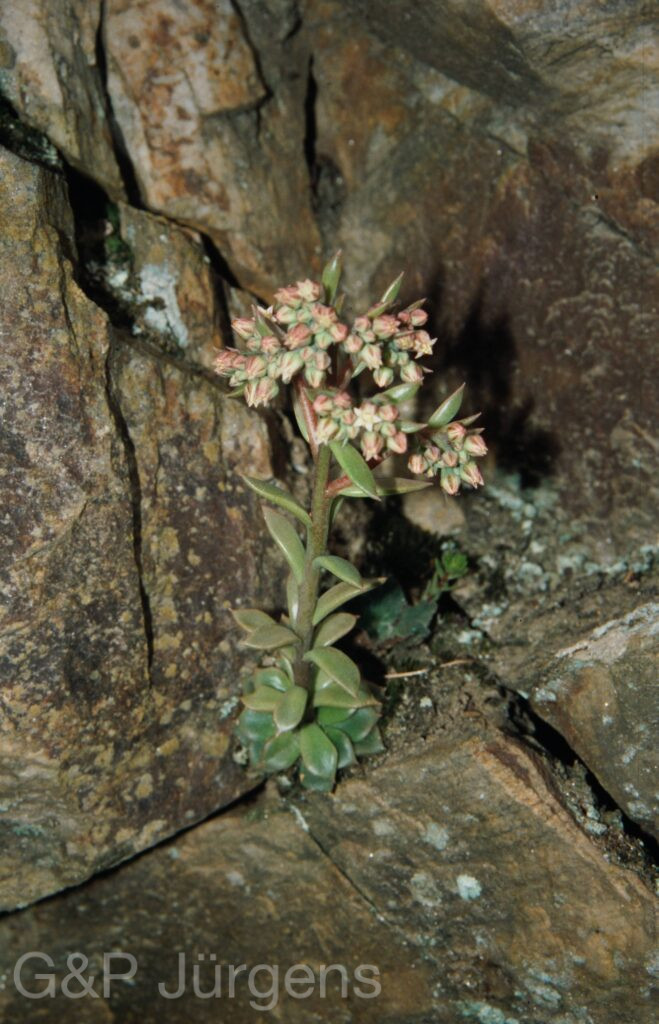
Sinocrassula indica is a succulent biennial to short-lived perennial herb distributed through the Sino-Himalayan region, with records from China, India, Nepal and Bhutan and scattered naturalised or cultivated occurrences elsewhere. It grows on dry rocky banks, cliff ledges, stony slopes and walls in the montane belt, typically from about 1500 to 3500 m, rooting in shallow gritty pockets and crevices where competition is slight. The photographed plant comes from Pamela in West Nepal at around 2700 m, flowering in July during the monsoon. With over 650 georeferenced occurrences it is a frequently collected and widely recognised crassulaceous element of the Himalayan foothills and ranges.
The plant produces a basal rosette of fleshy, oblanceolate to spathulate leaves, glabrous or finely papillose, often flushed reddish, from which arises an erect, leafy, sometimes branched inflorescence-bearing stem. The cauline leaves are smaller, sessile and crowded. Flowers are numerous, borne in a dense terminal thyrse of cymes; they are small, with five erect or connivent petals that are greenish-yellow to dull red, scarcely spreading, giving the flower an urn-shaped appearance. There are five stamens, and the carpels are erect with short styles. The fruit is a cluster of follicles releasing fine seeds, after which the monocarpic flowering rosette dies.
Sinocrassula was segregated from Crassula and Sedum on the basis of its erect, barely opening petals and Asian distribution, and S. indica is the most widespread species of the genus. The taxon is morphologically variable in leaf shape and flower colour, and several infraspecific forms have been described. It is occasionally grown by succulent enthusiasts. Being common and ecologically adaptable across a broad range, it is of no conservation concern.
Author: A. Berger · Sources: POWO (Kew), GBIF, Flora of China, Flora of Nepal, Crassulaceae of the World (monograph)