
Hook.f. et Thomson
Description
Thalictrum rostellatum is a meadow-rue of the temperate to subalpine Himalaya and adjacent China, recorded from China, Nepal, India, Bhutan and Myanmar, with some 258 occurrences aggregated in GBIF. It favours shaded, humus-rich slopes, the margins of forest, scrub and streamsides, and damp grassy banks within the broad-leaved and conifer forest belt of the Eastern Himalaya. Across its range it ascends through the montane and lower subalpine zones, where it grows in the dappled understorey alongside other moisture-loving herbs, flowering through the summer monsoon months.
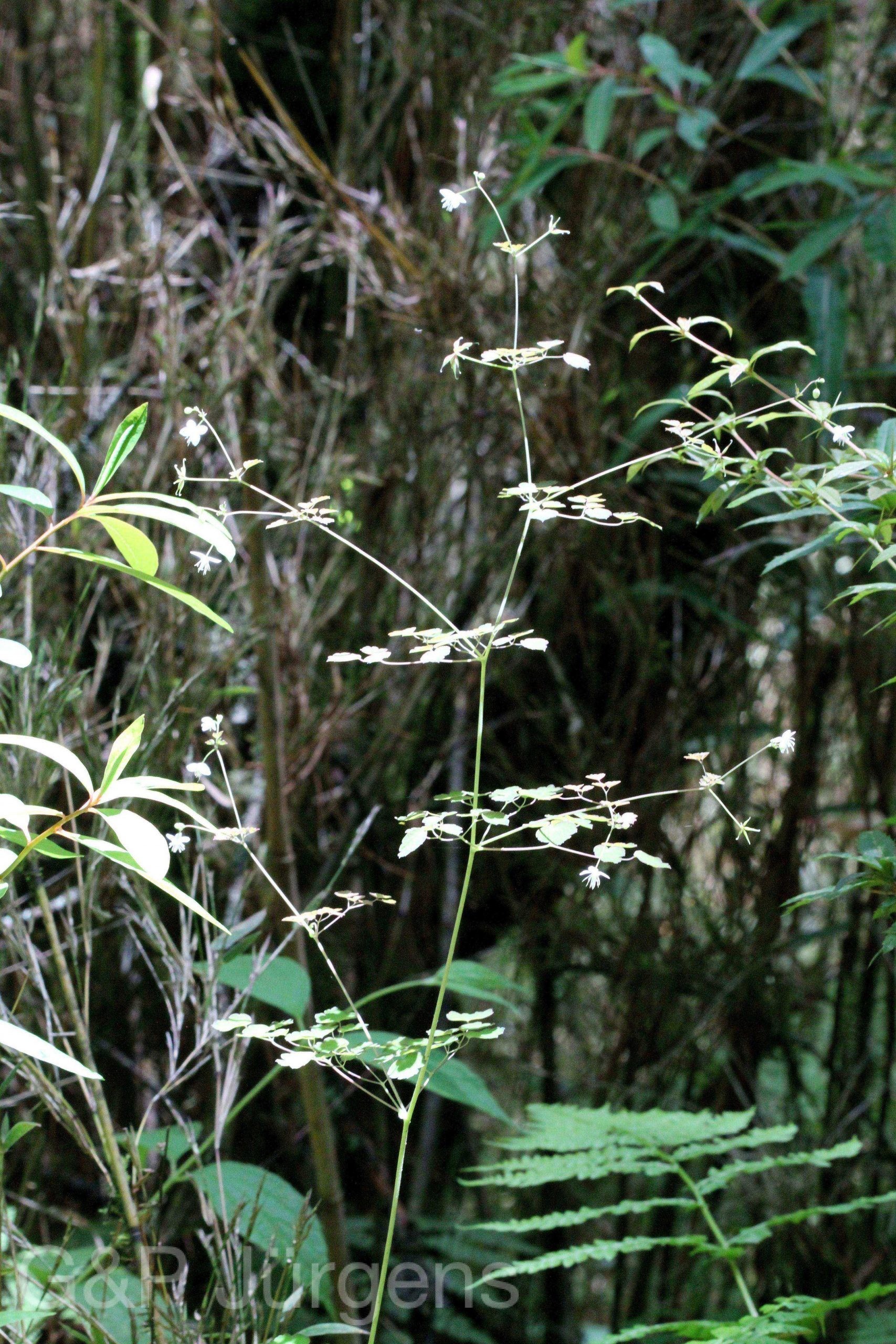
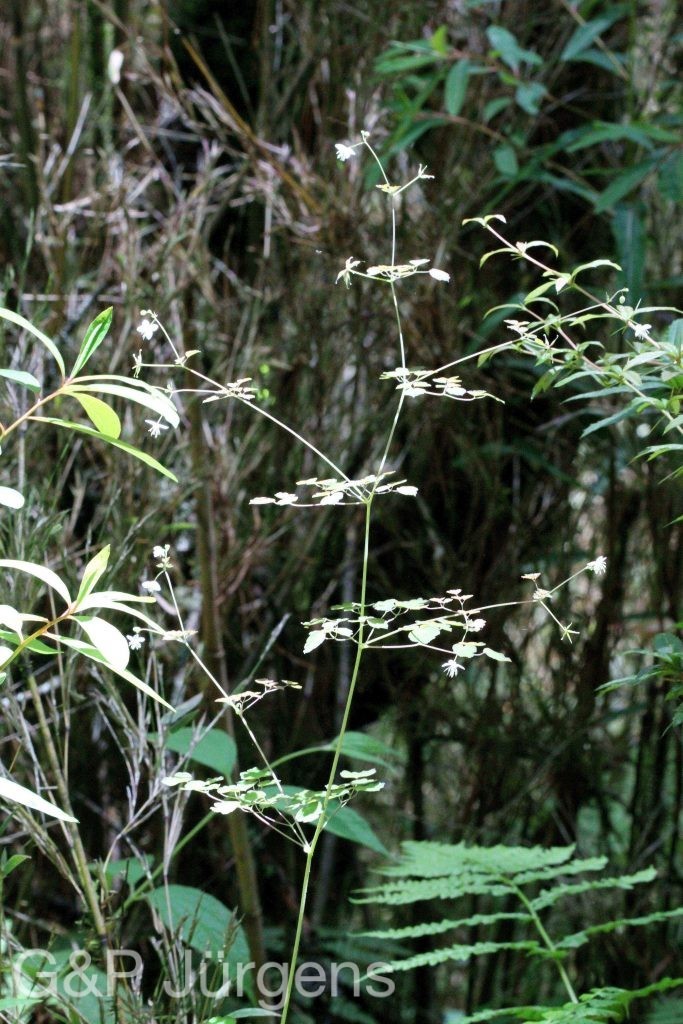
It is a slender, glabrous perennial herb with a thin, creeping rhizome and erect, sparingly branched stems. The leaves are ternately decompound, the ultimate leaflets thin and membranous, obovate to broadly cuneate and shallowly lobed or toothed at the apex, often glaucous beneath. The inflorescence is a lax, few-flowered panicle of small, nodding flowers; as in the genus, the four pale sepals are caducous and petals are wanting, the floral display reduced to the pendulous stamens with filiform filaments and delicate anthers. The carpels are few and stipitate, ripening into small, stipitate achenes that bear a conspicuous slender beak, the rostellum from which the epithet derives.
The markedly beaked, stalked achenes are the principal character separating T. rostellatum from related Himalayan meadow-rues such as T. virgatum and T. reniforme. Like most Thalictrum it is anemophilous, the reduced, scentless flowers and exserted stamens reflecting wind pollination. Widespread and locally frequent through the Eastern Himalaya, it is of no particular conservation concern, though as a forest-understorey element its persistence depends on intact montane woodland.
Author: Hook.f. et Thomson · Sources: POWO (Kew), GBIF, Flora of China, Flora of Bhutan, Annotated Checklist of the Flowering Plants of Nepal, Boivin's revisionary studies of Thalictrum