
Beauverd
Description
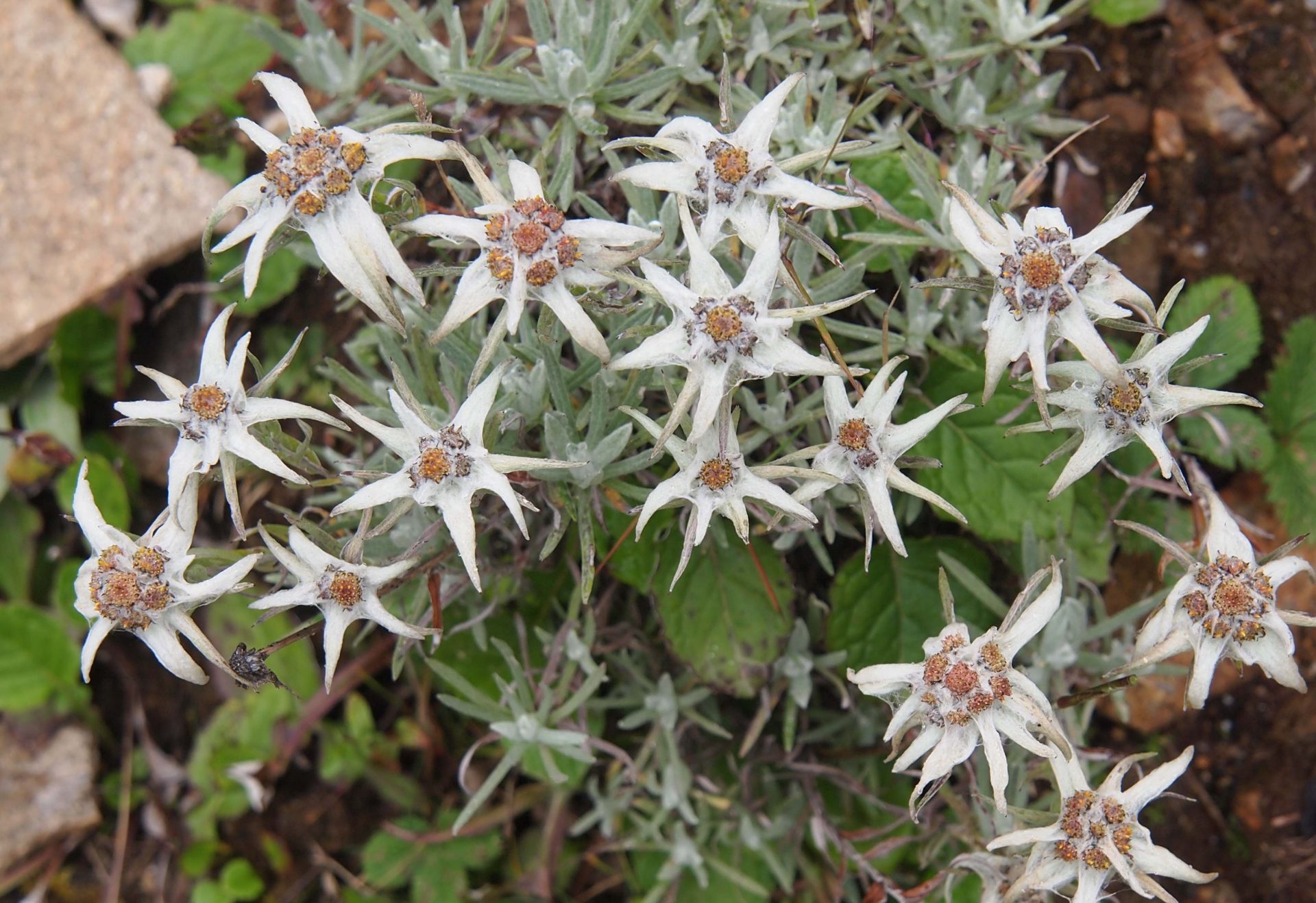
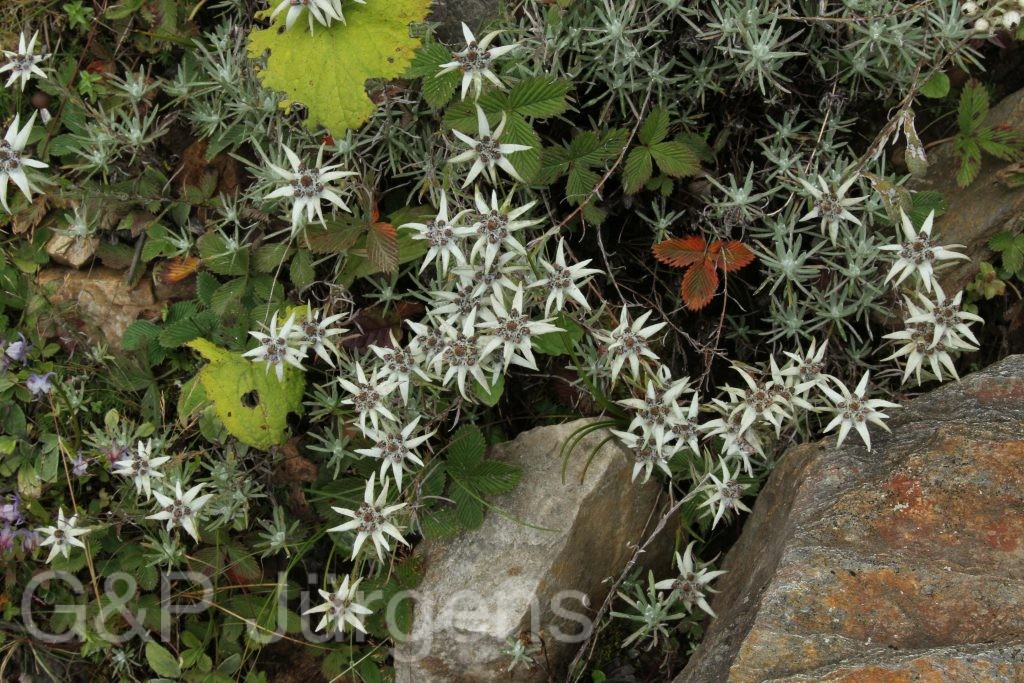
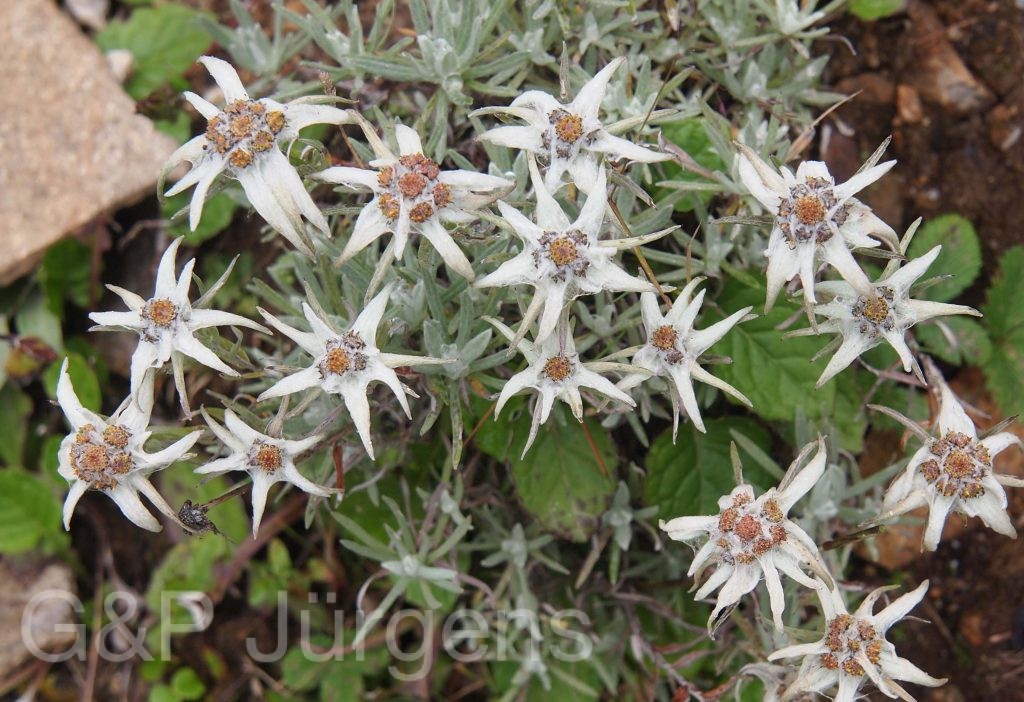
Leontopodium jacotianum is a high-alpine edelweiss of the Sino-Himalayan region, recorded from Nepal, China, India, Bhutan, Pakistan and Myanmar (NP, CN, IN, BT, PK, MM), with a modest 546 GBIF occurrences reflecting its restriction to lofty, difficult terrain. It inhabits open alpine meadows, stony slopes, screes and rocky crevices above the treeline, where snow lies long and the growing season is brief. The photographed plant grew on the Shele-La in Bhutan at about 4100 m in September, flowering at the close of the monsoon season on exposed alpine turf typical of the genus across the eastern Himalaya.
It is a tufted perennial herb arising from a stout, branched caudex, forming compact cushions or small clumps of several flowering stems 5–25 cm tall, the whole densely grey-white lanate-tomentose. The basal and cauline leaves are spathulate to linear-oblong, sessile, woolly on both surfaces. The diagnostic feature is the terminal star of leaf-like floral bracts radiating beyond the capitula, densely felted with white woolly hairs and forming the familiar edelweiss "flower". Within this stellate ruff sit several crowded capitula; the heads contain yellowish tubular florets, the plants typically subdioecious with outer female and central functionally male florets. The fruit is a small cypsela crowned by a pappus of barbellate to subplumose bristles.
The genus Leontopodium (tribe Gnaphalieae) reaches its greatest diversity in the Himalaya and the mountains of western China, where numerous species are differentiated by indumentum, bract shape and habit; L. jacotianum, described by Beauverd, belongs to this dense Asiatic radiation. The thick woolly investment is an adaptation to intense ultraviolet radiation, desiccation and cold at high elevation. Though not currently assessed as threatened, such narrowly alpine specialists are sensitive to climatic warming and the upslope contraction of suitable habitat.
Author: Beauverd · Sources: POWO (Kew), GBIF, Flora of China Vol. 20-21, Flora of Bhutan, Flora of Nepal, Leontopodium monograph (Handel-Mazzetti, revision of the genus)