
(Hook. f. & Thomson) Fu
Description
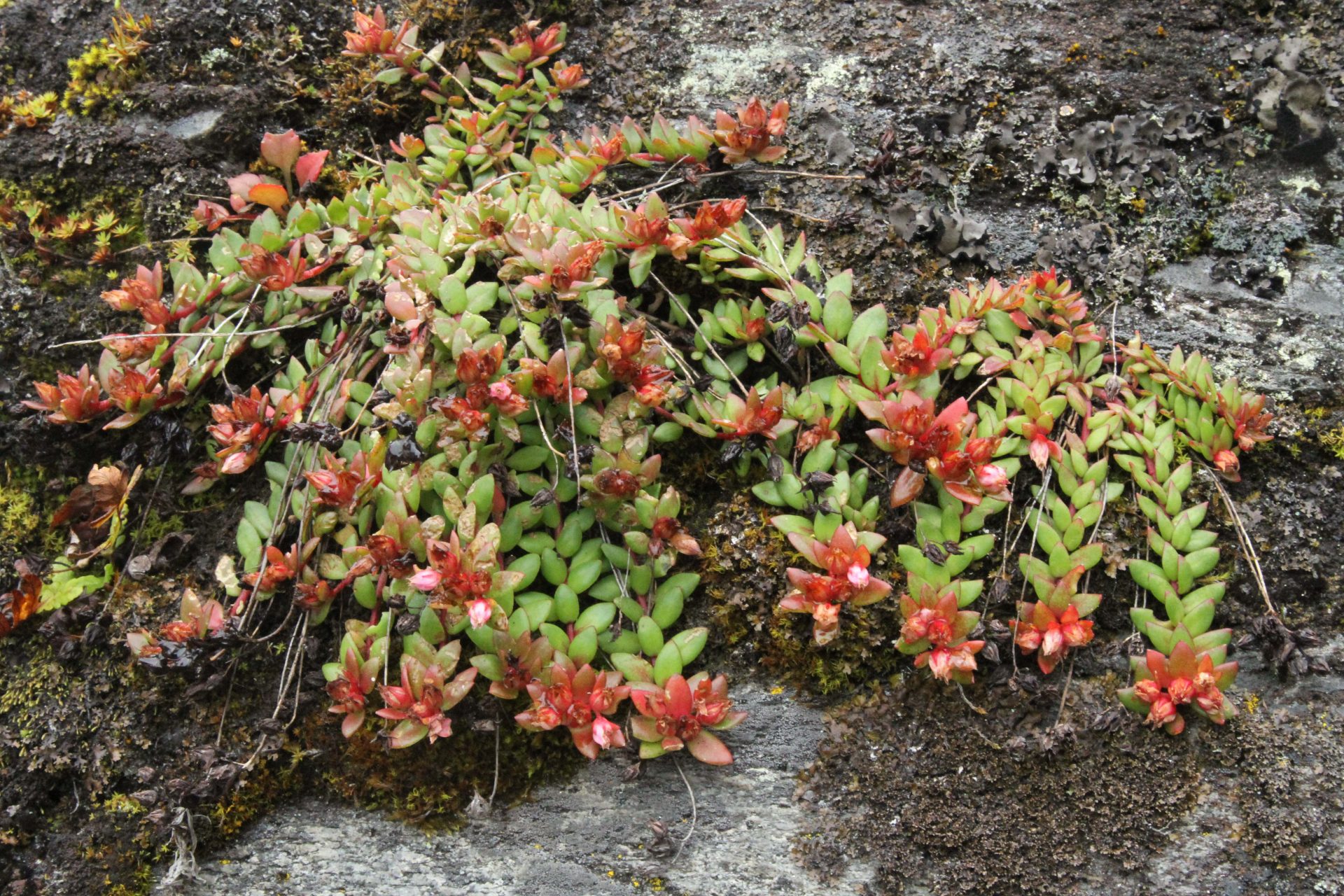
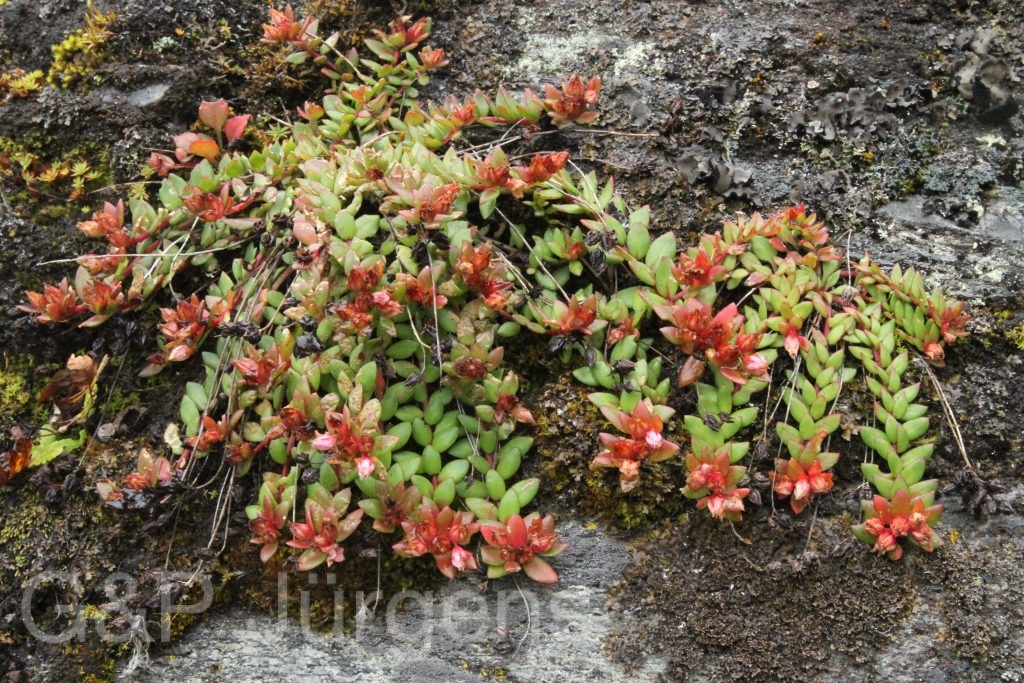
Rhodiola humilis is a dwarf high-alpine stonecrop of the Himalaya and adjacent China, recorded from south-central China (Xizang), the Indian Himalaya, Nepal and Bhutan, with around one hundred GBIF occurrences (a few extra-Himalayan records being cultivated or misattributed). It inhabits the highest open habitats, including alpine screes, rock crevices, gravelly slopes and the stony margins of the upper alpine zone, generally well above 4000 m. The photographed plant from the Shele-La in Bhutan at 4100 m, flowering in September, exemplifies its preference for exposed, frost-prone, mineral-rich substrates near the upper limit of vascular plant life.
The species is a small, glabrous, cushion- or mat-forming perennial succulent arising from a stout, branched, persistent caudex clothed in old leaf bases. The numerous short flowering stems bear crowded, small, fleshy, linear to oblong leaves with entire margins. The inflorescence is a compact terminal cyme of few flowers; as is typical of Rhodiola the plants are usually dioecious, with four- to five-merous flowers, the petals reddish, purplish or greenish, and the carpels erect, becoming spreading, beaked follicles at maturity that release minute seeds.
The GBIF backbone treats this name as doubtful, but it is here treated under the accepted name Rhodiola humilis within Rhodiola (Crassulaceae, subfamily Sempervivoideae), a genus segregated from Sedum and centred on the high mountains of Asia. Its succulent caudex, dwarf cushion form and crassulacean physiology are adaptations to drought, cold and intense radiation at extreme altitude. Like many Rhodiola, it may be gathered for traditional medicinal use; though not formally assessed, its slow growth and harvesting pressure suggest caution.
Author: (Hook. f. & Thomson) Fu · Sources: POWO (Kew), GBIF, Flora of China, Flora of Bhutan, Ohba monograph of Himalayan Sedoideae/Rhodiola (Crassulaceae)