
Moench
Description
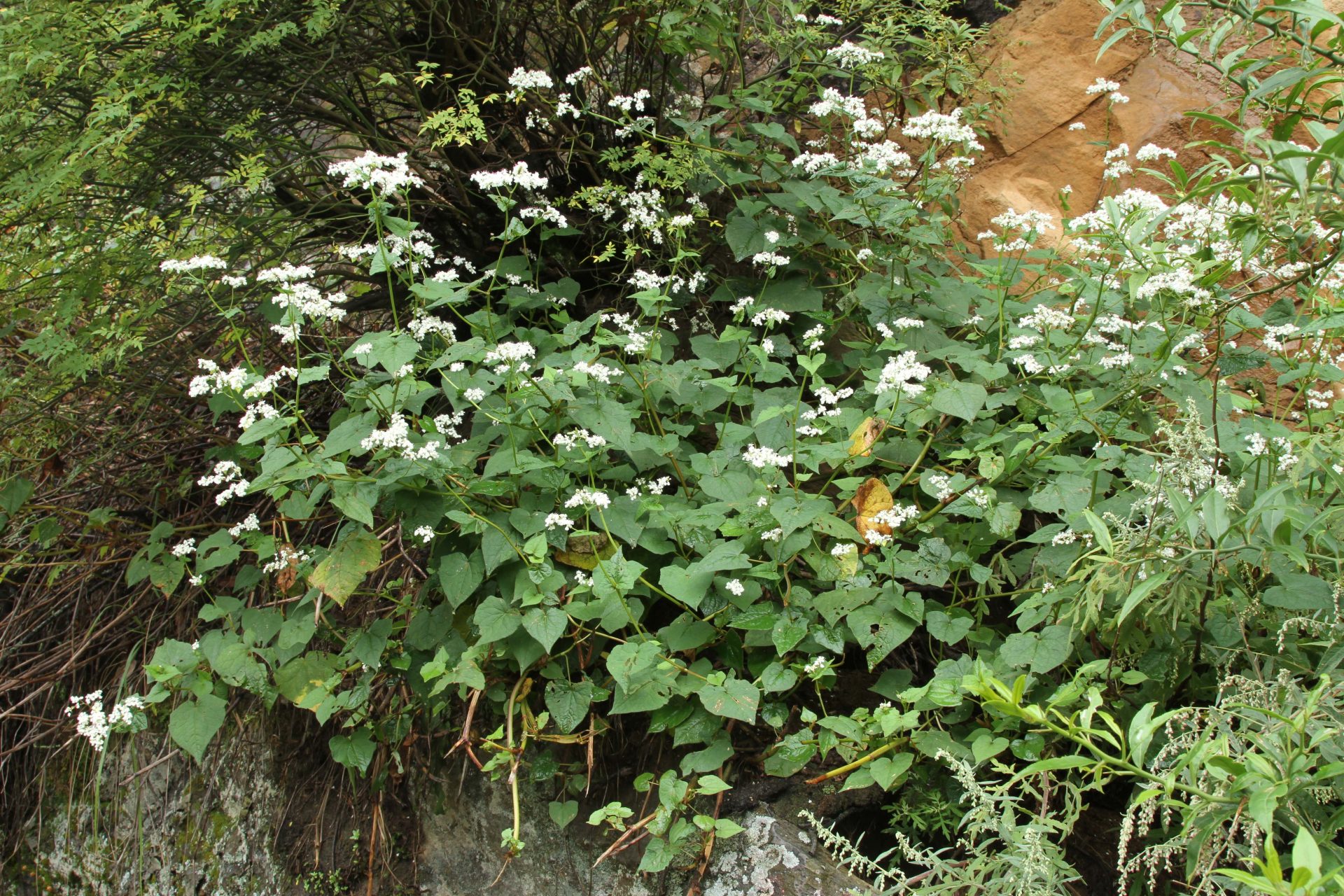
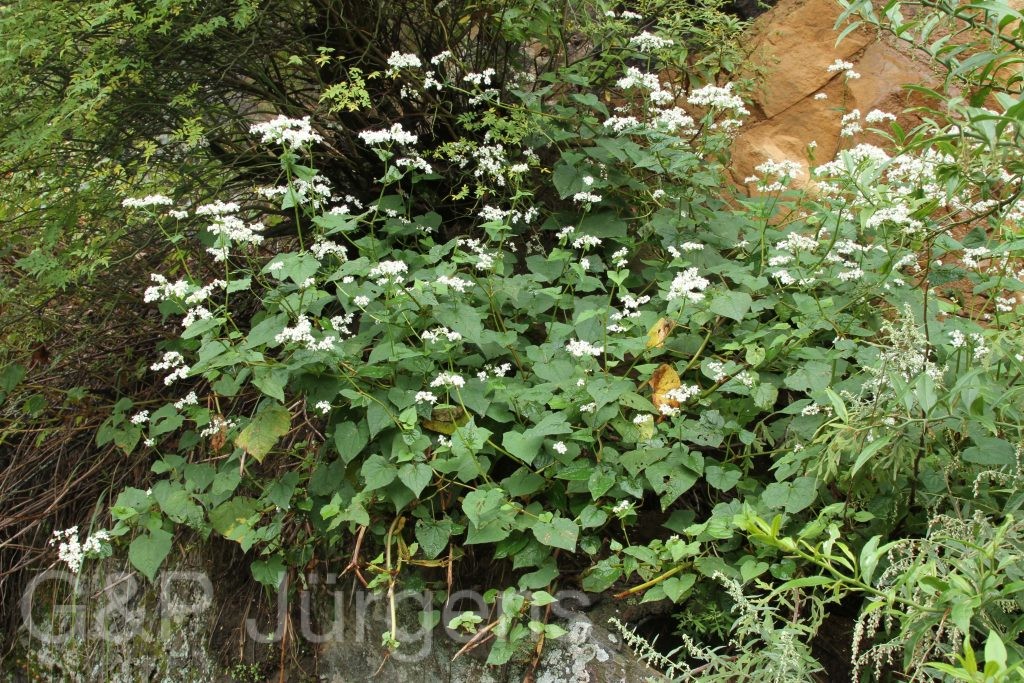
Fagopyrum esculentum, common buckwheat, is a domesticated annual of South-East Asian and Sino-Himalayan origin now cultivated and naturalised across the temperate world, accounting for its more than 72,000 GBIF occurrences in France, the Netherlands, Germany, Russia, China, Korea, Japan, the United States and Canada among many others. In the Himalaya it is a traditional mountain crop grown on terraced fields and as an escape on disturbed ground at middle to high elevations. The record from the Haa Valley of western Bhutan at 3100 m in September captures it in flower and early fruit at the close of a typical subalpine growing season.
It is an erect, glabrous annual 30-90 cm tall with reddish, somewhat fleshy stems and characteristic membranous ochreae sheathing the nodes. The leaves are alternate, broadly triangular-cordate to hastate, the lower ones petiolate and the upper sessile and clasping. The flowers are small, borne in dense axillary and terminal corymbose racemes, with a five-parted white to pinkish perianth, eight nectary-bearing stamens and a tristylous heterostylous breeding system promoting outcrossing. The fruit is a sharply three-angled, smooth brown achene (the buckwheat "grain") much exceeding the persistent perianth.
Within Polygonaceae the genus Fagopyrum is distinguished by its trigonous achenes and heterostyly; F. esculentum is the principal cultivated species, complemented by Tartary buckwheat F. tataricum. It is insect-pollinated, valued as a nectar source and pseudocereal, and is of agricultural rather than conservation interest, persisting widely as a weedy escape from cultivation.
Author: Moench · Sources: POWO (Kew), GBIF, Flora of China, Flora of Bhutan, Flora Europaea, Ohnishi monograph of Fagopyrum