
Sims ex C.B.Clarke
Description
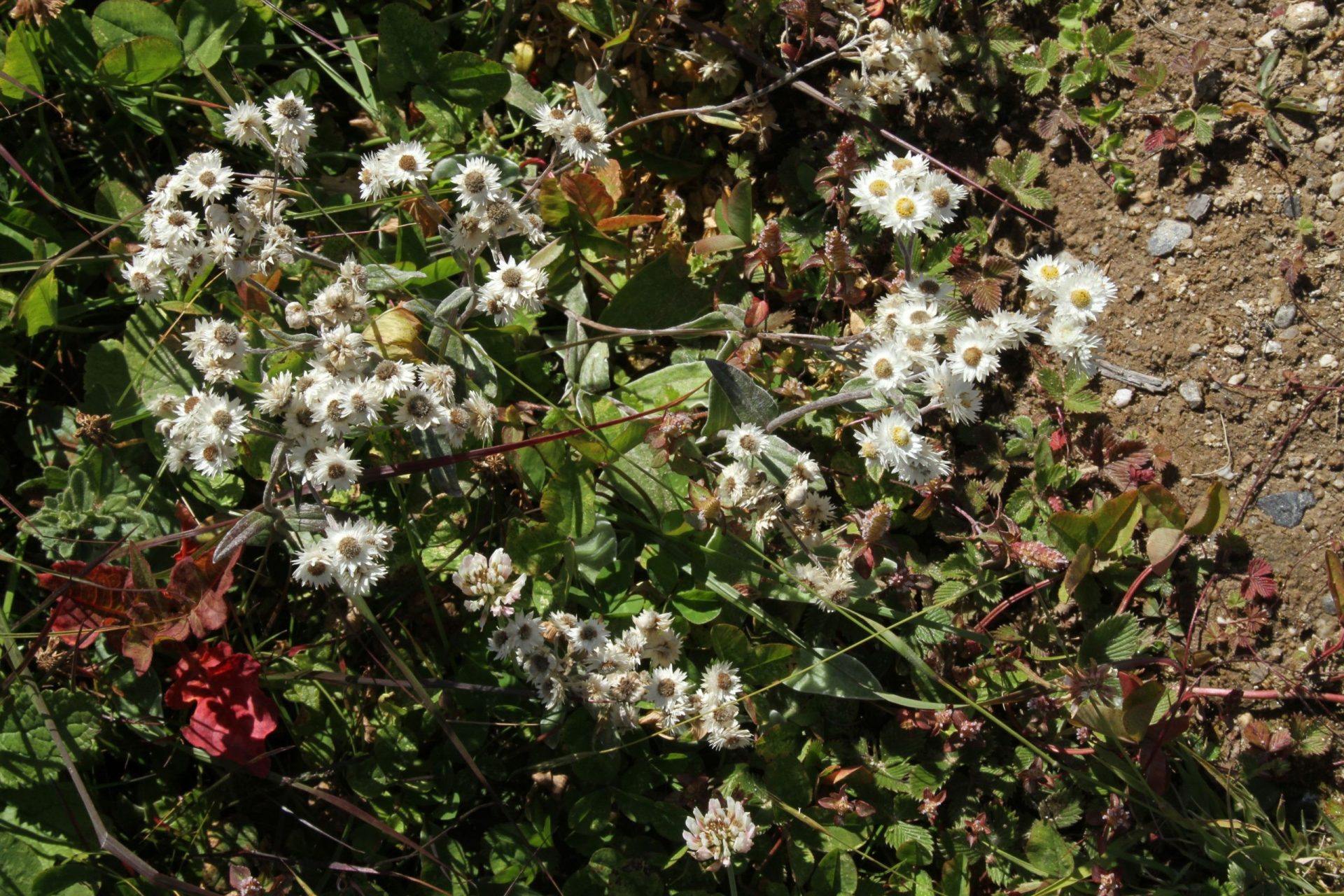
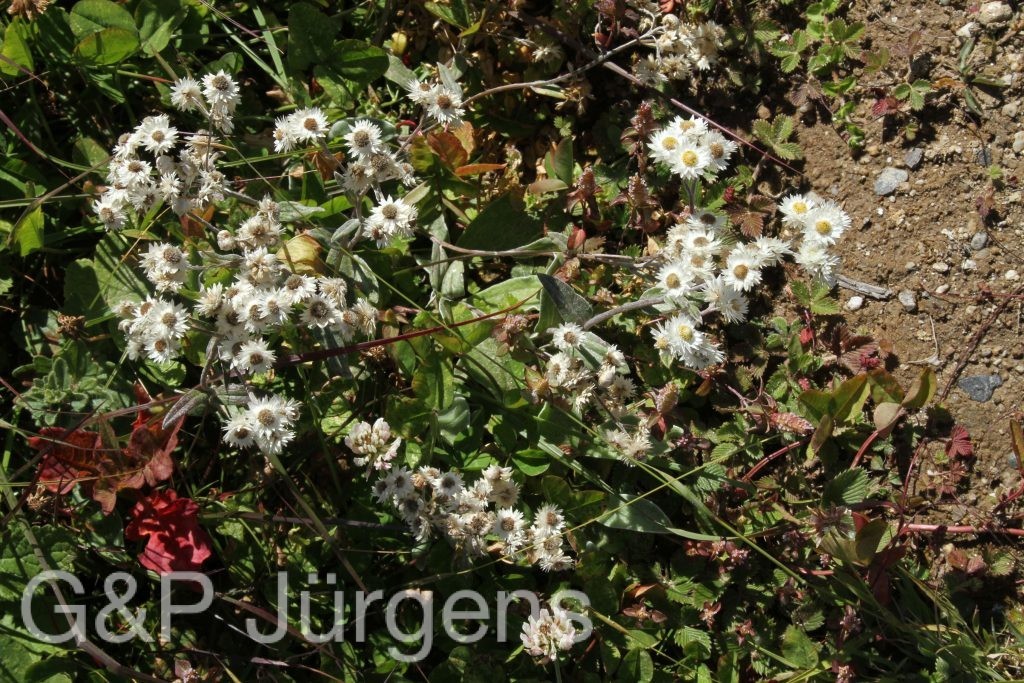
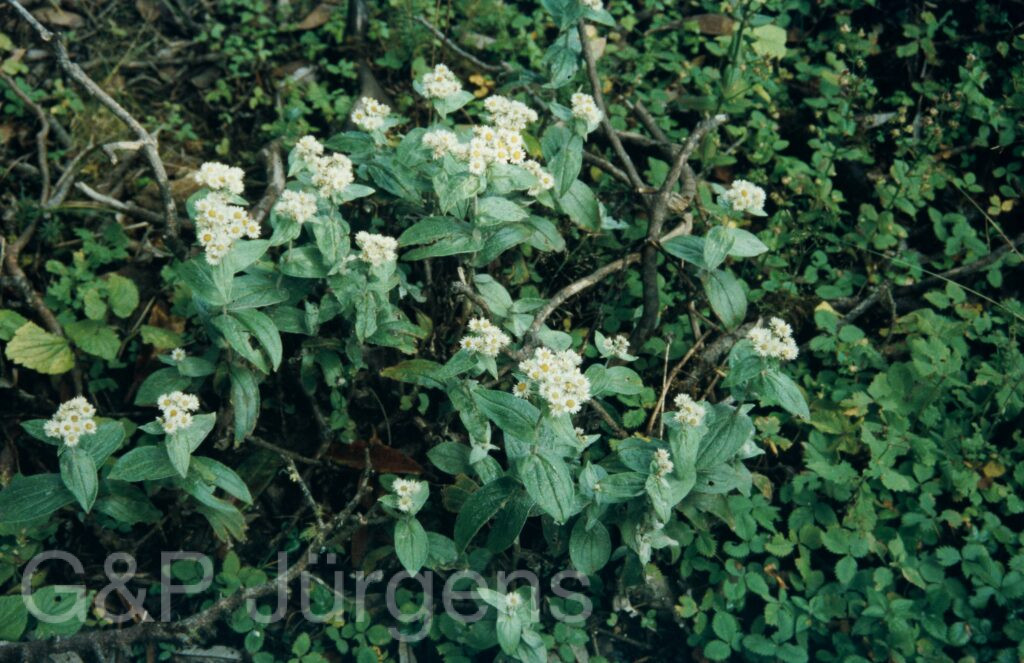
Anaphalis triplinervis is a widespread Himalayan everlasting recorded natively from Nepal, India, China, Pakistan, Bhutan, Myanmar and Afghanistan, and widely grown in gardens (hence European and North American records); GBIF holds over 900 occurrences. It is a plant of open subalpine and alpine slopes, grassy meadows, forest clearings and stony banks, ranging from about 2000 to over 4000 m. The photographed material is from Tumching-La in Bhutan at 4000 m in October and from Kunol in Garhwal, India, at 2900 m in September, spanning the autumn flowering across the central and eastern Himalaya.
The species is a tufted perennial herb with creeping rhizomes and erect, white-woolly stems. The leaves are alternate, oblong to obovate-lanceolate, sessile and often somewhat decurrent, with the three prominent longitudinal nerves that give the epithet "triplinervis"; they are green and thinly cobwebby above and densely white-tomentose beneath. The capitula are small and crowded in dense terminal corymbs, each surrounded by spreading, papery, pearly-white involucral bracts that form the showy "flower"; the true florets are small and yellowish, the plants typically dioecious or functionally so. The fruit is a tiny cypsela with a pappus of barbellate bristles.
Anaphalis belongs to the tribe Gnaphalieae, the cudweeds, and A. triplinervis is among the most familiar Himalayan species, its persistent papery bracts making it a popular everlasting for drying. Abundant and ecologically tolerant of grazed and disturbed slopes, it is of no conservation concern.
Author: Sims ex C.B.Clarke · Sources: POWO (Kew), GBIF, Flora of Bhutan, Flora of China, Annotated Checklist of the Flowering Plants of Nepal, Revision of Asiatic Anaphalis (Gnaphalieae)