
Bedd.
Description
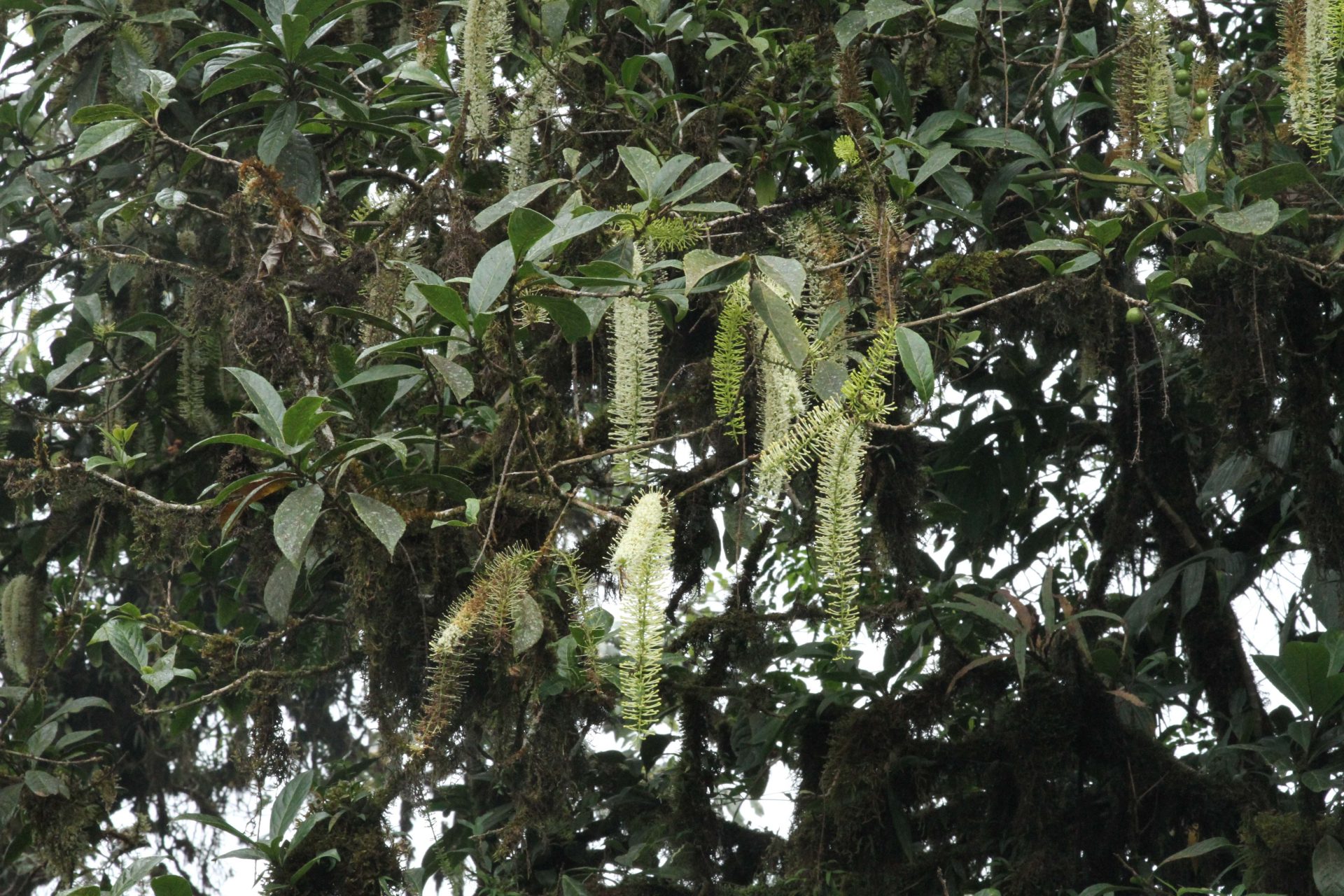
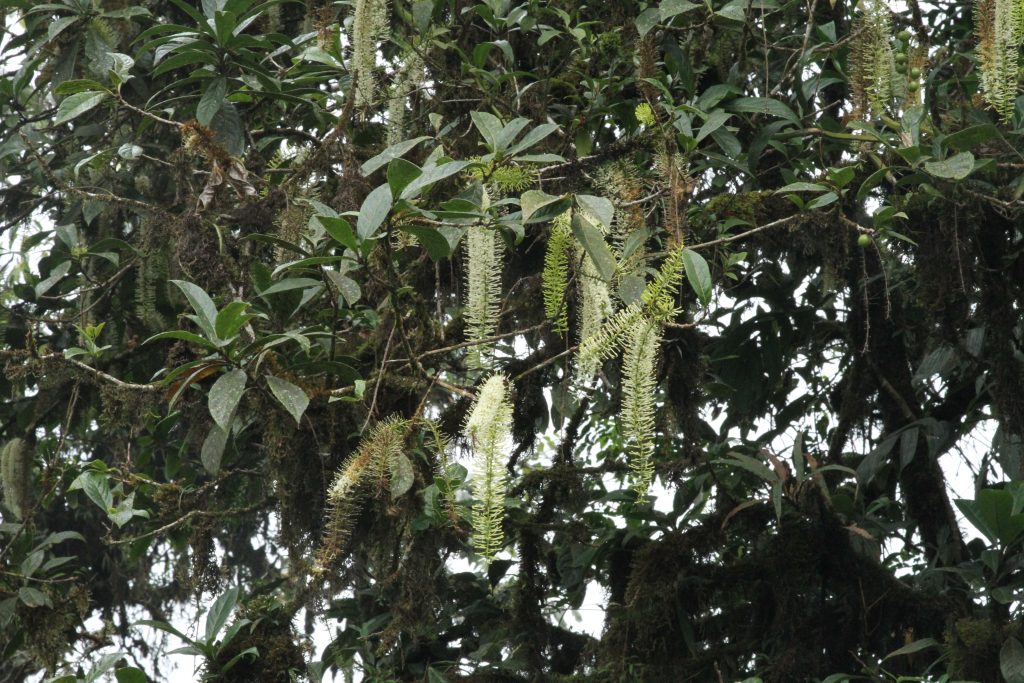
Helicia nilagirica is an evergreen tree or large shrub of subtropical and tropical montane Asia, distributed from southern and northeastern India and the Nilgiri hills (whence the epithet) through Nepal, Bhutan, Myanmar, Thailand, southern China, Vietnam and Cambodia; GBIF lists some 944 occurrences, the species being relatively well collected. It grows in evergreen and semi-evergreen broadleaved forest, on hill slopes, ridges and along forest streams, chiefly between about 800 and 2000 m. The photographed individual was recorded in eastern Bhutan at Tserang around 1100 m in September, a humid forest setting typical of this warm-temperate to subtropical Proteaceae.
It is a tree with smooth to finely fissured bark and coriaceous foliage. The leaves are alternate, often clustered toward the branch tips, elliptic to oblong-lanceolate, leathery, entire or with a few coarse teeth toward the apex, glabrous and glossy above. The flowers are small and borne in slender, elongate, axillary racemes; as in the genus they are bisexual with four tepals that recurve at anthesis, the four stamens inserted on the tepals, and a hypogynous disk. The fruit is a hard, globose to ellipsoid, indehiscent drupe-like nut with a single large seed.
Helicia (Proteaceae) is the largest Old World genus of the family, centred on tropical Asia and reaching its northern limit in the eastern Himalaya. H. nilagirica is among the more widespread Asian species, and its racemose inflorescences and one-seeded indehiscent fruits typify the genus. Broadly distributed and locally common, it is not considered globally threatened, though populations depend on subtropical broadleaved forest affected by clearance.
Author: Bedd. · Sources: POWO (Kew), GBIF, Flora of China Vol. 5, Flora of Bhutan Vol. 1, Flora of Nepal, Flora of Pakistan, Sleumer revision of Asian Proteaceae