
Kunth
Description
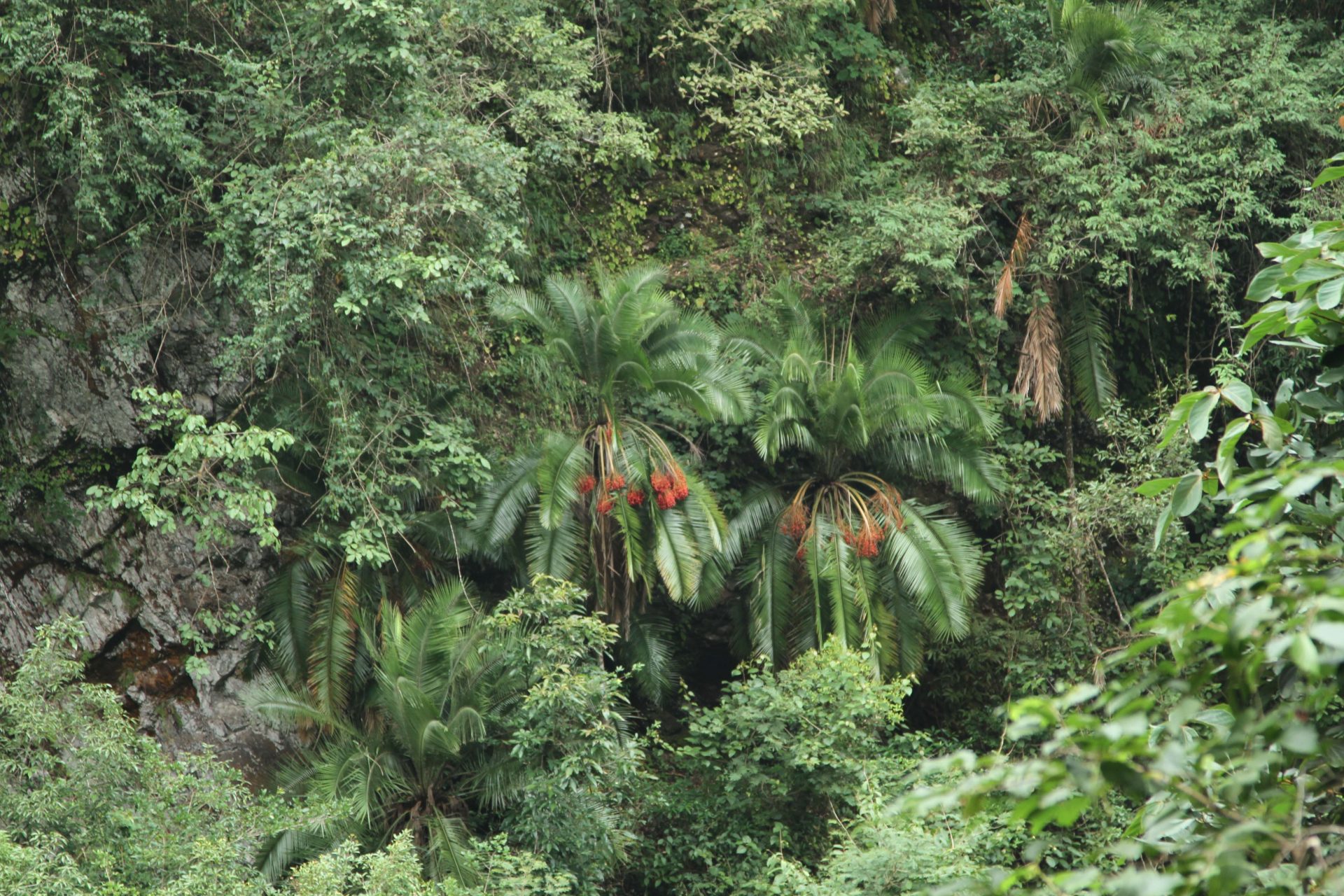
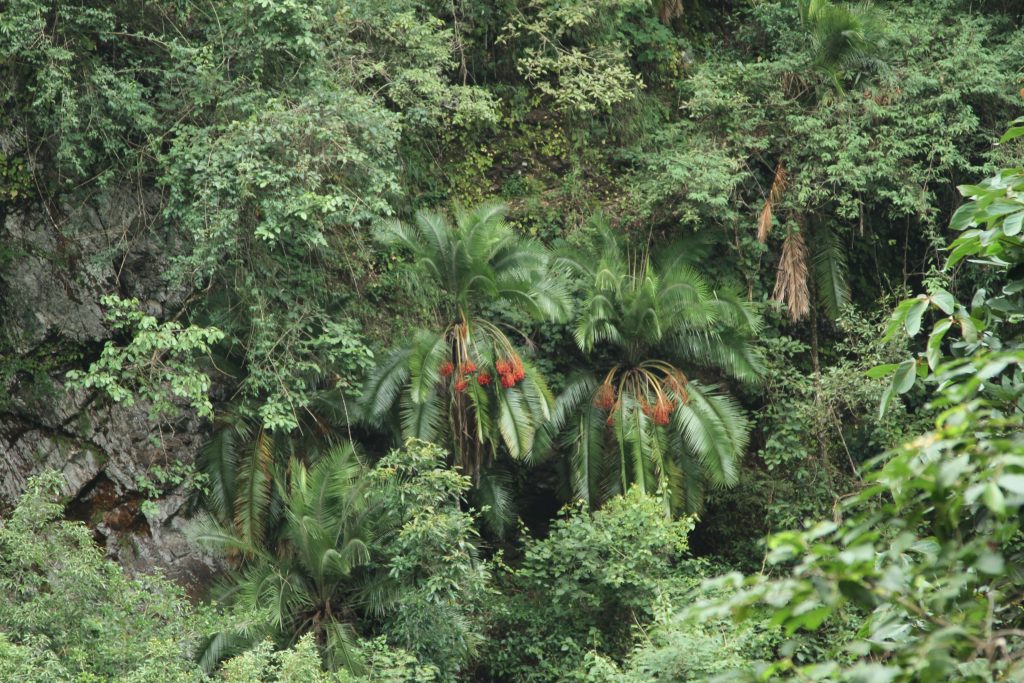
Phoenix loureiroi Kunth is a small date palm broadly distributed across South and Southeast Asia, recorded by GBIF from Taiwan, India, Thailand, China, Vietnam, Nepal, Myanmar, the Philippines, Laos, Pakistan, Cambodia and Bhutan, with cultivated occurrences in the United States, Cuba, Brazil and Spain, totalling over 2000 records. It grows in open forest, savanna, grassy slopes and rocky hillsides from the lowlands into the lower montane zone, tolerating seasonally dry, fire-prone ground. The Bhutanese material from Zhemgang at 1600 m in October reflects its presence in the warm subtropical foothills.
It is a small, often clustering palm with a short, sometimes subterranean stem clothed in persistent leaf bases, rarely forming a slender erect trunk. The leaves are pinnate and arching, the leaflets (pinnae) linear-lanceolate and stiff, the lower ones modified into sharp spines (acanthophylls), a defining feature of Phoenix. The plants are dioecious, the inflorescences branched spadices enclosed in a spathe, the small unisexual flowers cream to yellowish. The fruit is a small ellipsoid drupe ripening purplish-black to reddish, with thin sweet flesh around a single grooved seed, dispersed by birds.
Phoenix loureiroi is a polymorphic species with several recognised varieties spanning its wide range. As a relative of the cultivated date palm, it provides minor local uses for thatch, fibre and fruit, accounting for the scattered cultivated records. Its fire- and drought-tolerant habit and broad Indo-Malesian to Sino-Himalayan distribution make it a resilient element of open landscapes, and it is not threatened, although habitat conversion locally reduces wild populations.
Author: Kunth · Sources: POWO (Kew), GBIF, Flora of China Vol. 23, Flora of Bhutan Vol. 3, Flora of Pakistan, Barrow monograph of the genus Phoenix (Palmae)