
Freyn
Description
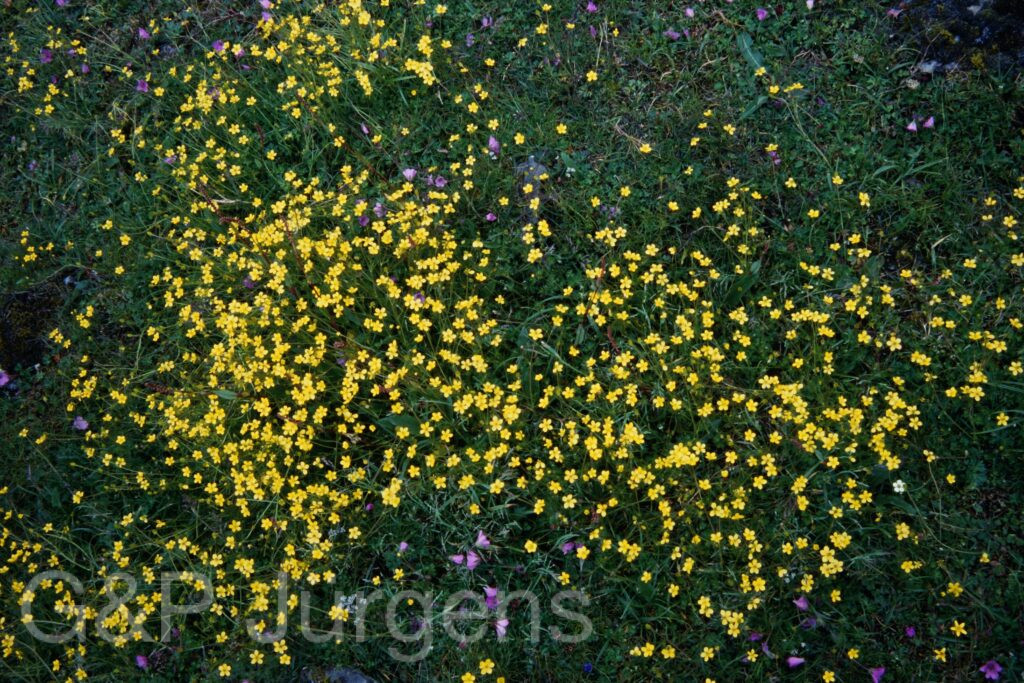
Ranunculus brotherusii is a widespread alpine buttercup of Central Asia and the Himalaya, recorded from China, Nepal, India, Bhutan, Pakistan, Mongolia, Russia and Kyrgyzstan, with additional collections in European herbaria. Its roughly 1756 georeferenced records reflect a common and broadly distributed high-mountain species. It grows in damp alpine meadows, marshy ground, streamsides and snow-flush hollows, typically at about 3000-5000 m. The Sikkim gatherings cited above, from the Vista valley at 3800 m in June and from Saniti Lake at 4300 m in August, are characteristic, the species flowering through the short alpine summer on moist, well-watered turf.
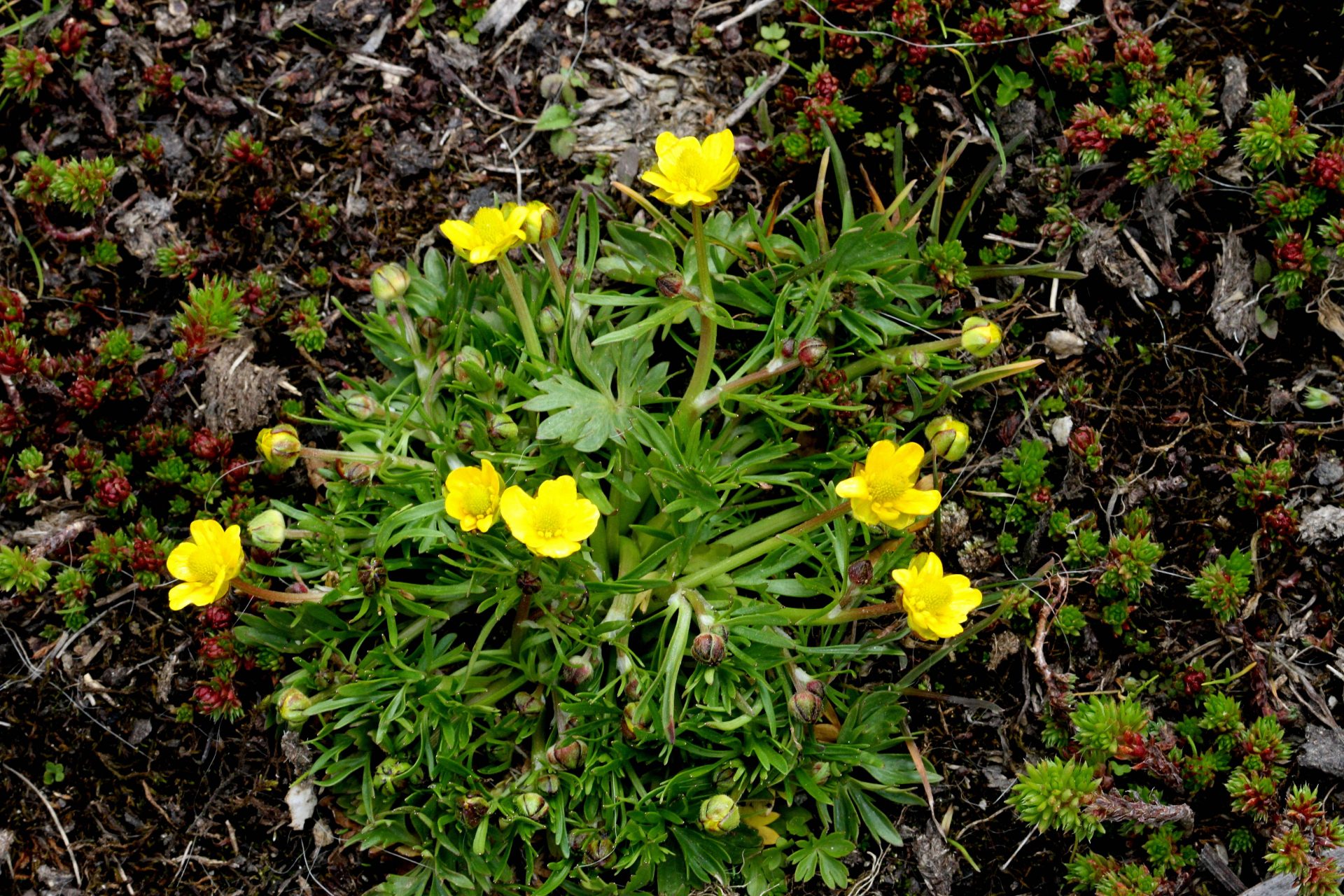
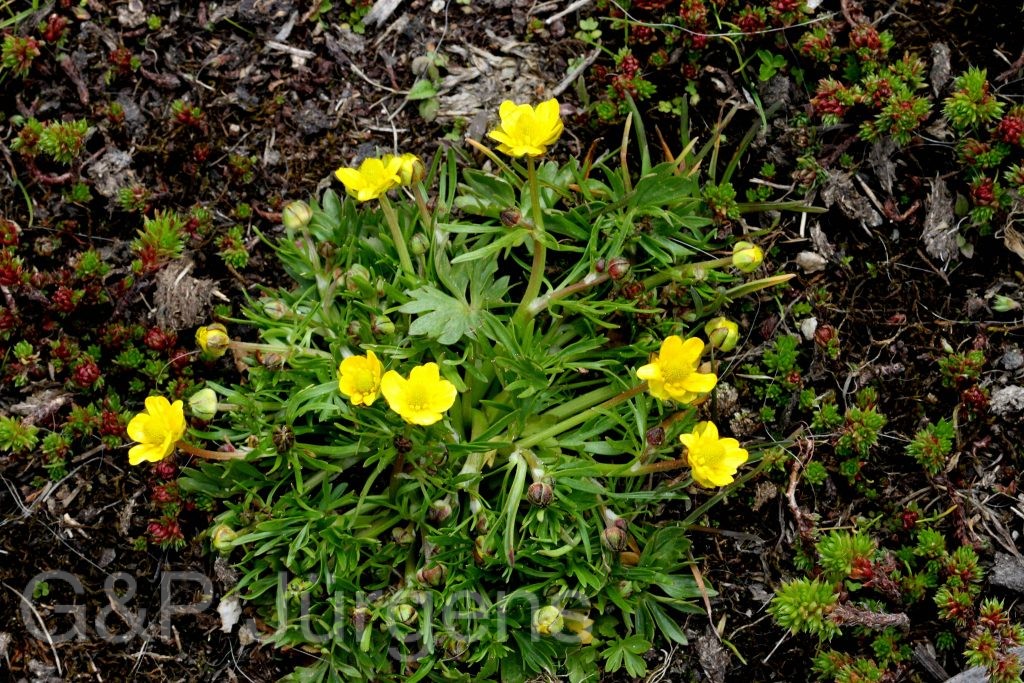
It is a small, tufted perennial herb arising from a fibrous root system, the stems erect to ascending and sparsely appressed-hairy. The basal leaves are long-petiolate with reniform to orbicular blades that are three-lobed or further divided into crenate segments, while the cauline leaves are smaller and more deeply cut, becoming sessile above. The flowers are solitary or few, with five greenish, often pubescent sepals and five glossy yellow obovate petals each bearing a small nectary scale. The numerous stamens surround a globose to ovoid head of carpels, the fruit an aggregate of small glabrous achenes with a short curved or hooked beak.
Ranunculus is a large, cosmopolitan genus particularly diverse in cold temperate and alpine regions, and R. brotherusii belongs to its assemblage of small-flowered Asian alpine buttercups. Like its relatives it contains acrid protoanemonin compounds rendering it unpalatable and toxic to livestock, which favours its persistence on grazed pasture. Pollination is by generalist alpine flies and bees. Its extensive transboundary range and ecological tolerance place it well outside any conservation concern.
Author: Freyn · Sources: POWO (Kew), GBIF, Flora of China, Flora of Pakistan, Ranunculus of Central Asia monograph