
W.E.Evans
Description
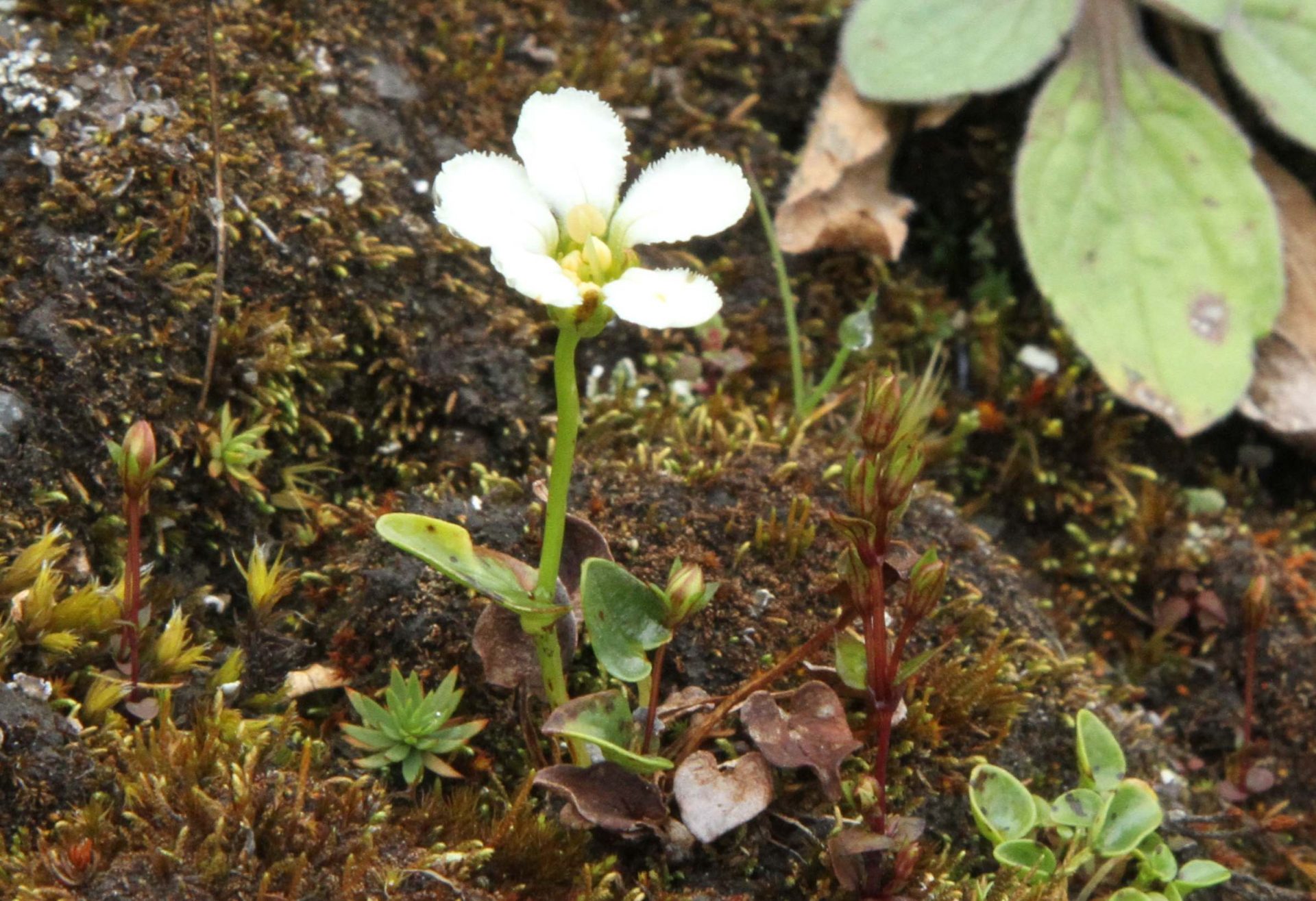
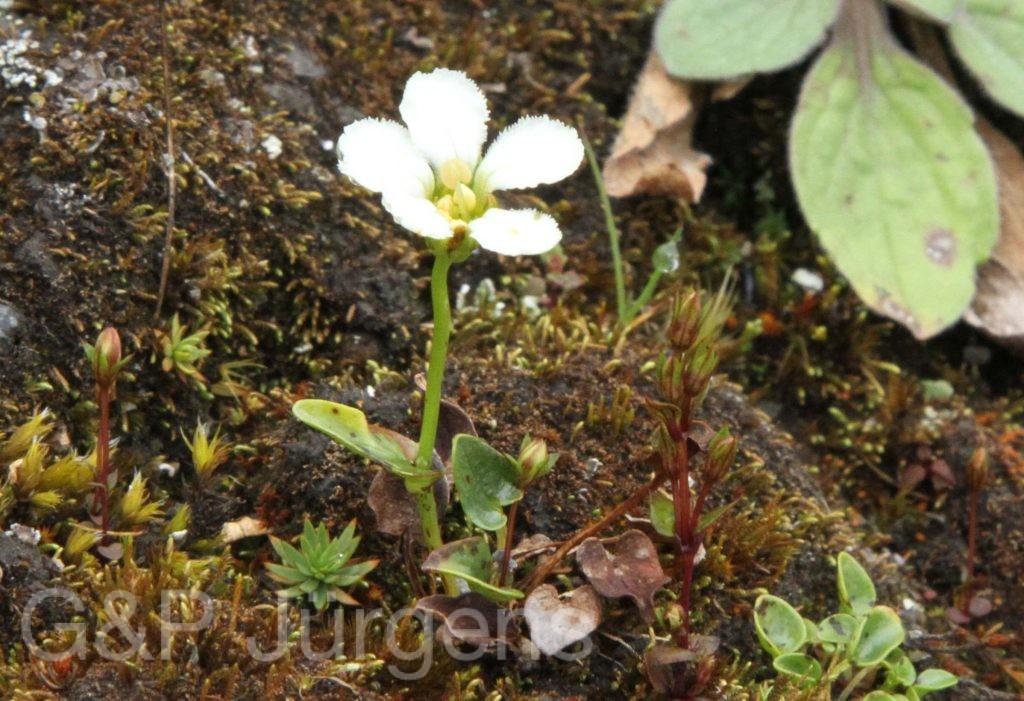
Parnassia cooperi is an alpine perennial herb of the eastern Himalaya, known from a small set of 12 GBIF occurrences in China, Bhutan and India. It inhabits moist alpine meadows, seepage slopes, streamsides and damp grassy turf in the upper temperate to alpine zone, generally between about 3500 and 4300 m. The plant recorded on the Shele-La in Bhutan at 3800 m in September represents its typical high-elevation habitat, flowering late in the season on cool, humid, well-watered ground where snowmelt and monsoon moisture persist.
The species is a slender, glabrous, rosette-forming herb arising from a short rhizome. The basal leaves are long-petiolate with ovate to cordate, entire blades, while each erect, unbranched flowering stem bears a single sessile or clasping cauline leaf below the solitary terminal flower. The flower has five free, white petals, frequently veined, and alternates fertile stamens with conspicuous fringed or gland-tipped staminodes, the latter a defining feature of the genus. The superior to half-inferior ovary ripens into a capsule that dehisces into valves, releasing numerous small seeds.
Though traditionally placed in its own family Parnassiaceae or in Saxifragaceae, Parnassia is here listed under Celastraceae, reflecting molecular evidence that nests the Parnassia-Lepuropetalon lineage within an expanded Celastrales. Parnassia cooperi is a narrow-range eastern Himalayan endemic whose restricted distribution and specialised wetland-alpine habitat make it potentially vulnerable to grazing pressure and climatic shifts, warranting monitoring despite its current data-poor conservation status.
Author: W.E.Evans · Sources: POWO (Kew), GBIF, Flora of China Vol. 8, Flora of Bhutan Vol. 1, Flora of Nepal, Flora of Pakistan, Wu's monograph of Parnassia