
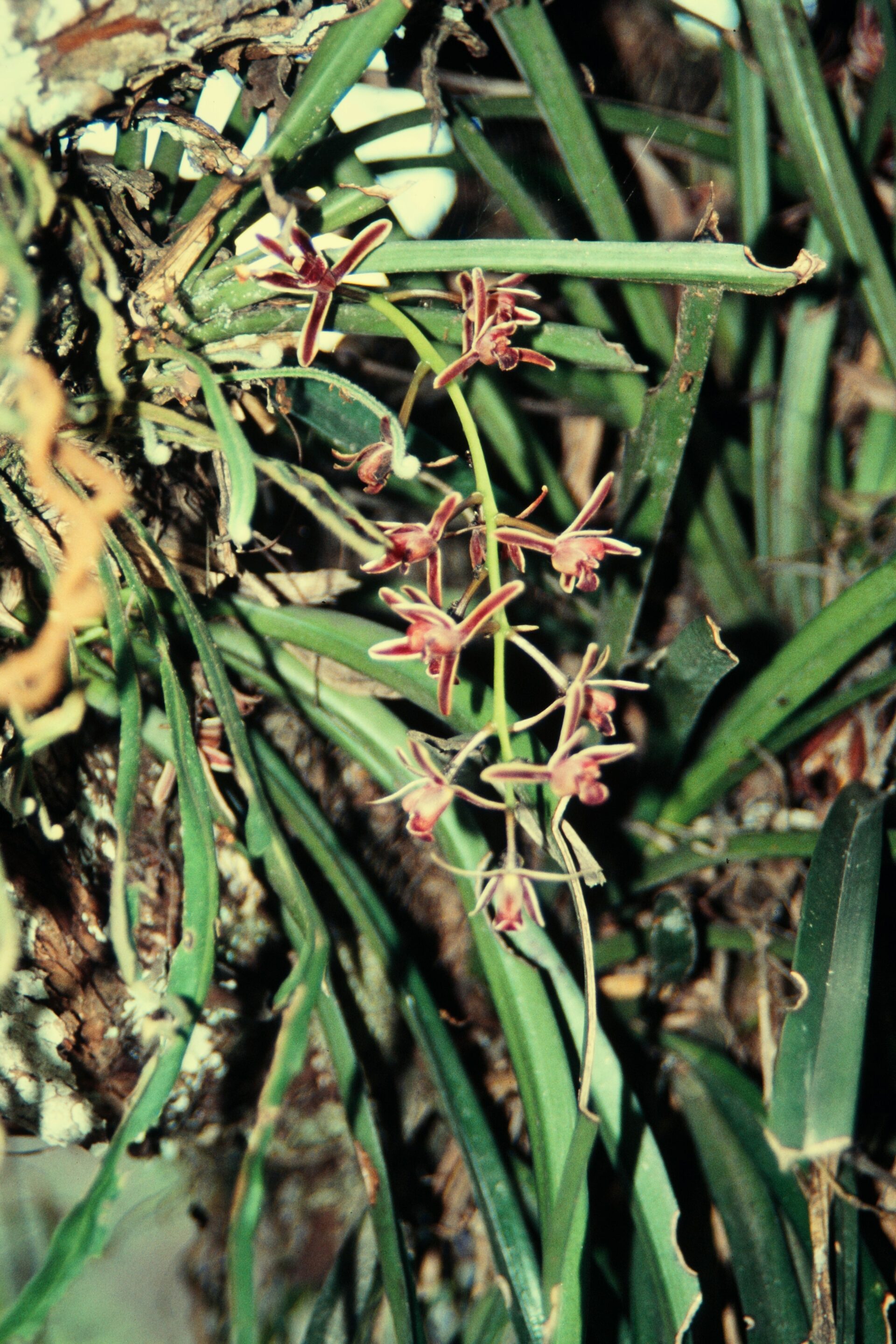
Wall.
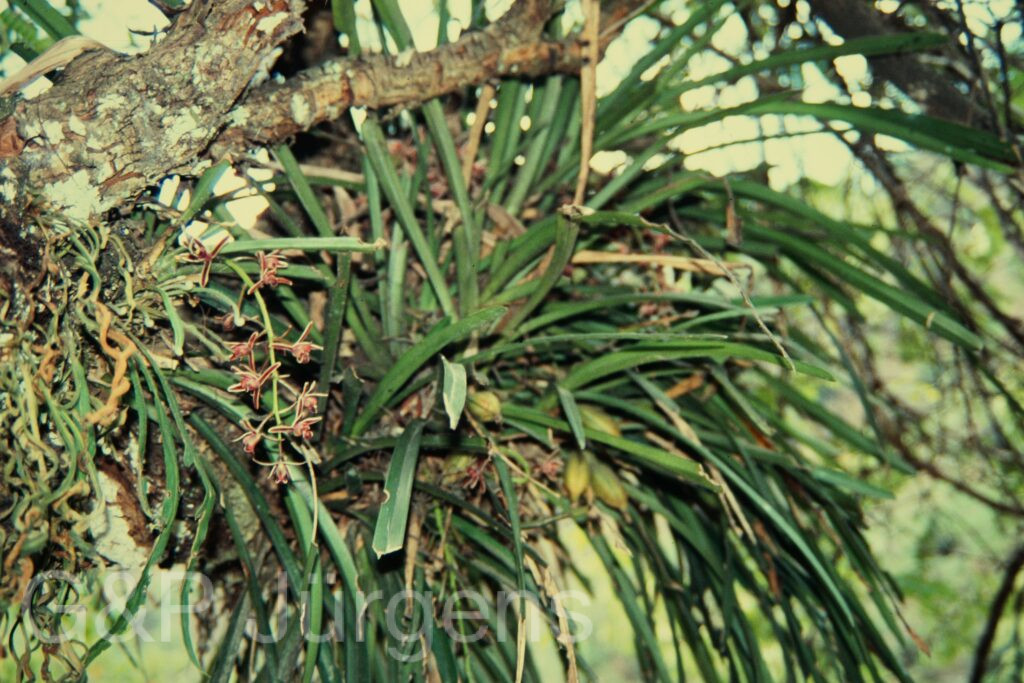
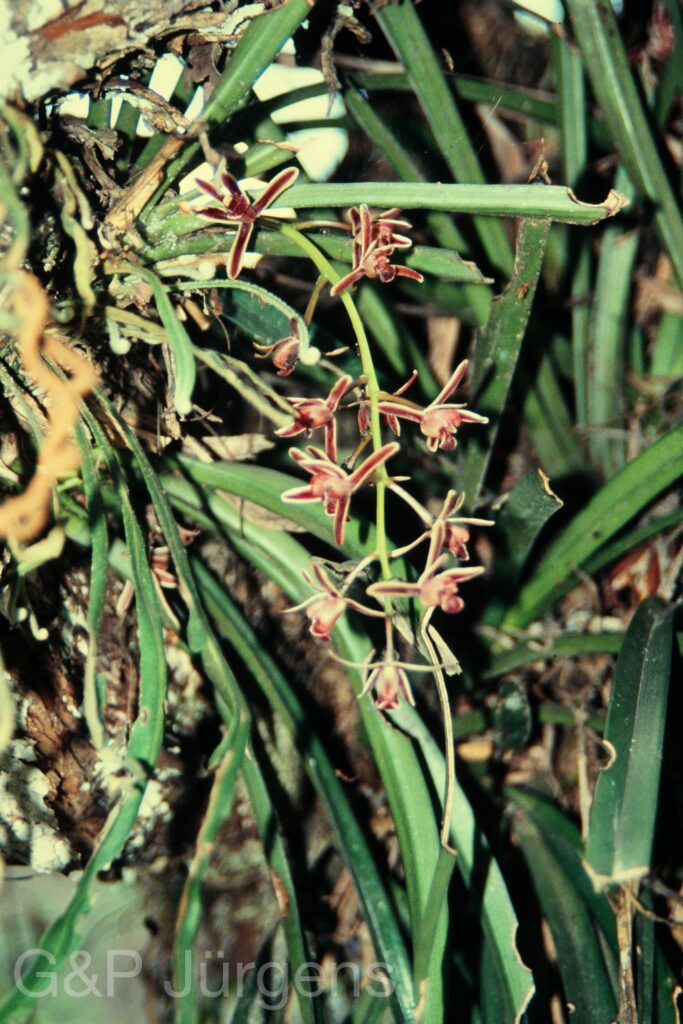
Description
Cymbidium crassifolium Wall. is an epiphytic to lithophytic orchid of the warm subtropical Himalaya and adjacent Southeast Asia, recorded from Nepal, Bhutan, north-east India, Myanmar, Thailand and southern China. It grows in broad-leaved evergreen and semi-deciduous forest at low to moderate elevations, frequently perched on mossy tree trunks, on shaded rock faces or on steep humus-covered banks in humid ravines. The photographed population from the Mewa-Khola valley of eastern Nepal at 1160 m, flowering in April, typifies its preference for lower hill forests near the warm-temperate transition, where it relies on free drainage, dappled light and a seasonal alternation of monsoon rains and a drier cool season.
The plant forms clustered, ovoid to spindle-shaped pseudobulbs partly enclosed by leaf bases, bearing several thick, leathery, linear-ligulate leaves (the epithet crassifolium referring to their fleshy texture). The inflorescence is an arching to pendent lateral raceme carrying numerous fragrant, relatively small flowers. Sepals and petals are narrow and spreading, yellowish to dull olive or brownish-green, often veined with maroon; the trilobed labellum is whitish marked with red-purple spotting and bears longitudinal keels on the disc. The fused column and stalked pollinia are typical of the genus, pollination being followed by an erect, ellipsoid dehiscent capsule.
The name has frequently been confused with the closely allied Cymbidium mannii, with which it shares the pendent, multiflowered habit. POWO accepts C. crassifolium as a distinct species within section Cymbidium. As a member of a genus heavily collected for the ornamental trade, wild populations are subject to over-collection and habitat loss; like all Orchidaceae it is listed under CITES, underscoring the need for in-situ protection of its subtropical forest habitat.
Author: Wall. · Sources: POWO (Kew), GBIF, Flora of China, The Genus Cymbidium (Du Puy & Cribb), Orchids of Nepal, CITES Orchid Checklist