
Lindl.
Description
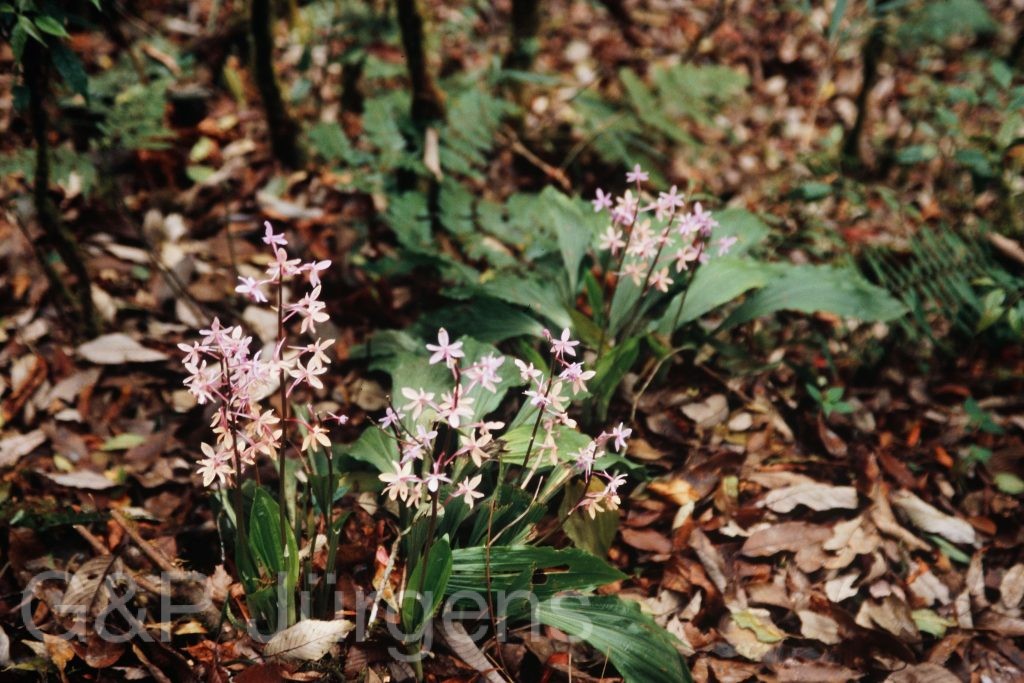
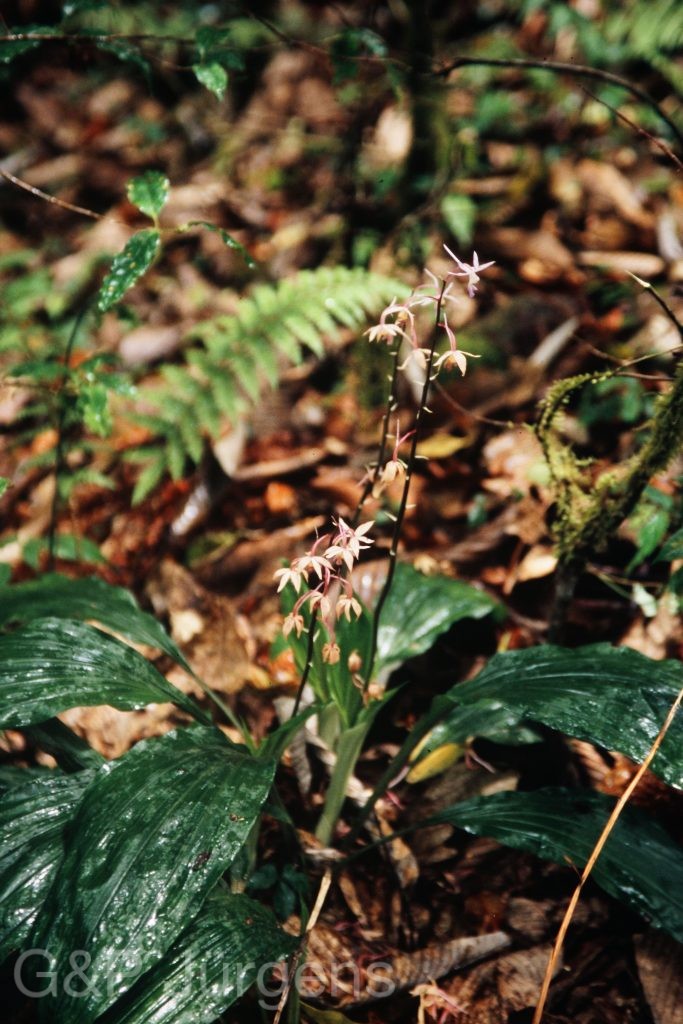
Calanthe plantaginea is one of the most widespread and conspicuous terrestrial orchids of the Himalayan montane forest zone. Its range extends from Pakistan through the entire Himalayan arc (Nepal, India, Bhutan) into Myanmar and southern China. GBIF documents over 110 occurrences. The species grows in the understory of broadleaved and mixed forests, in moist leaf litter and humus, at elevations of 1,000–3,000 m.
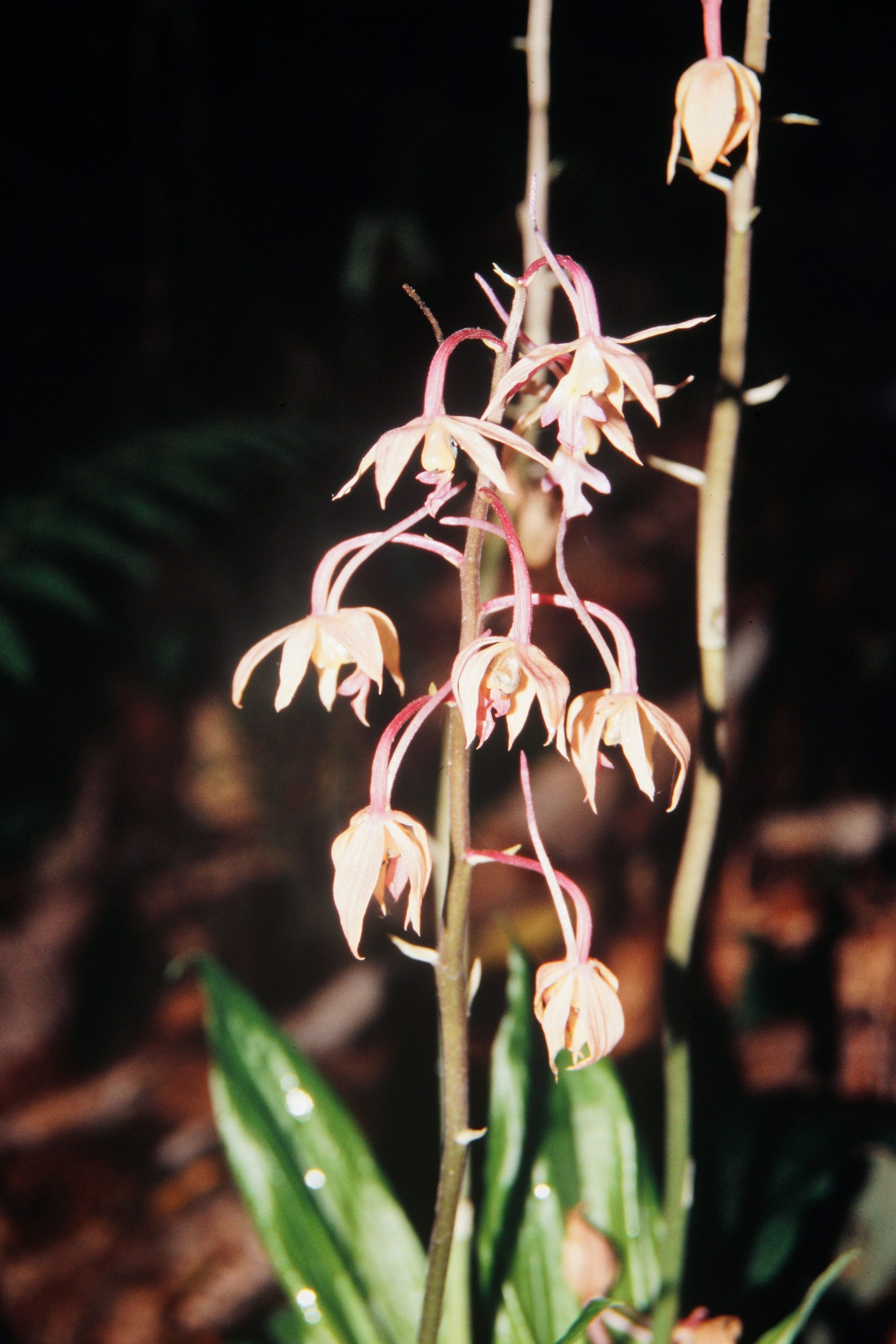
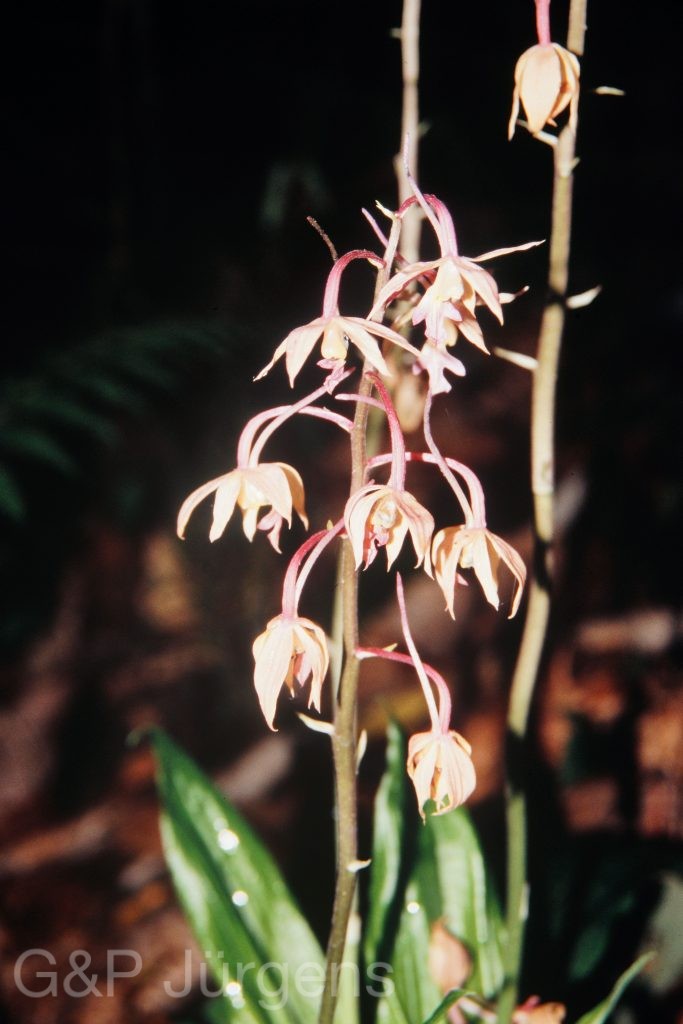
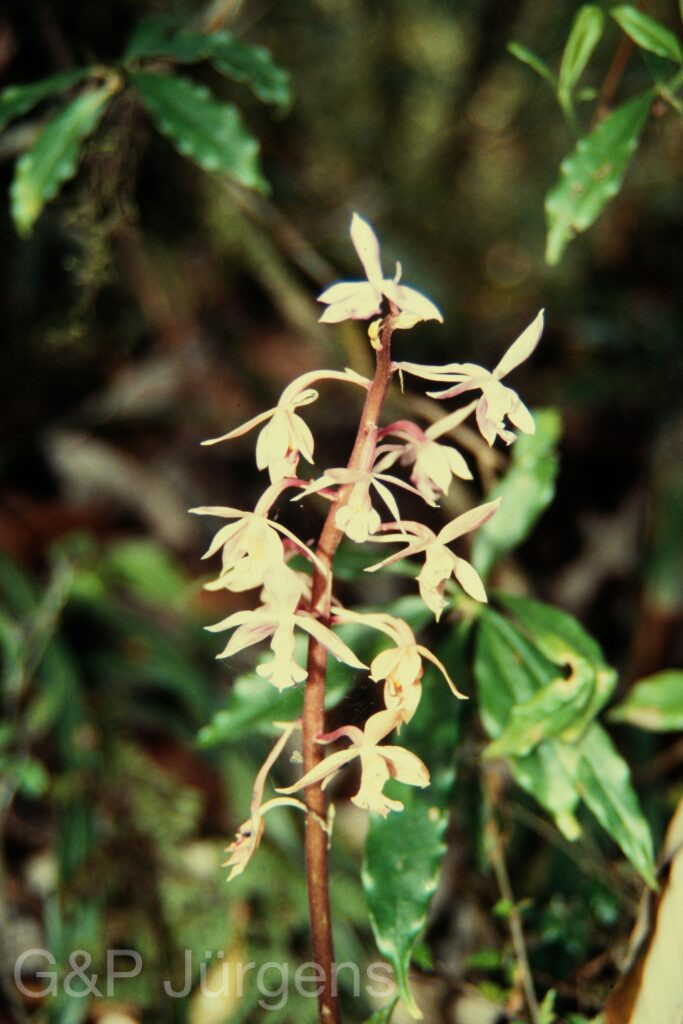
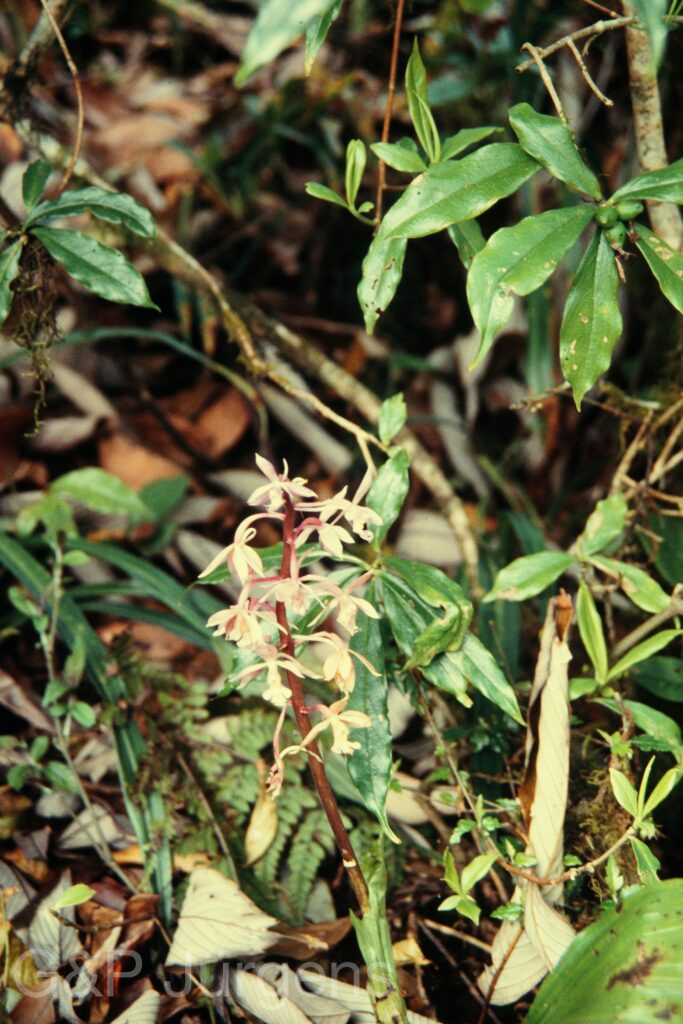
The plant produces reduced pseudobulbs hidden by persistent leaf sheaths. Leaves are 3–5, large, broadly elliptic, 15–40 cm long, prominently plicate, resembling plantain leaves — hence the epithet 'plantaginea'. The inflorescence is a stout, erect raceme 20–40 cm tall, bearing 10–20 showy flowers. Flowers are 3–4 cm across, the largest among Himalayan Calanthe, and range from pale pink to deep rose-pink, occasionally white. The lip is trilobed, the mid-lobe deeply bifid, with a prominent callus of 3–5 raised, yellow lamellae. The spur is slender, 1.5–2 cm long. Flowering occurs from March to May, typically before full canopy closure.
Calanthe plantaginea is arguably the most recognisable spring-flowering orchid in the Himalayan mid-altitude forests. Its large, brightly coloured flowers and broad leaves make it conspicuous even to non-specialists. It is often the first orchid to flower in the understory after winter.
Author: Lindl. · Sources: POWO (Kew), Flora of Bhutan Vol. 3, Flora of Nepal Checklist, GBIF, Pearce & Cribb: The Orchids of Bhutan (2002)