
Wall. ex Lindl.
Description
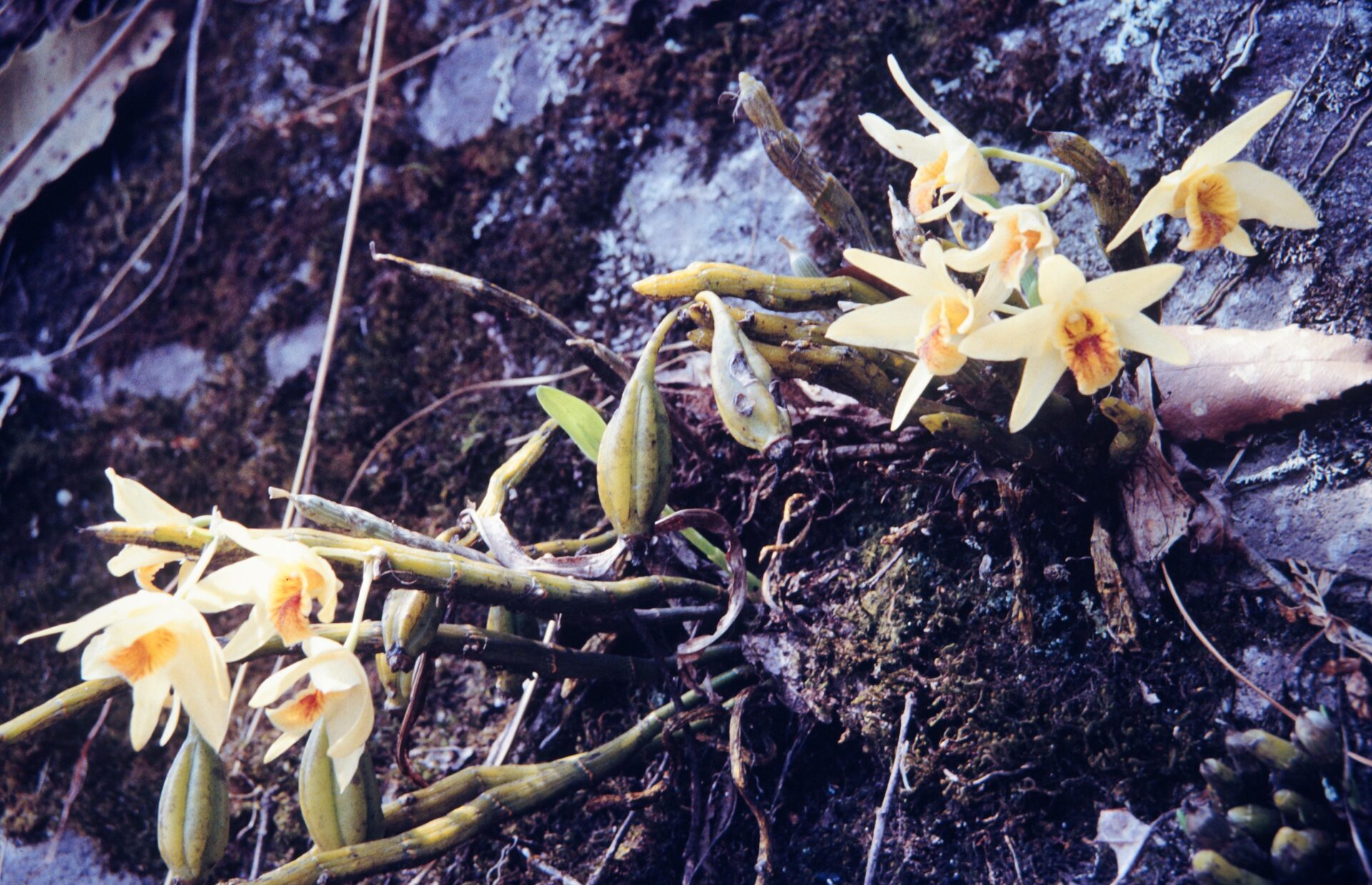
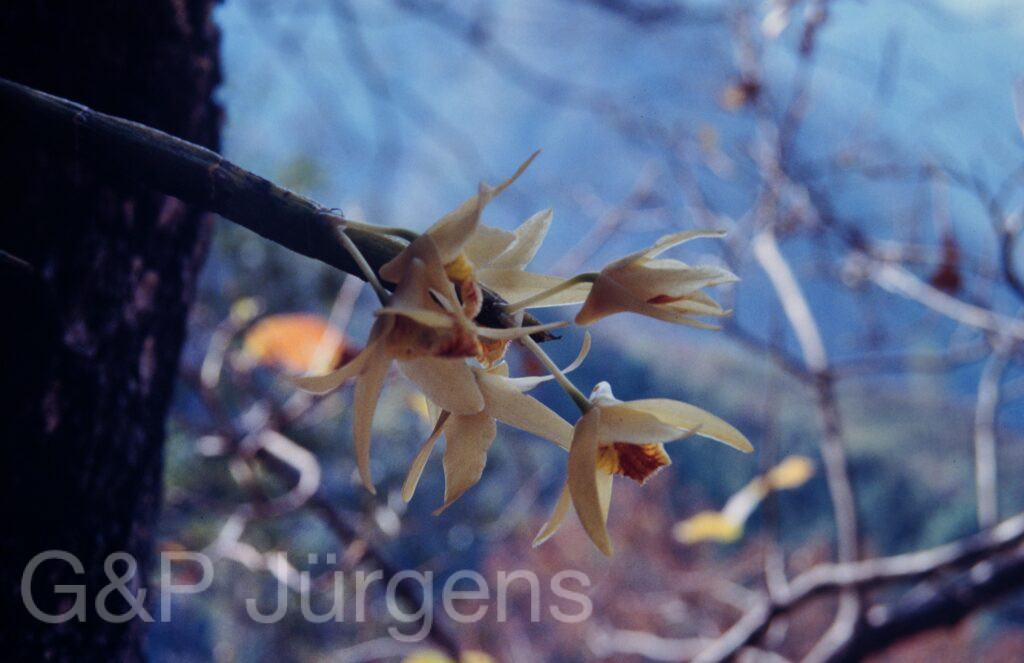
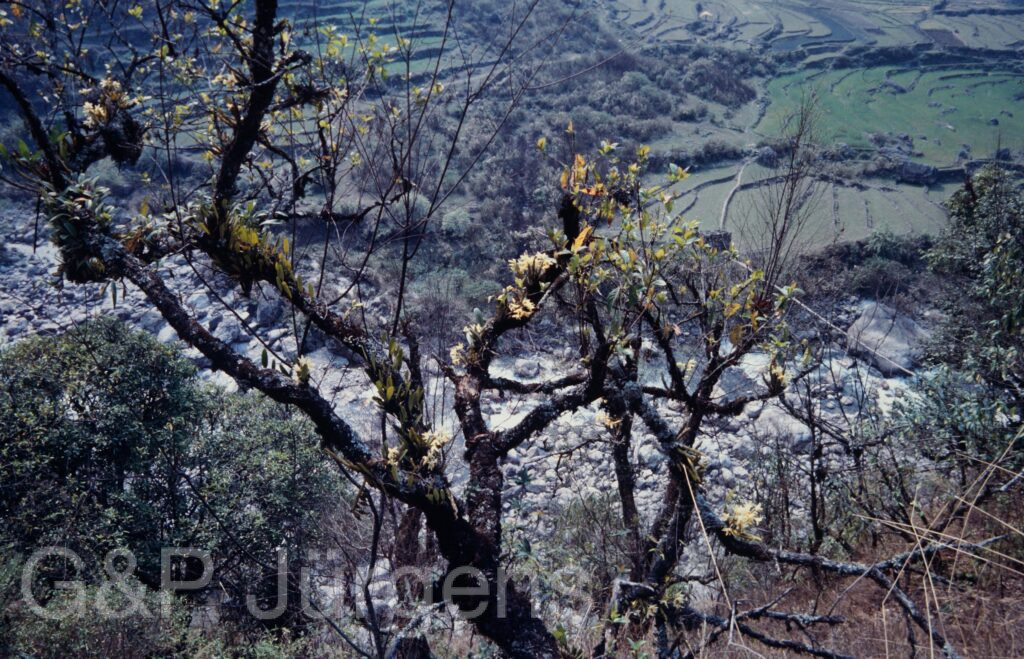
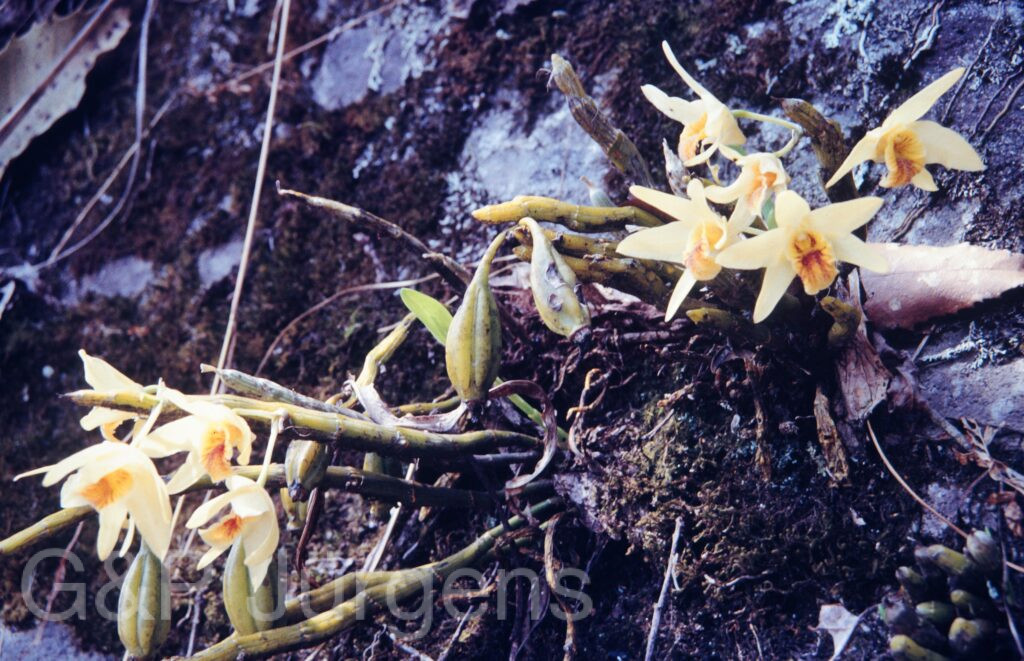
Dendrobium heterocarpum is a widespread epiphytic orchid of the tropical and subtropical forests of southern and southeastern Asia. GBIF data document its broad native range across the Philippines, Thailand, India, Nepal, Vietnam, China, Indonesia, Bhutan, Sri Lanka and Myanmar, with additional records from cultivation in the United States, Britain, Belgium and Germany, totalling around 261 occurrences. It grows as an epiphyte on the trunks and larger branches of trees in seasonally dry, well-lit montane and submontane forest, often in regions with a marked dry season that triggers flowering. The photographed plant from Amjilassa in eastern Nepal at 2300 m, flowering in March, illustrates its occurrence in the mid-elevation hill forests of the central Himalaya, where spring blooming follows the cool dry winter.
It is a sympodial epiphyte with clustered, erect to pendent, cane-like pseudobulbs that are somewhat fusiform and longitudinally furrowed when old, bearing several lanceolate, deciduous leaves along their length. The flowers, borne in small lateral clusters from nodes of leafless canes, are fragrant, with cream to pale yellow, often reflexed sepals and petals; the labellum is broad and recurved, golden-yellow with reddish-brown longitudinal veining and a pubescent disc. The fruit is a ribbed, ellipsoid capsule releasing dust-like seeds.
Dendrobium is among the largest orchid genera, and D. heterocarpum belongs to section Dendrobium, characterised by deciduous-leaved, nodally flowering canes. Long valued in horticulture for its sweetly scented, durable flowers, the species is collected from the wild across parts of its range, and like most epiphytic orchids it is listed under CITES Appendix II to regulate international trade. Its pollination depends on deceptive attraction of bees to the showy, nectarless labellum.
Author: Wall. ex Lindl. · Sources: POWO (Kew), GBIF, Flora of Nepal, Flora of China (Orchidaceae), The Genus Dendrobium (Lavarack, Harris & Stocker)