
Royle
Description
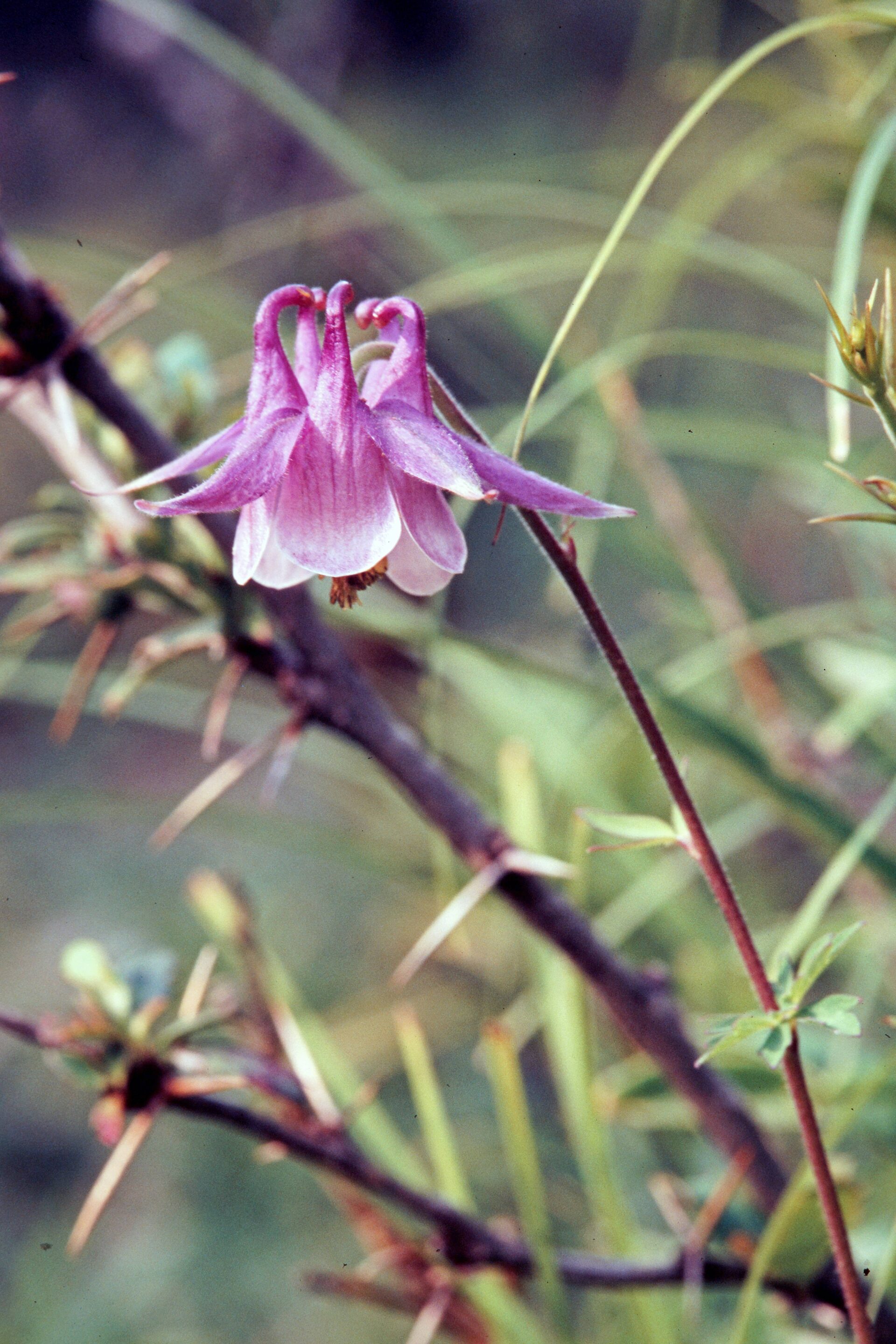
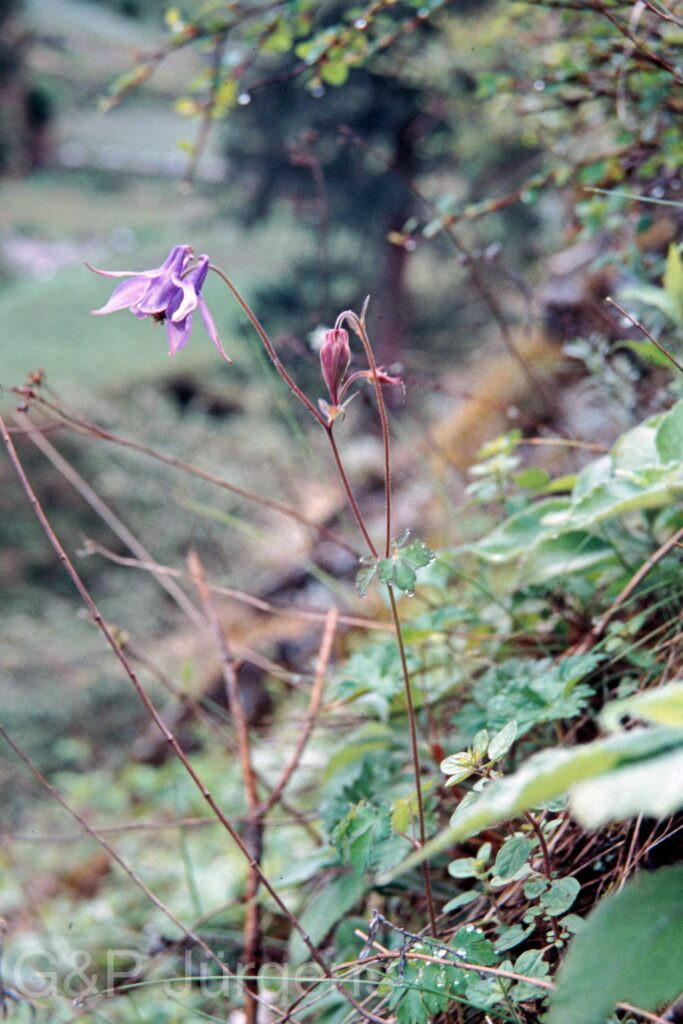
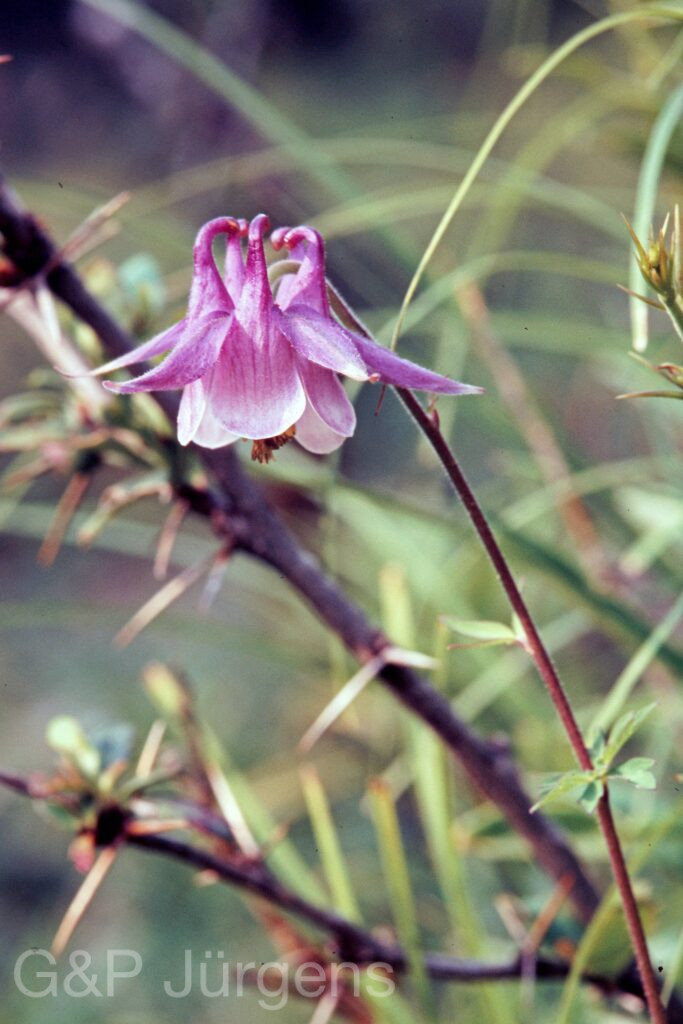
Aquilegia pubiflora is a columbine of the western and central Himalaya, recorded from Afghanistan, Pakistan, India, Nepal and adjacent China. It grows in shady forest, scrub, grassy slopes, stream banks and rocky places in the temperate montane belt, generally between about 2000 and 3600 m. The photographed plants come from Nyor Gaad in West Nepal at around 2700 m and from Barron Chatti in Indian Garhwal at about 2450 m, both flowering in June. With around 240 georeferenced occurrences it is a moderately well-documented and characteristic Himalayan member of its genus along forest margins and in semi-open habitats of the inner valleys.
It is an erect perennial herb up to about 1 m, arising from a stout rootstock, the stems branched above and finely pubescent. The leaves are mostly basal and biternate, the leaflets obovate and lobed, glaucous and softly hairy especially beneath. The nodding to half-nodding flowers are borne on slender pedicels; each has five petaloid sepals and five petals, the petals prolonged backward into prominent hooked or incurved nectar spurs that are the diagnostic feature of Aquilegia. The flowers are pale to deep purple, lilac or whitish, finely pubescent on the outside, as the epithet pubiflora indicates. The numerous stamens are exserted, the inner ones forming membranous staminodes, and the carpels are five and free, ripening into erect, pubescent, many-seeded follicles.
Aquilegia pubiflora belongs to the Asian assemblage of the genus and is distinguished by its softly hairy, spurred flowers and biternate foliage; it intergrades with related Himalayan columbines and has been treated under varying circumscriptions. Like other columbines it is pollinated by long-tongued insects attracted to the nectar spurs. As a widespread temperate herb it is of least conservation concern.
Author: Royle · Sources: POWO (Kew), GBIF, Flora of China, Flora Iranica, Munz monograph of Aquilegia