
(Prain) Pennell
Description
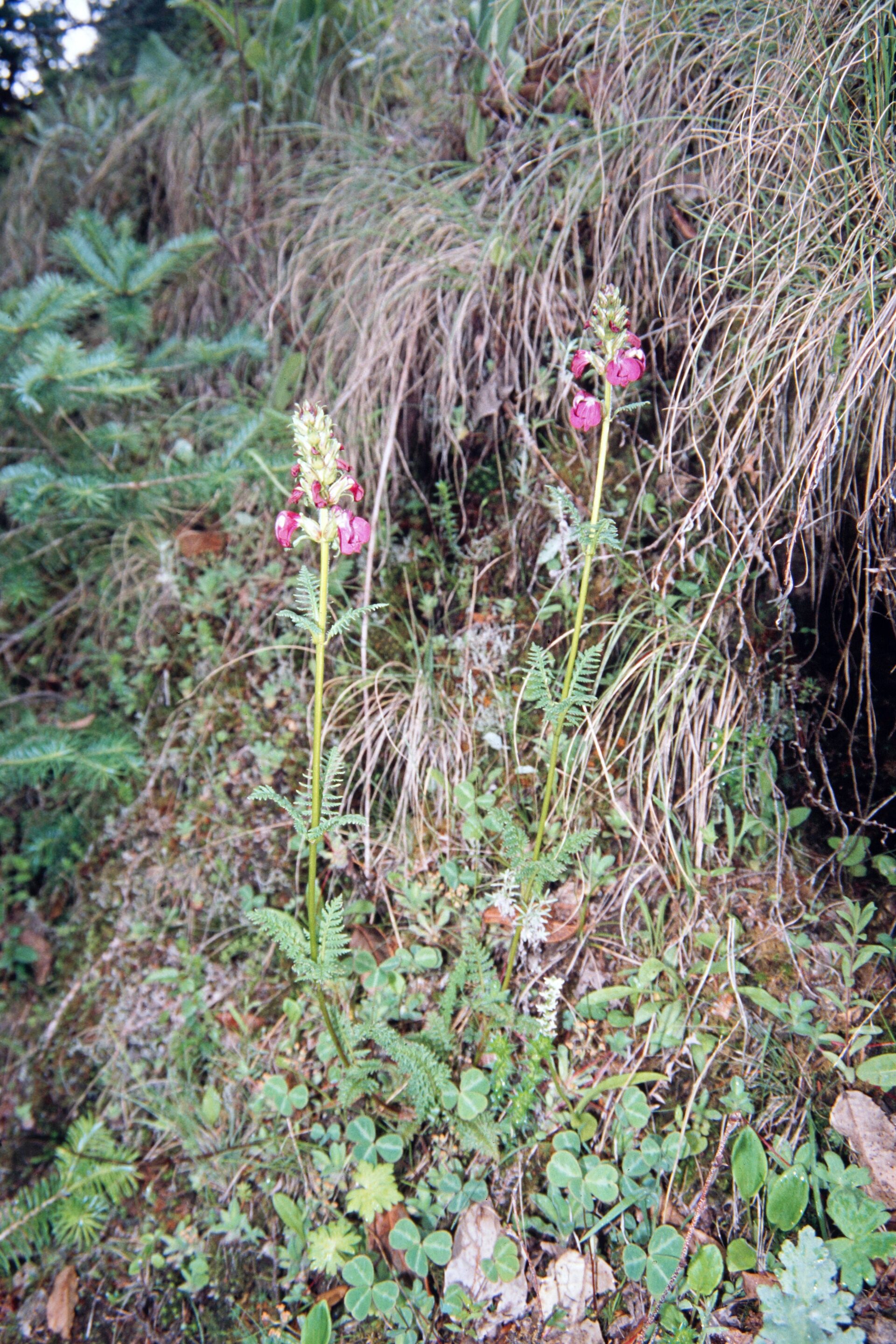
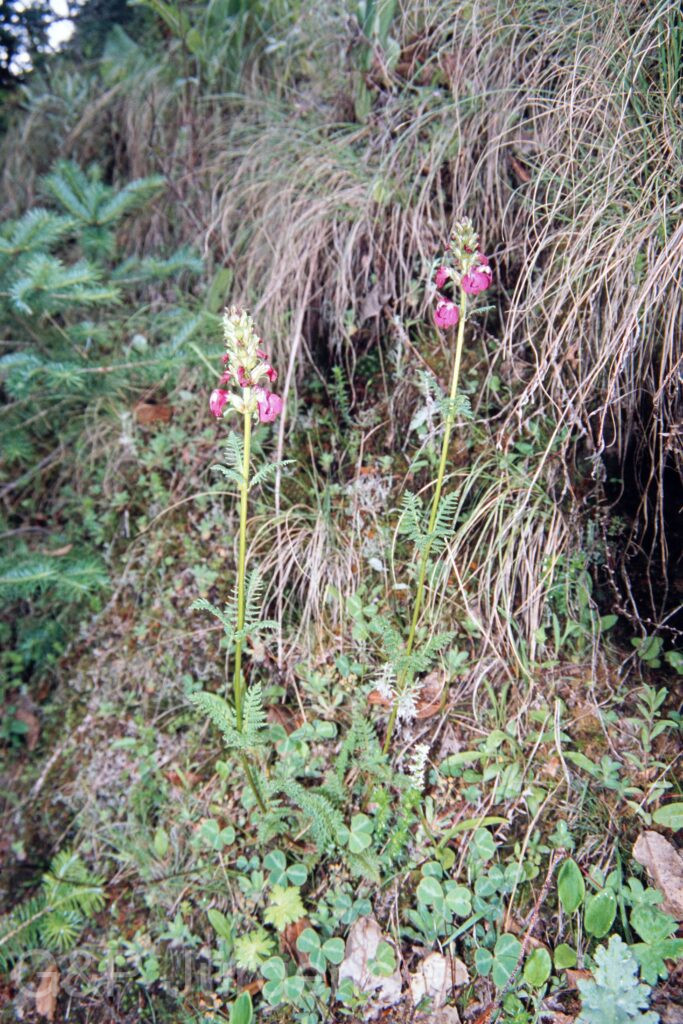
Pedicularis pectinata subsp. palans is a hemiparasitic herb of the western and central Himalaya, recorded from India, Pakistan and Nepal, where GBIF documents a small number of occurrences (11). It inhabits open alpine and subalpine slopes, grazed meadows and stony pastures, typically between roughly 3000 and 4000 m. The photographed plant comes from the Churta Khola in West Nepal at about 3300 m, flowering in June, a setting of damp, herb-rich turf where snowmelt persists into early summer.
Like other members of the genus, it is a perennial forming a basal rosette and erect, leafy flowering stems. The leaves are pinnatisect with the pinnae themselves toothed (pectinate), giving the foliage a fern-like aspect. The flowers are borne in a dense terminal spike; each has a tubular, two-lipped corolla, the galea (upper lip) often beaked or prolonged and the lower lip three-lobed and spreading, in shades of pink to rose-purple. The fruit is a flattened, oblique capsule enclosing several seeds.
The name is treated by GBIF as a synonym, with Pedicularis pectinata palans regarded as the accepted taxon. Pedicularis (Orobanchaceae, here labelled Orchideaceae in the source) is a notoriously variable, root-hemiparasitic genus, drawing water and nutrients from host roots while retaining green photosynthetic tissue. Its Himalayan species are pollinated chiefly by bumblebees, the corolla architecture closely matched to bee morphology. Such infraspecific taxa are valued markers of alpine biogeography and warrant continued field study.
Author: (Prain) Pennell · Sources: POWO (Kew), GBIF, Flora of Nepal, Flora of Pakistan, Pennell's monograph of the Scrophulariaceae of the Himalaya