
Boiss.
Description
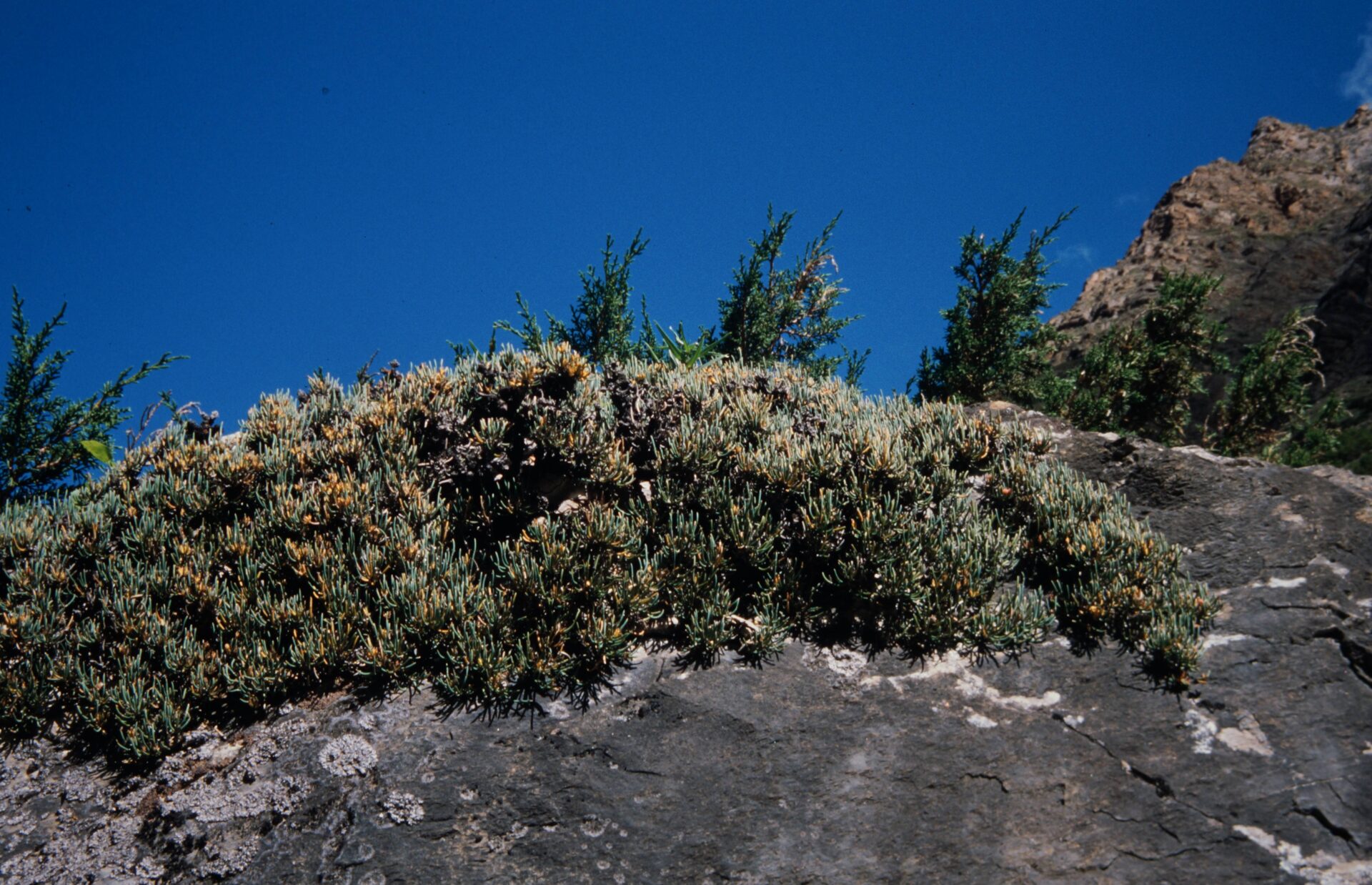
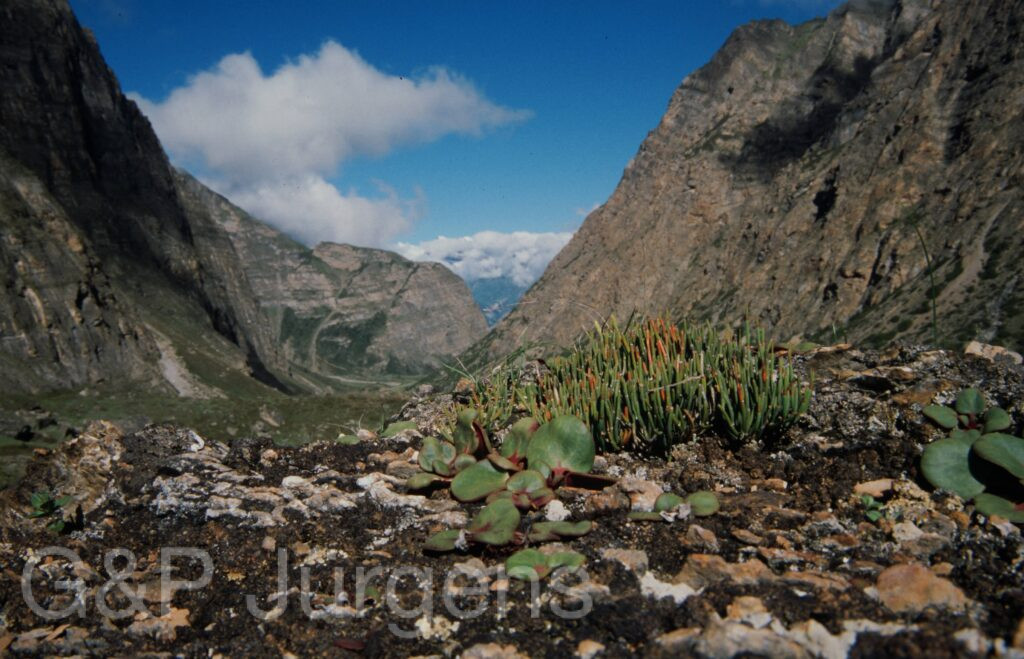
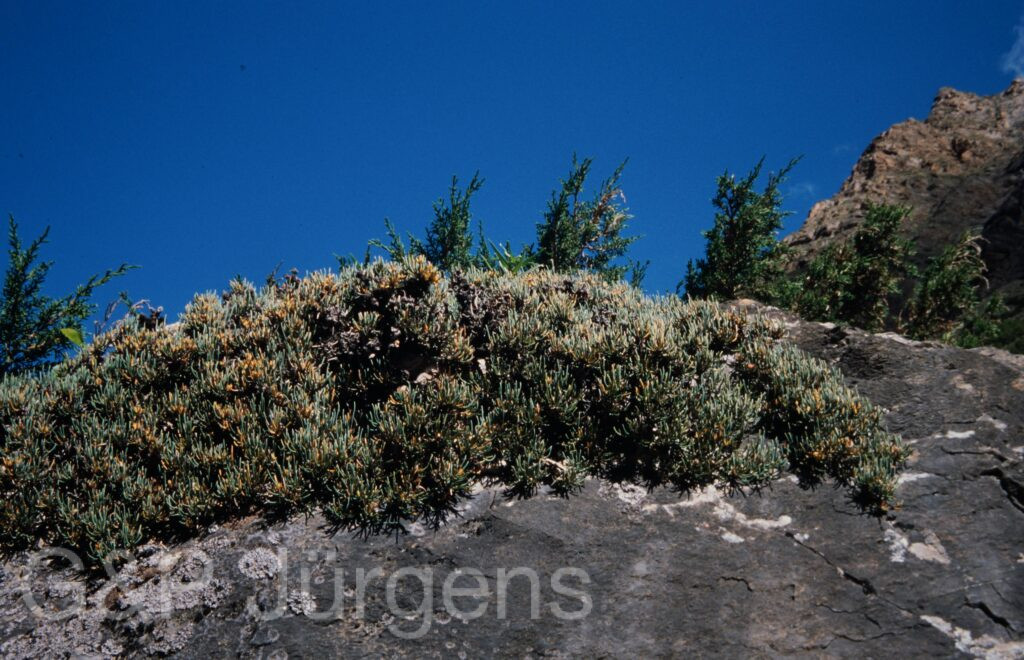
Ephedra pachyclada Boiss. is a xerophytic, gymnospermous shrub of the Ephedraceae ranging from the eastern Mediterranean and Arabia through Iran, Afghanistan and Pakistan to the western and central Himalaya. Its records extend across Egypt, Israel, Jordan, Saudi Arabia, Yemen, Oman, Iran, Afghanistan, Pakistan and into India and Nepal. The species is adapted to arid and semi-arid, sun-exposed habitats: dry rocky slopes, gravelly fans, cliff ledges and the stony soils of cold high-mountain deserts and the trans-Himalayan rain shadow. It occurs over a wide altitudinal span, and the population at Baga-La Phedi in Nepal, photographed at 4,000 m in July, exemplifies its occurrence in the cold, dry alpine zone.
The plant is a densely branched, often cushion-like or rigidly erect shrub with stout, jointed, longitudinally grooved green stems that perform photosynthesis in place of the reduced, scale-like leaves, which are paired and connate into small sheaths at the nodes. Like all Ephedra it is dioecious and wind- or insect-pollinated; the male cones bear clustered microsporangia, while the female cones produce ovules whose enveloping bracts become fleshy and red, forming a berry-like, succulent seed cone that aids in dispersal by birds.
Ephedra pachyclada is a taxonomically variable species, divided into several subspecies and forming part of a complex of robust Asian ephedras whose delimitation remains debated. The genus is renowned as a source of the alkaloids ephedrine and pseudoephedrine, giving it a long history of medicinal use, and several Asian species have been subject to harvesting pressure. As a hardy stabiliser of dry, eroding mountain slopes the species also has ecological value in fragile high-altitude desert ecosystems.
Author: Boiss. · Sources: POWO (Kew), GBIF, Flora of Pakistan, Flora Iranica, Freitag & Maier-Stolte: Revision of Ephedra in the Old World