
Lindl.
Description
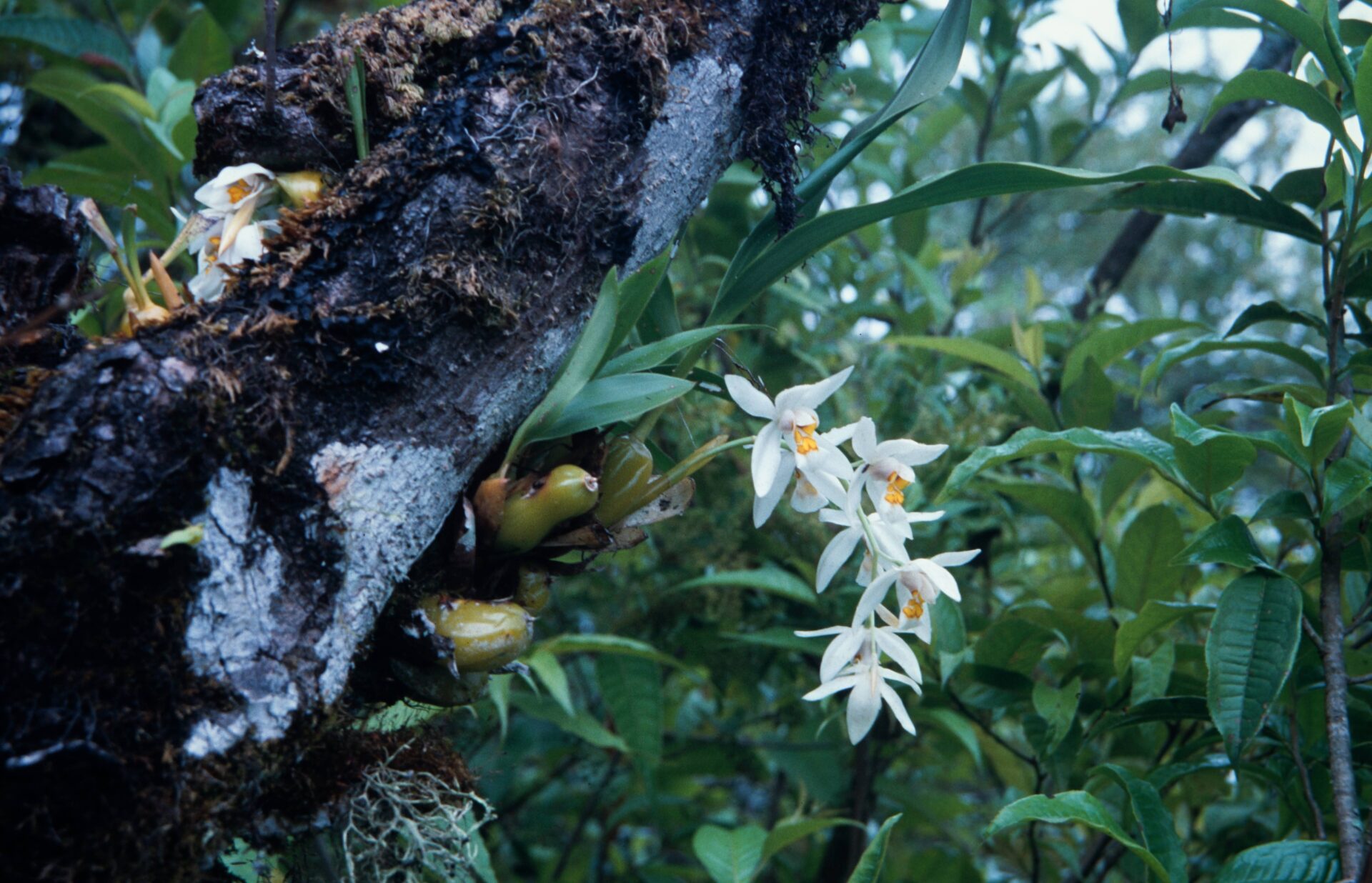
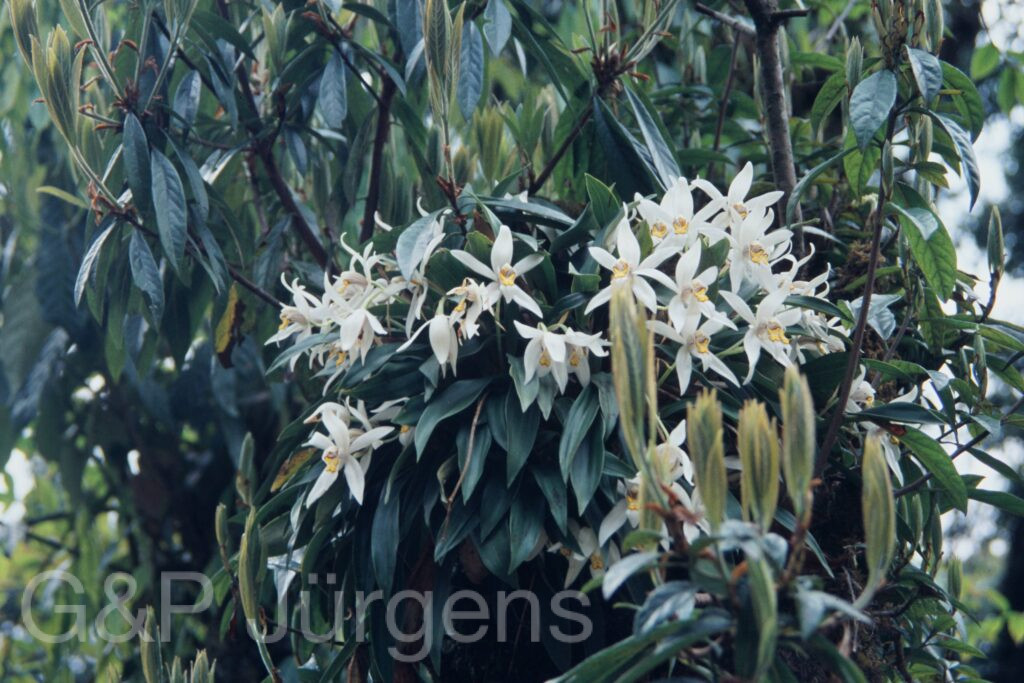
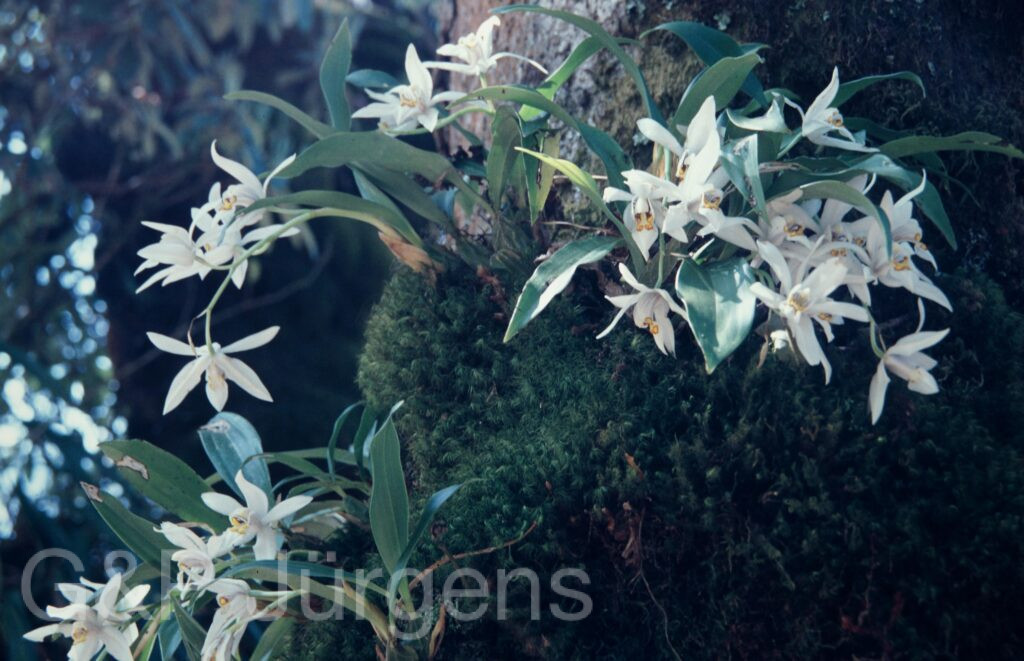
Coelogyne punctulata Lindl. is an epiphytic orchid of the Himalaya and neighbouring mountains, recorded from India, Nepal, Bhutan, China, Myanmar, Vietnam and Bangladesh (225 GBIF occurrences). It grows on mossy trunks and branches, and occasionally as a lithophyte on shaded rocks, in temperate broad-leaved and mixed forest, generally between 2000 and 3300 m. It was documented in Nepal at Niuli Kharka in Gorkha around 2500 m and at Milka-Danda in the east near 2850 m, both in May, and in Sikkim at Choka at 3330 m in April, reflecting the cool, humid mid-montane forests it favours.
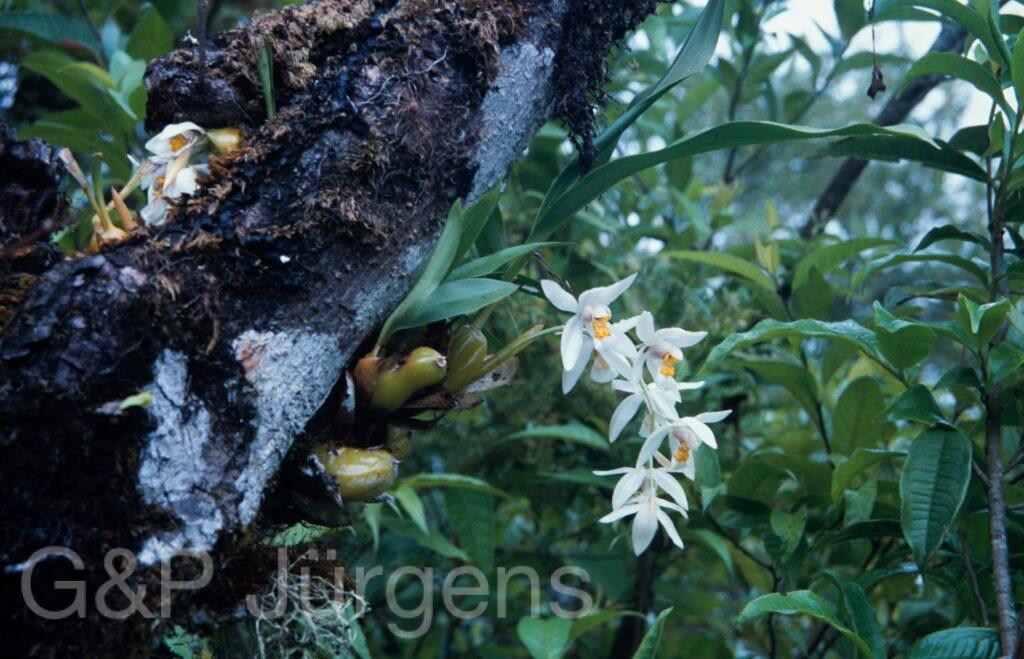
It is a sympodial epiphyte with closely set, ovoid to oblong pseudobulbs borne on a creeping rhizome, each bearing one or two plicate, elliptic-lanceolate leaves narrowed to a petiole-like base. The inflorescence is a few-flowered raceme arising with the new growth. The flowers are white to pale cream, the elliptic sepals and narrower petals spreading, and the showy trilobed labellum marked with yellow or orange keels and reddish-brown to ochre spotting on the disc, the lateral lobes erect about the column. The fruit is a ribbed, dehiscent capsule releasing dust-fine seeds.
Coelogyne is a large Asian genus and C. punctulata sits within the section of small-flowered white-and-spotted species; it has at times been confused with the related C. nitida, a synonymy reflected in the original page reference. The deceptive, nectarless flowers are pollinated by bees, and the minute wind-dispersed seeds depend on mycorrhizal fungi for germination. As a forest epiphyte it is vulnerable to habitat loss and orchid collection, concerns shared across wild-harvested Coelogyne, and the genus is listed under CITES Appendix II.
Author: Lindl. · Sources: POWO (Kew), GBIF, Flora of China, Flora of Bhutan, The Orchids of the Sikkim-Himalaya (King & Pantling), Coelogyne monograph (Clayton, The Genus Coelogyne)