
Wall. ex DC.
Description
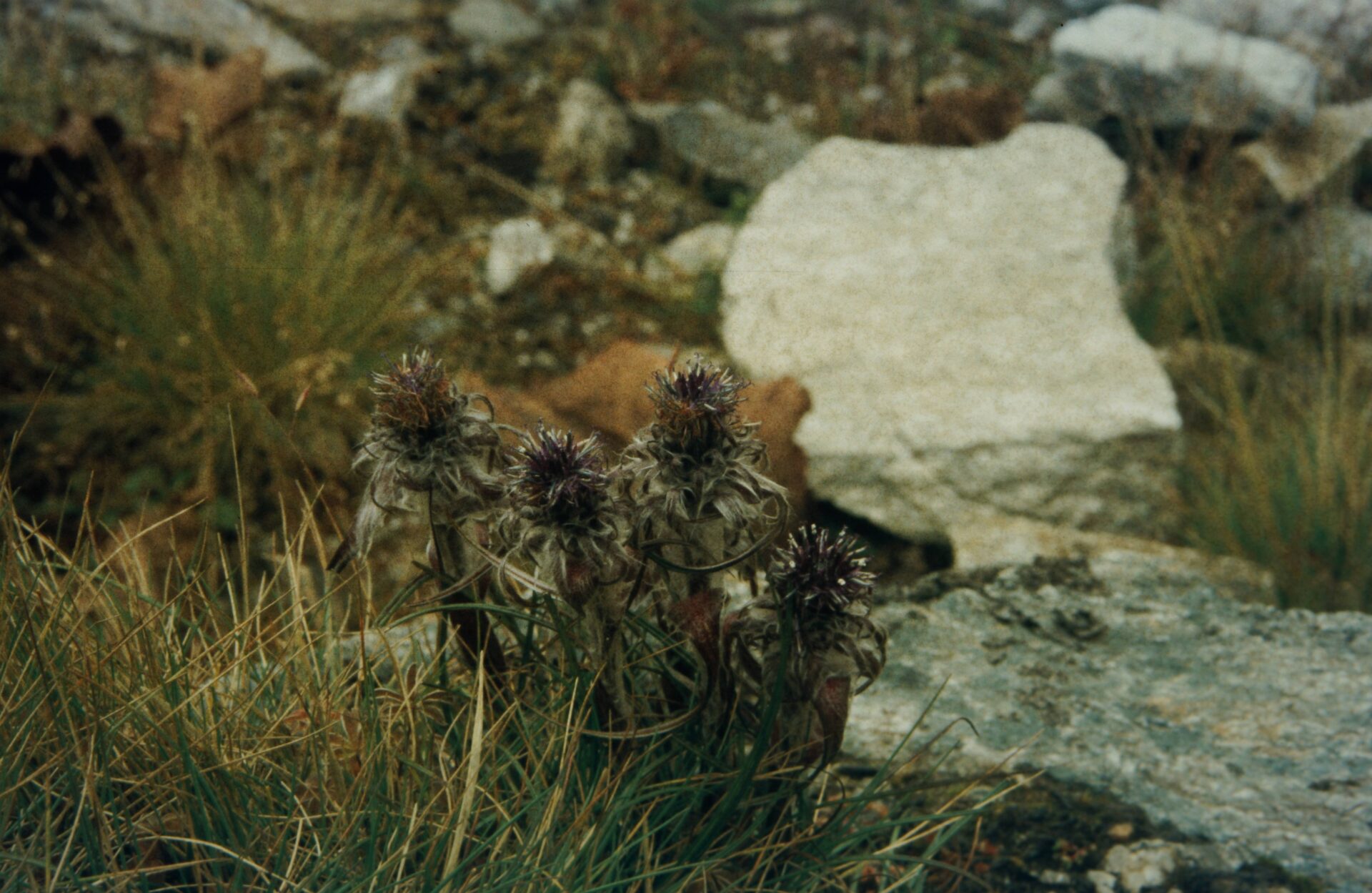
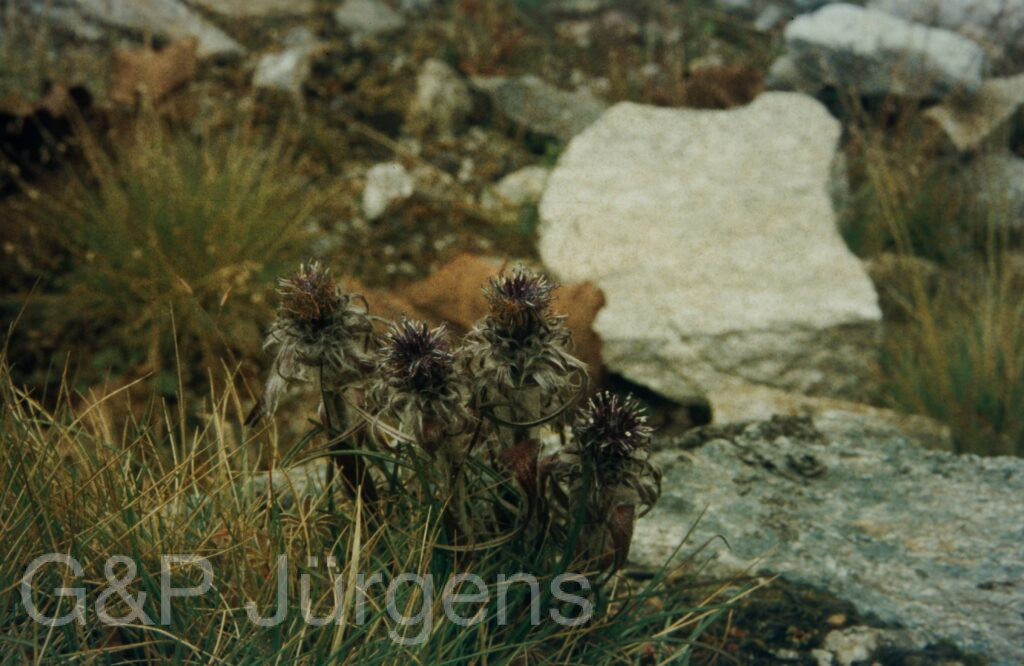
Saussurea graminifolia is a high-alpine composite of the Himalaya and Tibetan borderlands, distributed across Nepal, India, China and Bhutan, with about 127 GBIF occurrences. It is a true plant of the upper alpine zone, occupying screes, fine gravel, glacial moraine, stony meadows and exposed ridges generally above 4000 m and reaching well over 4500 m. The collection from Bagubasa in Garhwal, India, at 4100 m in September corresponds to its late-season flowering, when these wind-swept slopes near the limit of vascular plant life carry the characteristic cushion and rosette flora of the region.
It is a low, tufted perennial herb growing from a stout rootstock, with very narrow, grass-like (graminifolious) basal leaves that form a dense rosette, the epithet alluding to this distinctive linear foliage. One or few short scapes bear a cluster of capitula crowded among the leaves and often partly enveloped by them. The flower heads are discoid, containing only tubular florets that are purple to violet, surrounded by overlapping involucral bracts. As in Saussurea generally the fruit is an achene topped by a pappus of feathery (plumose) inner bristles and shorter outer ones.
Saussurea belongs to tribe Cardueae of the Asteraceae and is a hallmark genus of the Sino-Himalayan alpine zone, where many species show adaptations such as woolly indumentum or translucent bracts (the "snowball" and "glasshouse" plants) that buffer the harsh, cold, high-radiation environment. Though not formally threatened, such specialised high-elevation endemics are sensitive to climate warming and to harvesting where Saussurea species are used medicinally.
Author: Wall. ex DC. · Sources: POWO (Kew), GBIF, Flora of China, Flora of Bhutan, Saussurea monograph (Lipschitz)