
Hook. f.
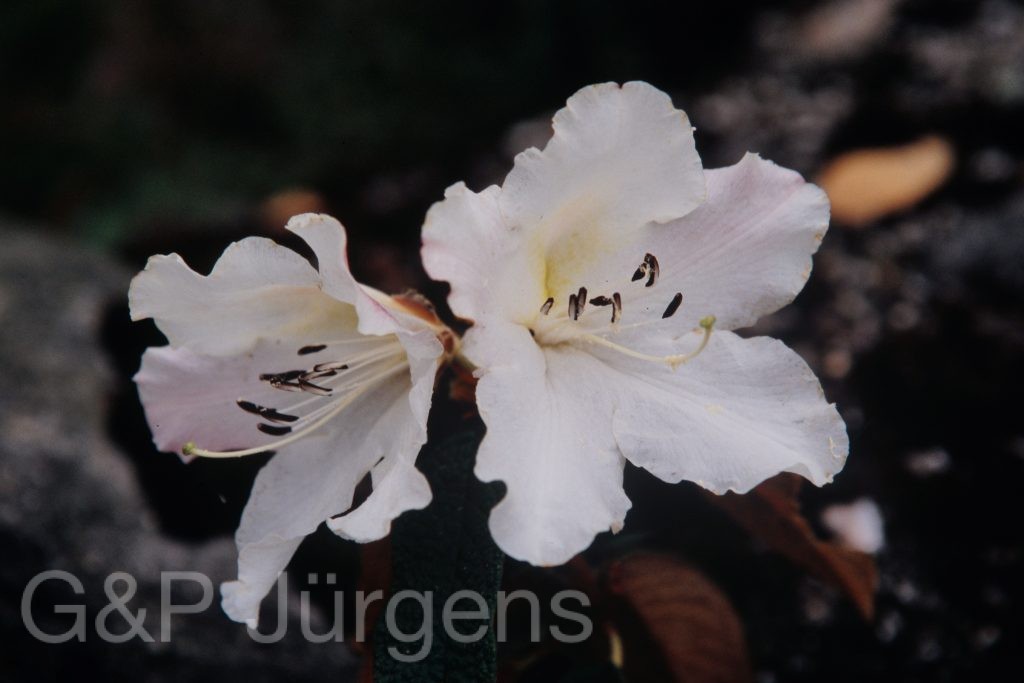
Description
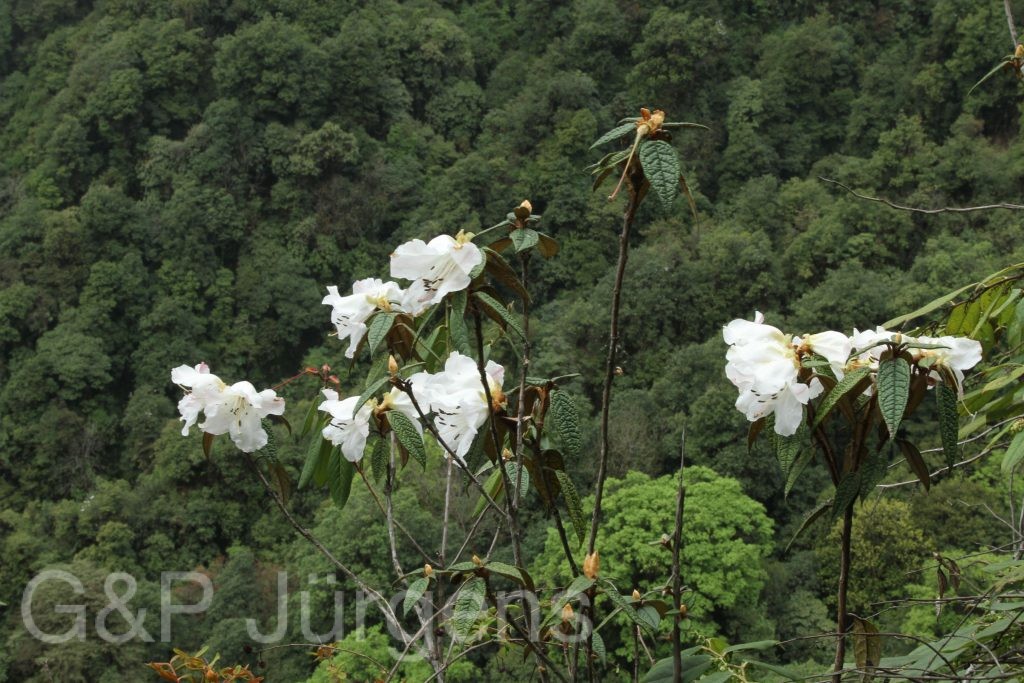
Rhododendron edgeworthii is distributed through the eastern Himalaya and adjacent montane south-west China, with native records spanning Bhutan, north-east India, Myanmar and Yunnan and Xizang (China); the remaining records among 665 georeferenced occurrences (United States, Canada, New Zealand, Britain, Belgium, Korea) reflect its long cultivation as an ornamental. It is characteristically epiphytic or saxicolous, growing on mossy tree trunks, boulders and humus-rich banks in cool, humid temperate forest with oak, Tsuga and other rhododendrons. The species was collected in Bhutan at Tumching-La and Chendebji at around 2600 m, consistent with its typical altitudinal range of roughly 2000-3700 m in the upper temperate zone.
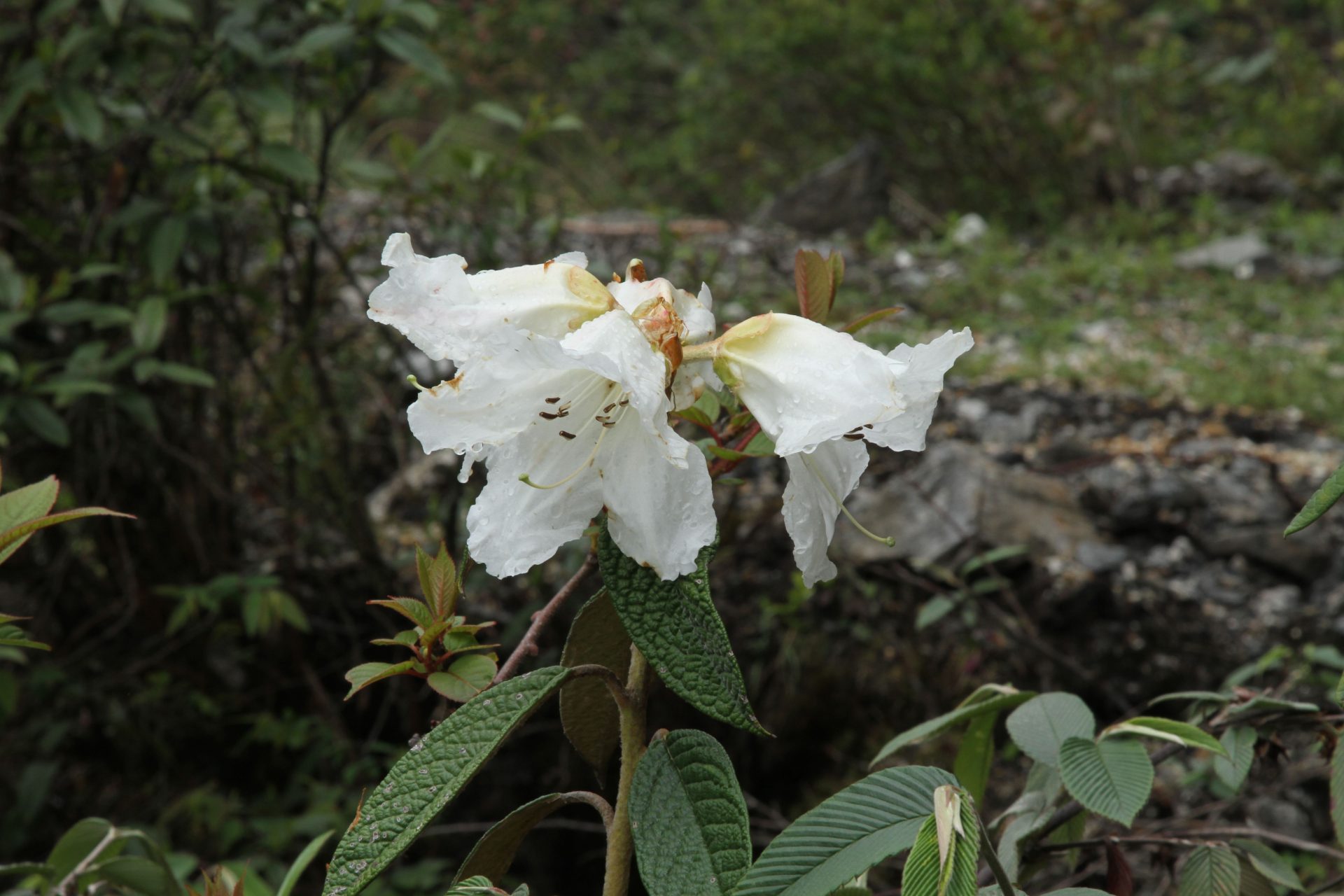
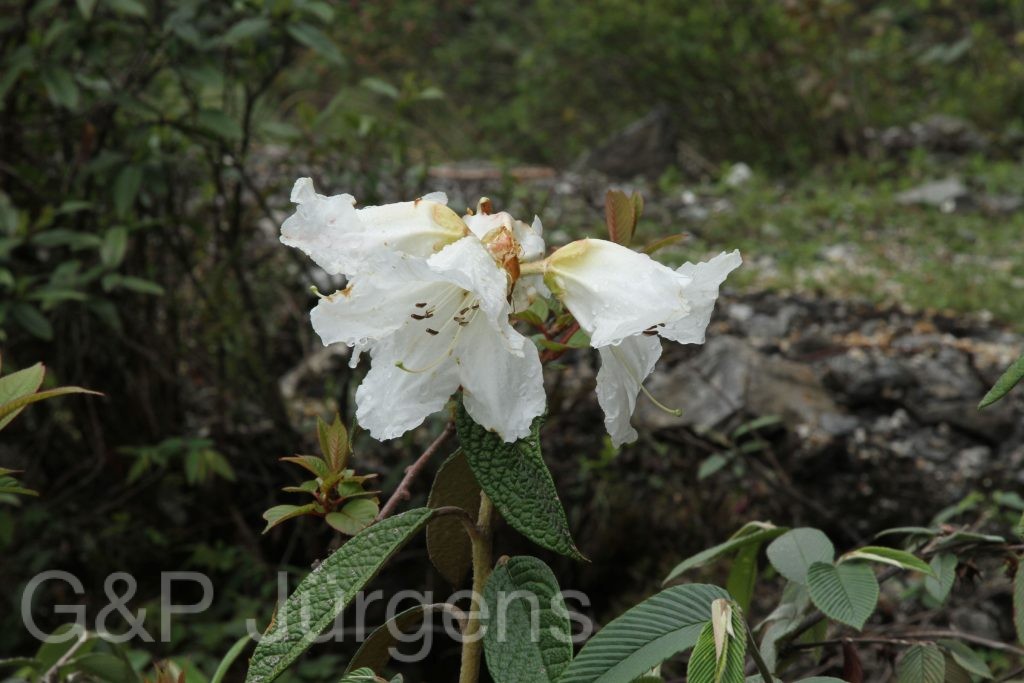
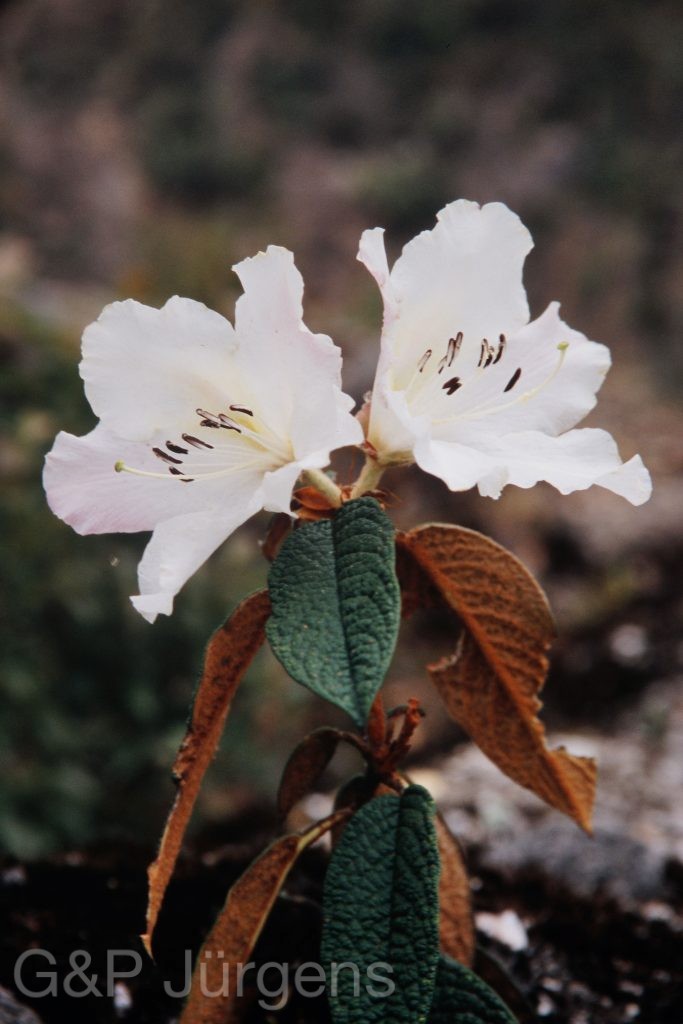
It is a straggling, often epiphytic shrub to about 2-3 m, the young shoots and undersides of the leaves densely clothed in tawny, woolly-tomentose to setose indumentum. The leaves are elliptic to ovate, leathery, bullate-rugose above and conspicuously brown-felted beneath. The flowers, borne in lax trusses of two or three, are large, broadly funnelform-campanular, white usually flushed rose, and strongly fragrant, with the outer surface scaly and the lobes spreading; stamens are typically ten and the ovary densely scaly, ripening into a scaly capsule.
Within the genus the species belongs to subgenus Rhododendron (lepidote rhododendrons), section Rhododendron, subsection Edgeworthia, distinguished by the combination of bullate foliage, dense woolly indumentum and large scented blooms. It hybridises readily in cultivation and has contributed to fragrant hybrid groups. Though locally frequent across a wide range and assessed as of Least Concern, its dependence on undisturbed humid forest makes it sensitive to deforestation and collection pressure.
Author: Hook. f. · Sources: POWO (Kew), GBIF, Flora of Bhutan, Flora of China, The Rhododendron Handbook (Royal Horticultural Society), Cox & Cox The Encyclopedia of Rhododendron Species