
D. Don
Description
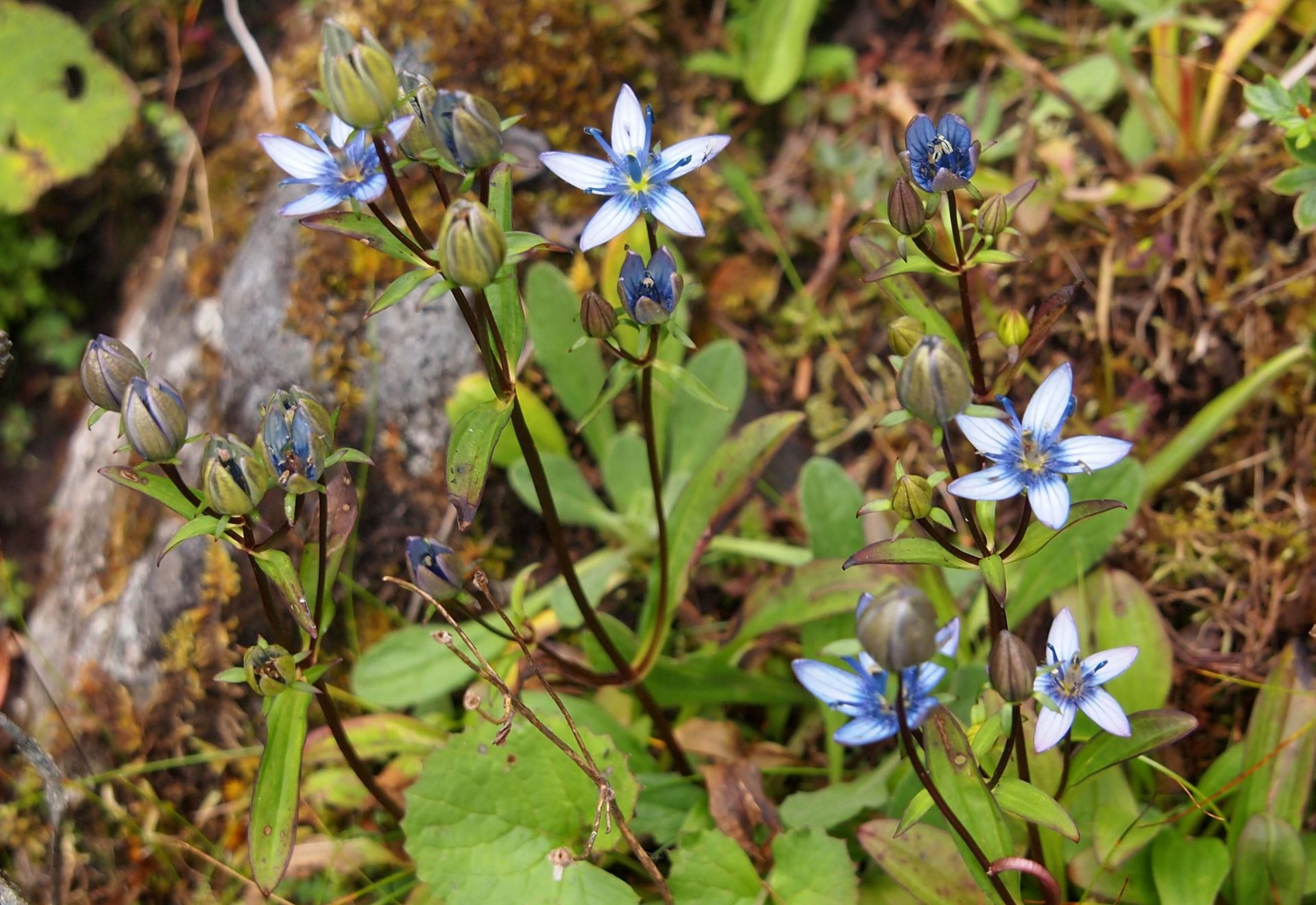
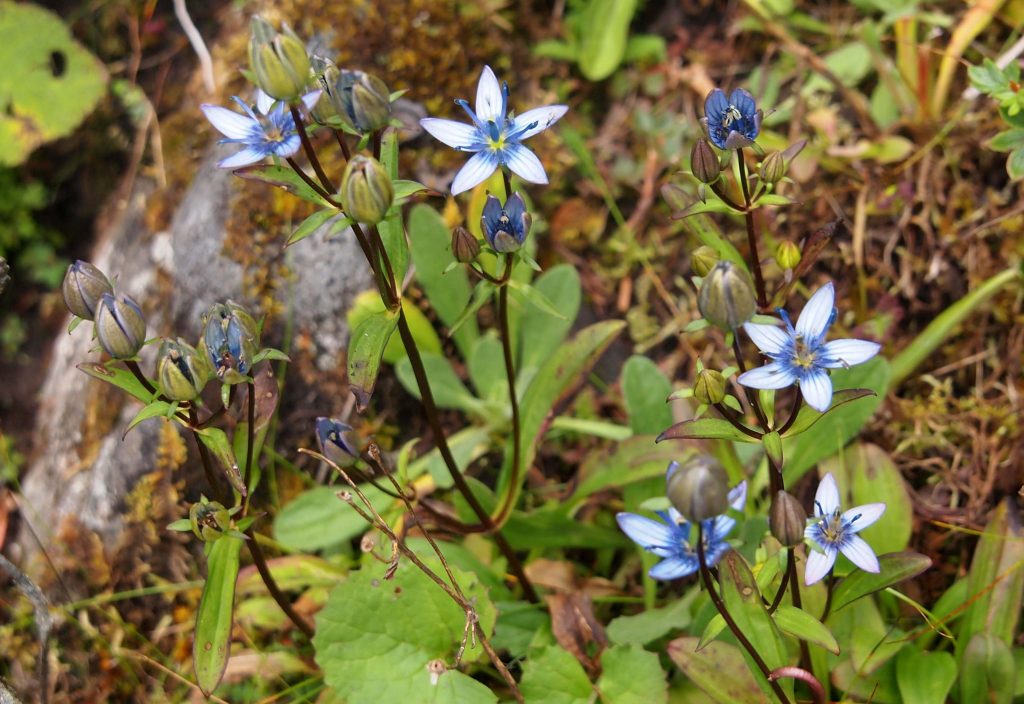
Swertia cuneata is a Himalayan gentian relative distributed from Pakistan through India, Nepal, China and Bhutan, with around 157 GBIF records. It is a plant of the alpine and upper subalpine zone, growing in open meadows, turfy slopes, rocky pastures and streamsides, broadly between about 3500 and 4500 m. The gathering from the Shale-La in Bhutan at 4300 m in September documents its late-summer flowering, when these high passes carry a colourful display of gentians, swertias and other alpine herbs at the close of the monsoon.
It is an erect annual or short-lived perennial herb with a simple or branched, often four-angled stem. The leaves are opposite, sessile, oblong to lanceolate and cuneate (wedge-shaped) at the base, the feature recalled by the epithet "cuneata". The flowers are borne in terminal and axillary cymes forming a loose panicle; each is rotate and four- or five-merous, with spreading lobes that are pale blue to purplish or yellowish and conspicuously veined or spotted, and bearing the nectary glands (nectaries fringed with fimbriae) on the corolla lobes that are diagnostic of Swertia. The fruit is a septicidal capsule containing numerous small seeds.
Swertia belongs to tribe Gentianeae and is well diversified in the Sino-Himalayan alpine flora, distinguished from Gentiana by its deeply divided, wheel-shaped corollas with open nectar glands rather than a tubular flower. Several species are important in Himalayan traditional medicine (the "chiretta" group), and although S. cuneata itself is widespread and not of conservation concern, harvesting pressure affects related taxa. Pollination is by generalist insects attracted to the exposed nectaries.
Author: D. Don · Sources: POWO (Kew), GBIF, Flora of China, Flora of Bhutan, Swertia revision (Clarke / Ho & Liu)