
Ling & Y.R.Ling
Description
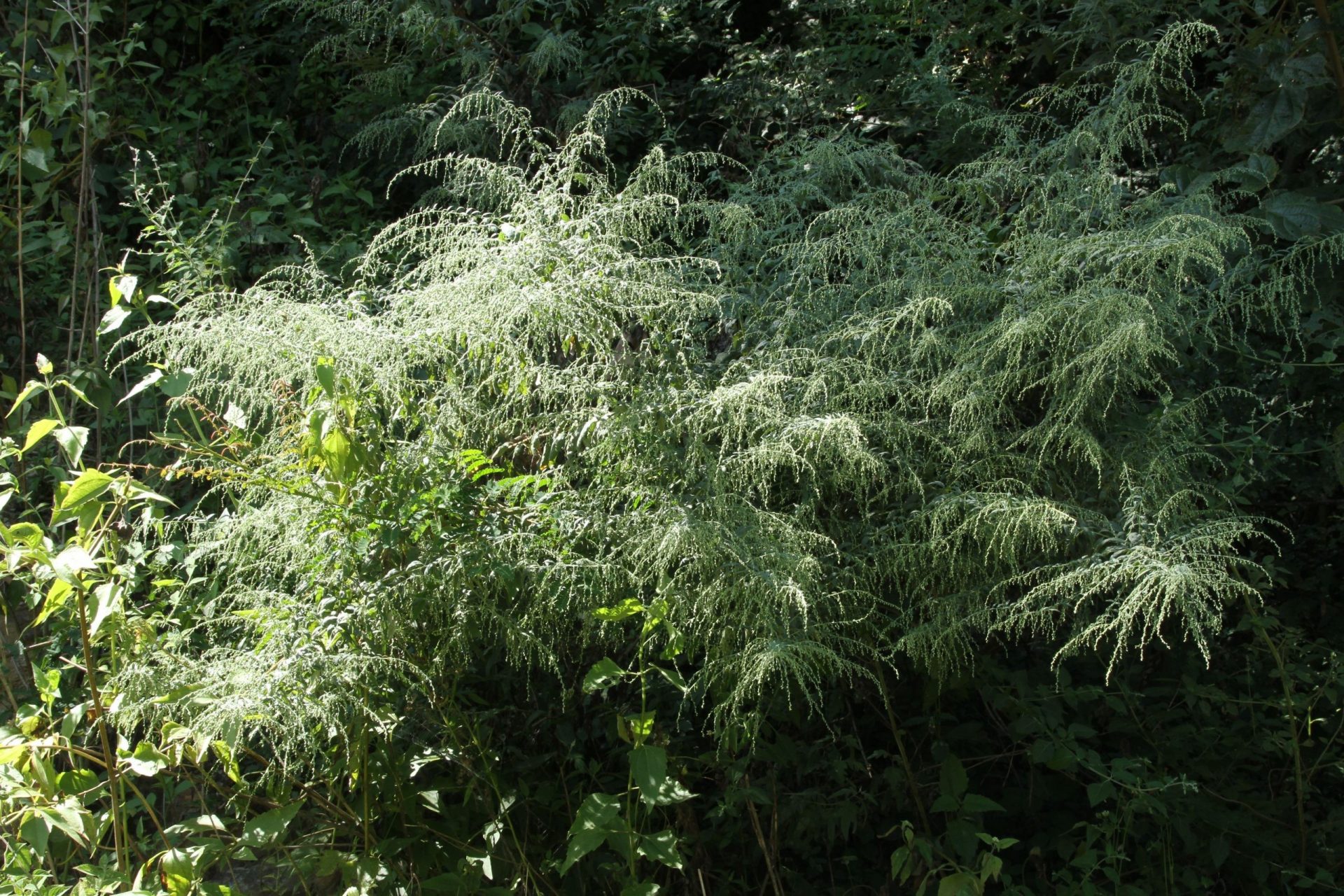
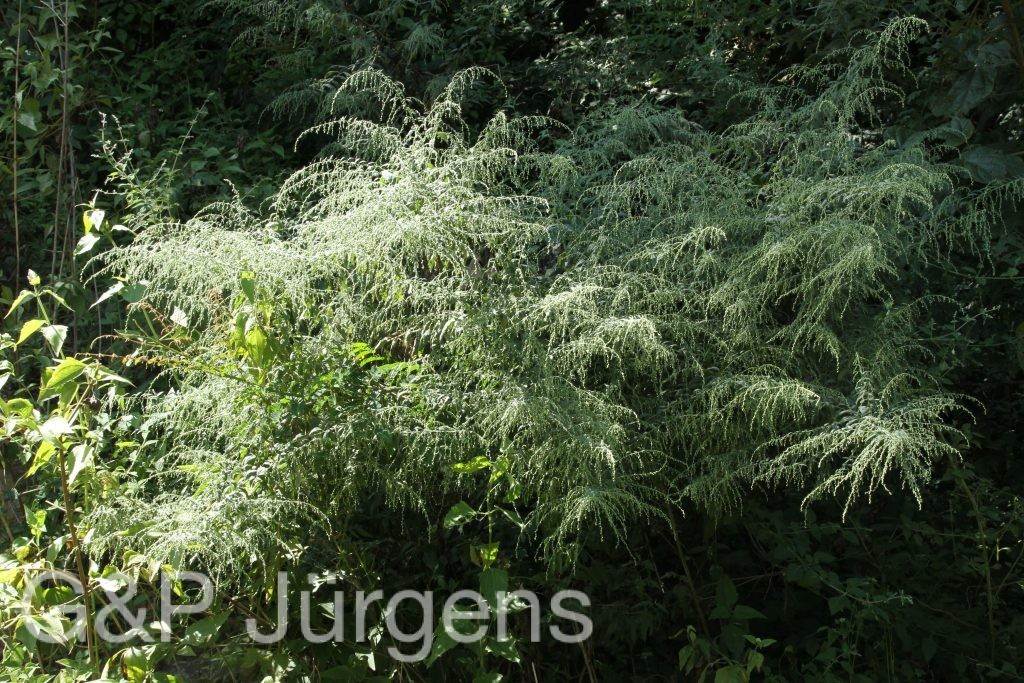
Artemisia austroyunnanensis Ling & Y.R.Ling is a Sino-Himalayan and South-East Asian wormwood distributed from south-western China (notably southern Yunnan, whence the epithet) through Bhutan, India, Myanmar, Laos, Vietnam, Thailand and Japan, with about 70 georeferenced occurrences in GBIF. It grows on dry slopes, forest margins, roadsides, riverbanks and disturbed ground in warm-temperate to lower montane country. The plant recorded at Trongsa at 2000 m in October is consistent with its occurrence in the mid-elevation valleys of the Bhutan Himalaya, flowering toward the close of the growing season.
It is an aromatic perennial herb or subshrub with erect, ribbed and branching stems clothed, like the foliage, in a fine grey or whitish tomentum. The leaves are alternate, once or twice pinnatifid into narrow, often lobed segments, with the lower surface more densely tomentose than the upper. The minute, nodding capitula are numerous and crowded in elongate, paniculate inflorescences; each ovoid to subglobose head has imbricate, woolly-margined phyllaries and is disciform, with outer female florets surrounding inner bisexual disc florets, all wind-pollinated and lacking rays. The fruit is a small, smooth, ellipsoid cypsela without a pappus.
Artemisia is among the largest genera of Asteraceae, and A. austroyunnanensis sits within the subgenus Artemisia of anemophilous, capitulum-clustered species. Its delimitation rests on indumentum, leaf dissection and capitulum structure within a difficult species complex. A regionally distributed plant of disturbed and seasonally dry habitats, it is of no conservation concern.
Author: Ling & Y.R.Ling · Sources: POWO (Kew), GBIF, Flora of China, Flora of Bhutan, Ling taxonomic studies of Artemisia