
Lindl.
Description
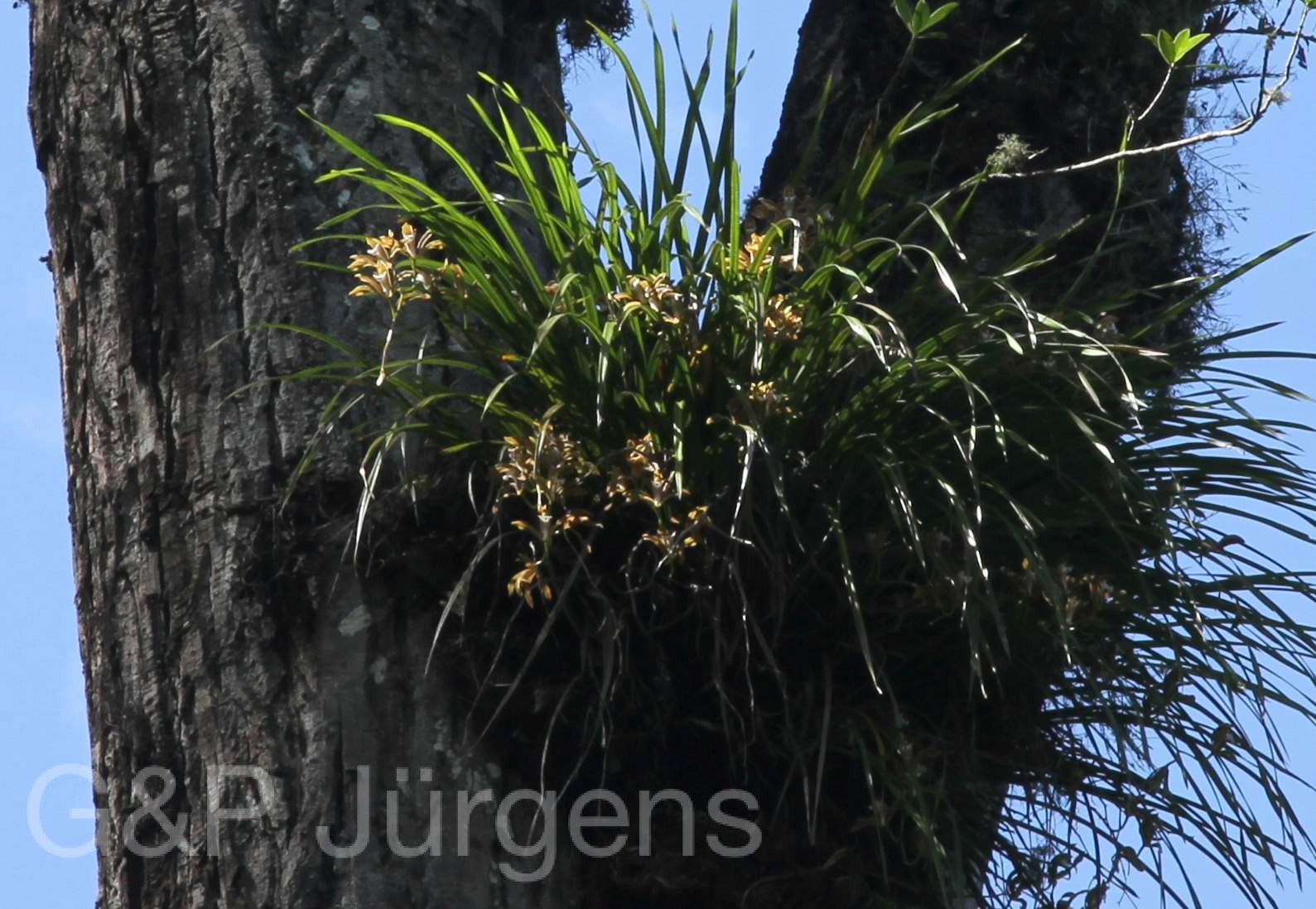
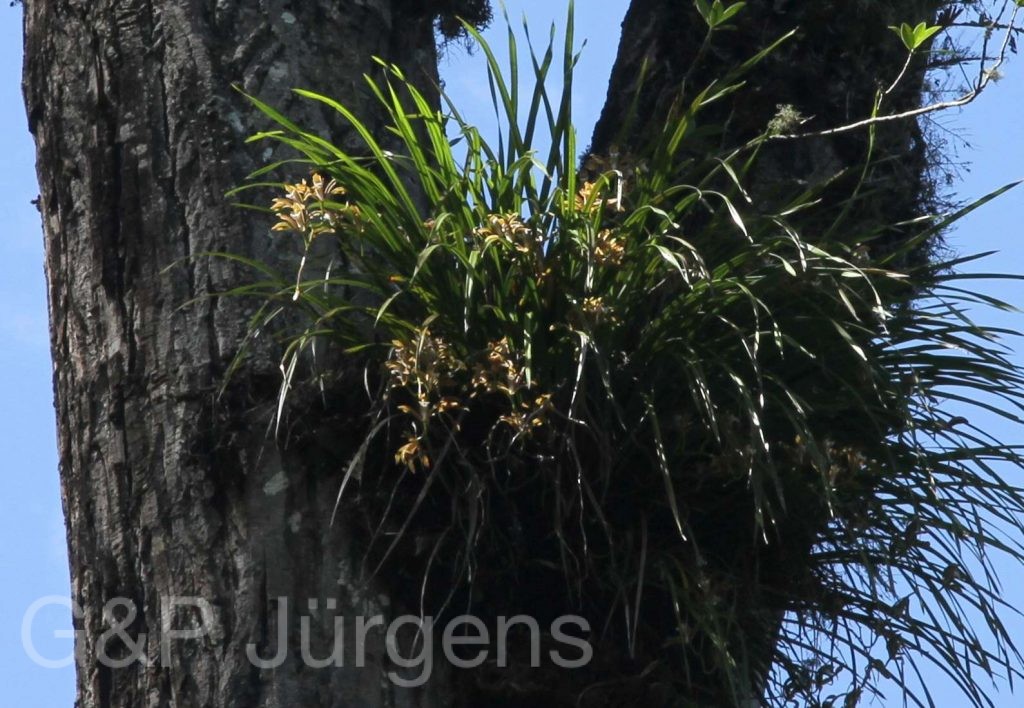
Cymbidium erythraeum is an epiphytic orchid distributed across the Sino-Himalayan region, native from China and the Himalaya (India, Nepal, Bhutan) into Myanmar and Vietnam, with cultivated material accounting for the Canadian GBIF records; about 116 occurrences are aggregated overall. It is an epiphyte, sometimes lithophytic, of humid evergreen and broad-leaved montane forest, growing on mossy trunks and shaded rock faces generally between roughly 1,400 and 2,800 m. The plant illustrated was photographed at Trashiyangtse (Trachiyangtse) in eastern Bhutan at about 1,780 m in October, the species typically flowering in autumn into winter.
It is a tufted epiphyte with ovoid to fusiform pseudobulbs sheathed by the bases of several distichous, narrowly linear, arching leaves. The inflorescence is a stout, suberect to arching lateral raceme carrying several large, fragrant flowers. The sepals and petals are green to olive, conspicuously veined and overlaid with reddish-brown lines, the petals spreading; the trilobed labellum is whitish to pale yellow, streaked and spotted with red, its disc furnished with two pubescent longitudinal keels and the side lobes erect about the slender column. The fruit is an ellipsoid, dehiscent capsule containing numerous minute seeds.
The species is referred to Cymbidium section Iridorchis, near C. iridioides, from which it differs in its narrower leaves and more strongly red-lined segments. Pollination is by bees, and germination requires mycorrhizal fungi. Prized in horticulture and subject to wild collection, it is, like the whole genus, protected under CITES Appendix II; over-collection and mid-elevation forest loss are the chief pressures.
Author: Lindl. · Sources: POWO (Kew), GBIF, Flora of China, Flora of Bhutan, The Orchids of Bhutan (Pearce & Cribb), Du Puy & Cribb's monograph The Genus Cymbidium