
(G.Don) Griseb.
Description
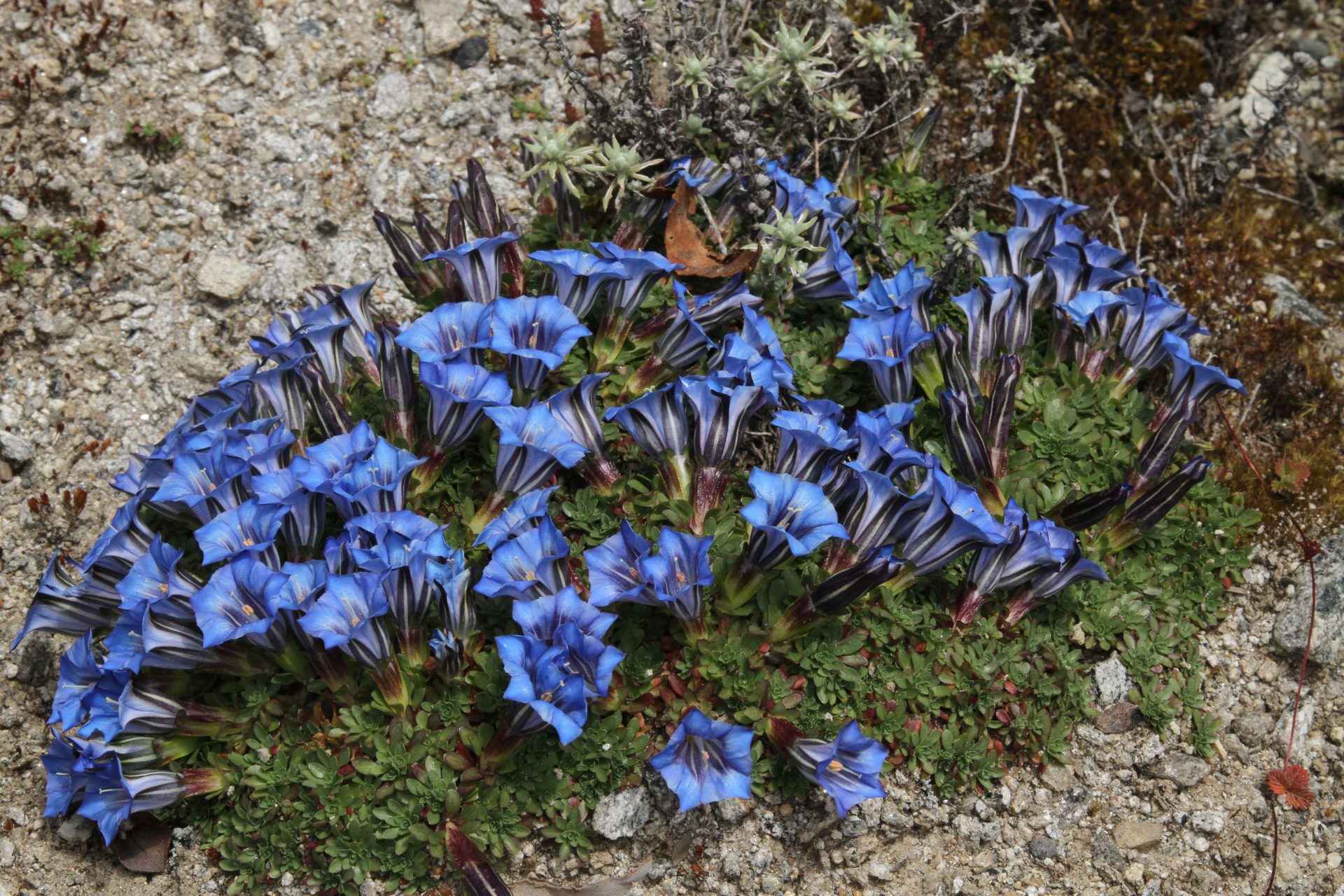
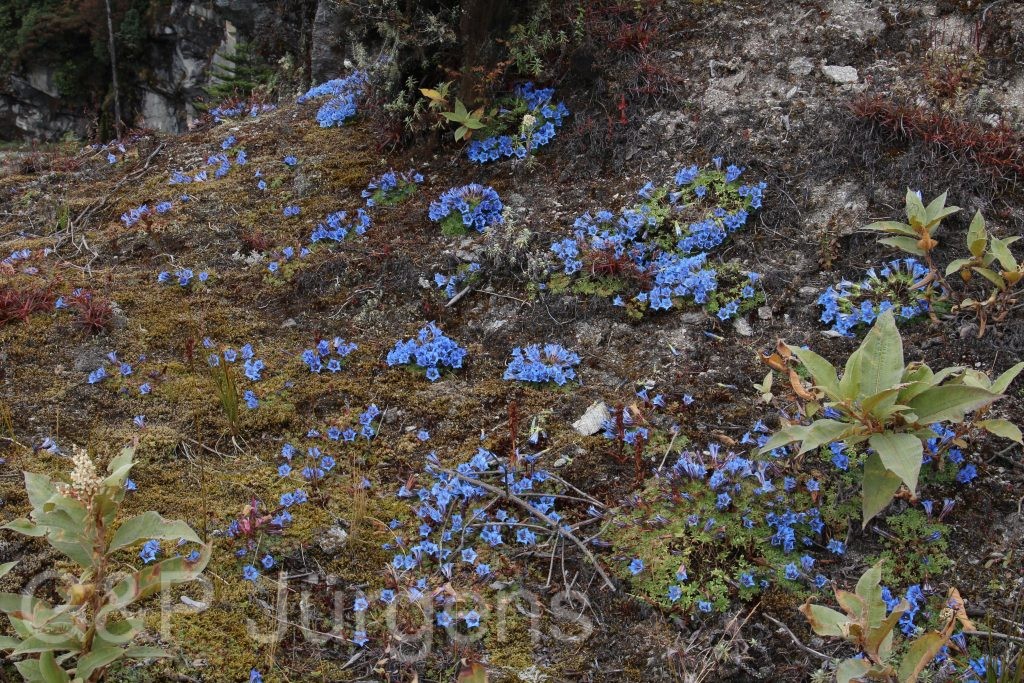
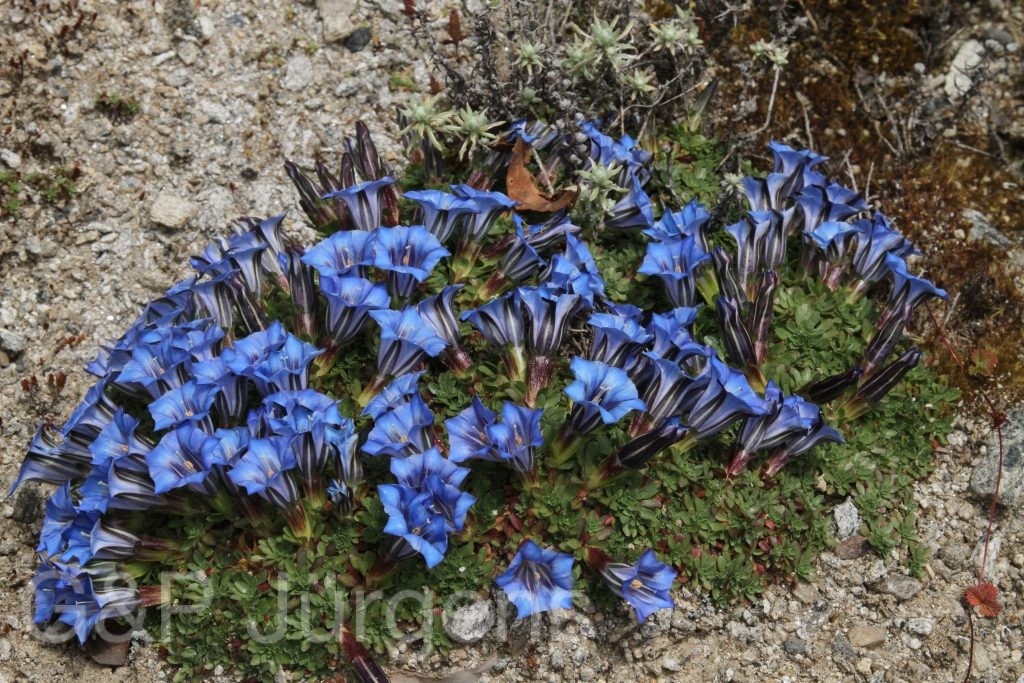
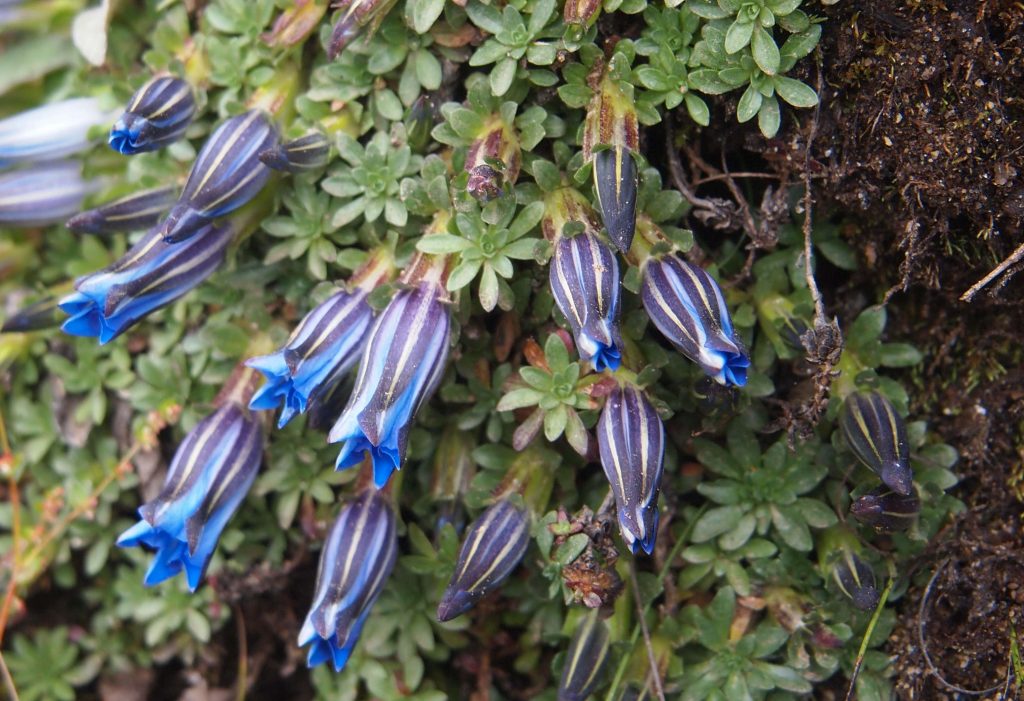
Gentiana tubiflora is a dwarf alpine gentian of the Himalaya and the Tibetan plateau, recorded by GBIF from Nepal, India, Bhutan and China (a Malaysian datum is likely erroneous) across some 124 occurrences. It is a plant of high open ground: alpine turf, short grazed pastures, damp meadows, gravelly flushes and moist slopes near the upper limit of vegetation, typically between about 3500 and 4500 m. The specimen photographed at Tumching-La in Bhutan at 4000 m in October, flowering very late in the season, illustrates its tolerance of cold and its occupation of exposed, well-watered high-alpine grassland.
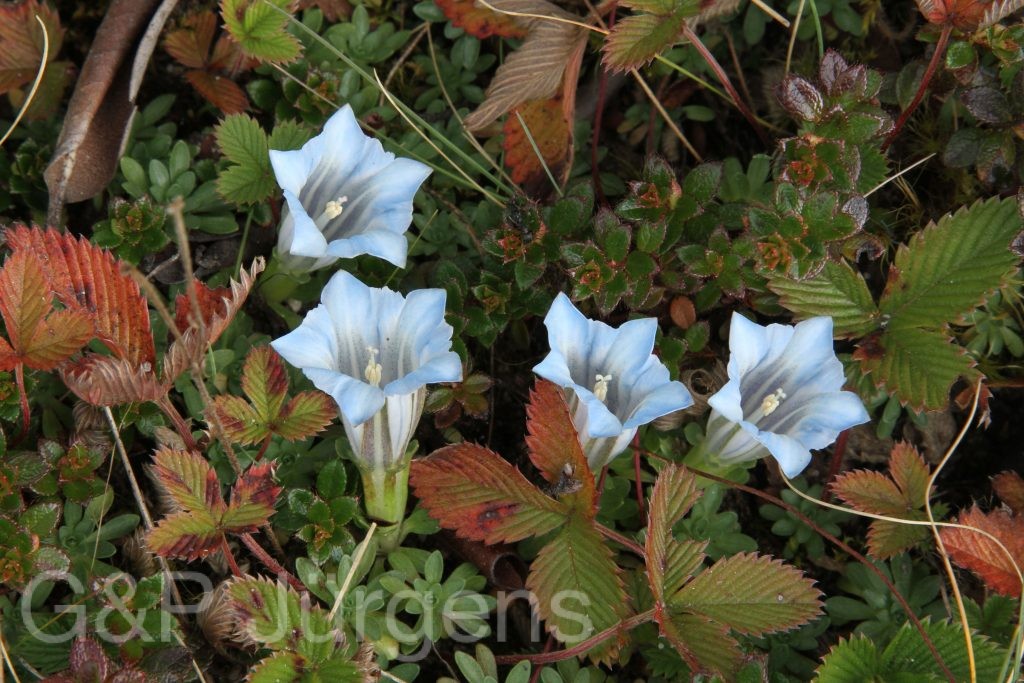
It is a small, tufted perennial herb forming low cushions or mats from a slender rootstock, with short, often prostrate to ascending leafy shoots. The leaves are small, opposite, linear to narrowly oblong, crowded and somewhat rigid, with cartilaginous margins. The flowers are solitary and terminal, the corolla narrowly tubular as the epithet indicates, with five short erect lobes alternating with small plicate folds, and coloured deep to pale blue. The calyx is tubular with narrow lobes, the stamens are inserted within the corolla tube, and the fruit is a stalked capsule that releases numerous minute seeds.
Gentiana is a large genus whose section of small-flowered, tube-corolla'd alpine species is especially diverse across the Sino-Himalaya, and G. tubiflora is a characteristic member of that high-elevation assemblage. The narrow tubular corolla and folds between the lobes channel access to specialised pollinators and protect the nectar, while the compact mat habit buffers the plant against wind and cold. The species is widespread and not regarded as threatened, forming a familiar element of late-flowering Himalayan alpine meadows.
Author: (G.Don) Griseb. · Sources: POWO (Kew), GBIF, Flora of China (Gentianaceae), Flora of Bhutan, Annotated Checklist of the Flowering Plants of Nepal, Ho & Liu monograph of Gentiana