
Buch.-Ham. ex D.Don
Description
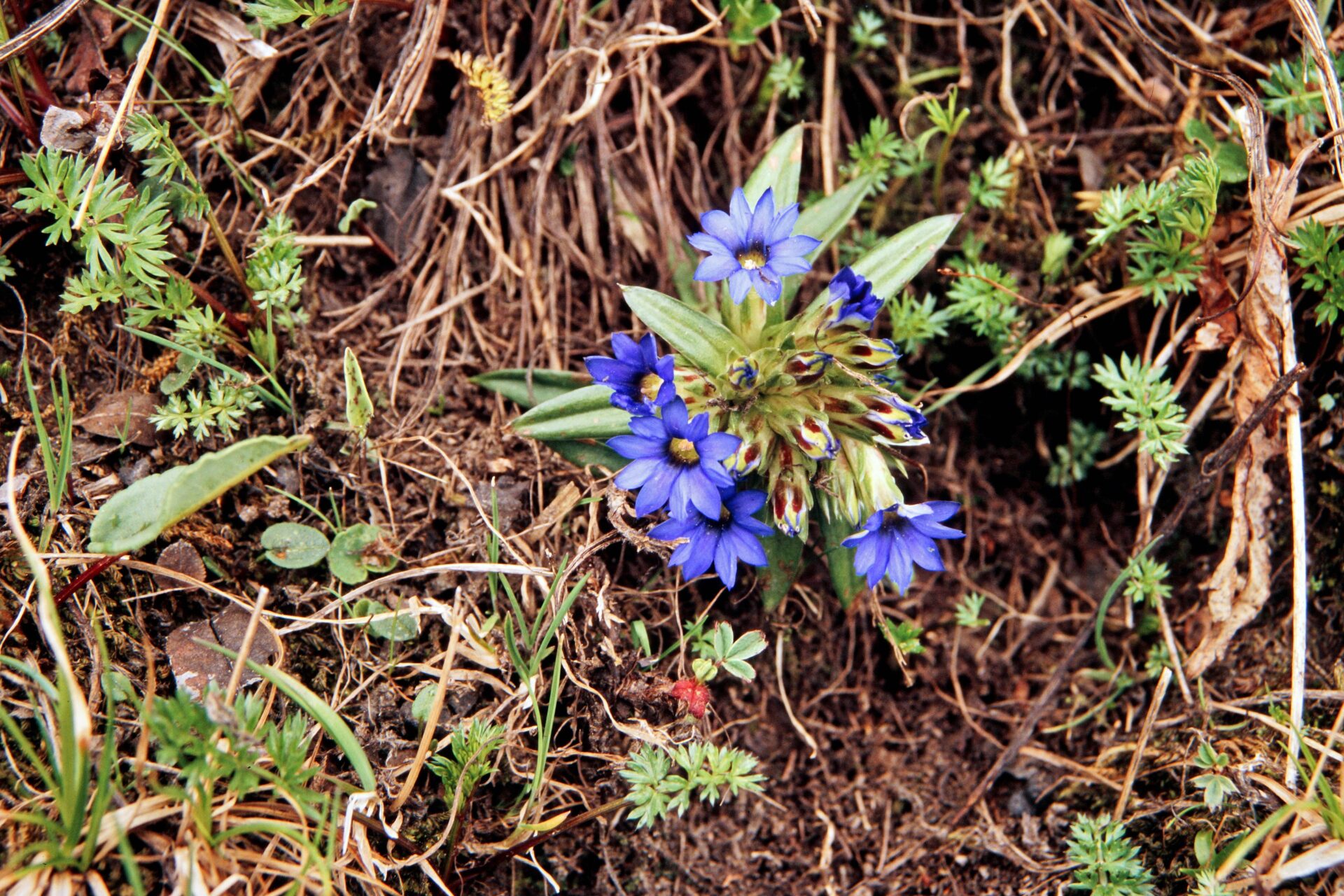
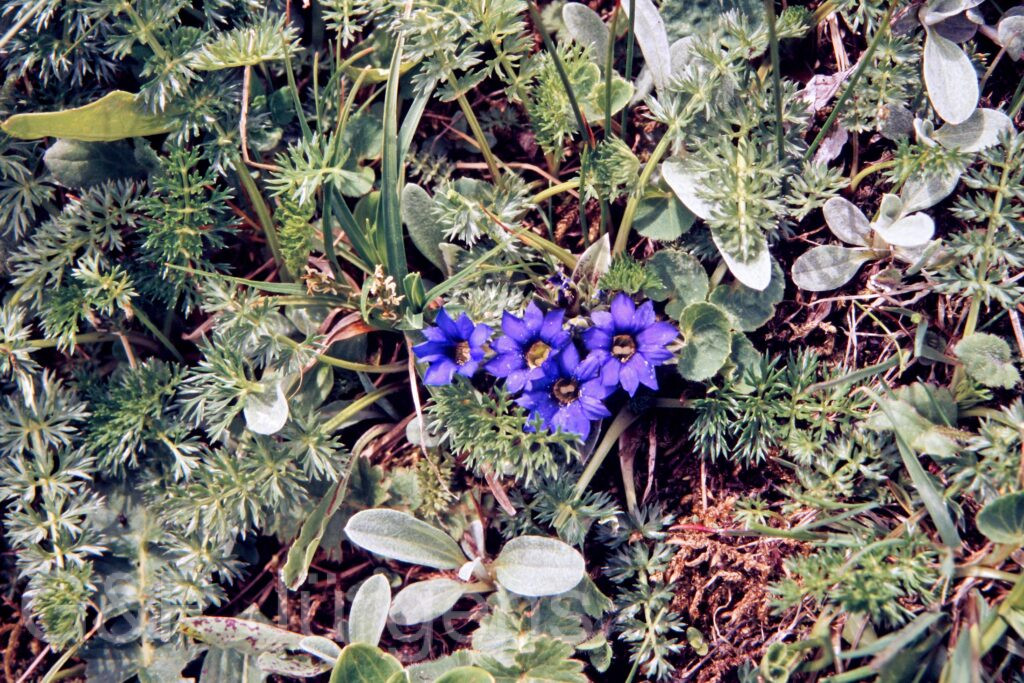
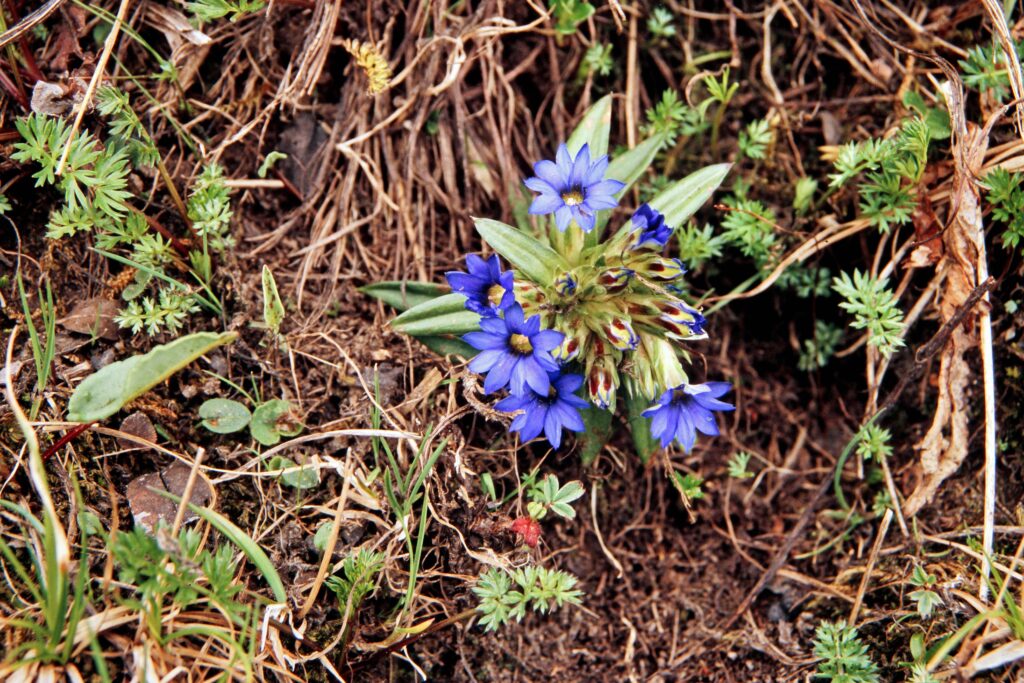
Gentiana capitata is a Himalayan annual gentian distributed across Nepal, India, Bhutan, China and Pakistan and into Myanmar; GBIF records about 206 occurrences spanning the central and eastern Himalaya. It grows on open alpine and subalpine slopes, grassy meadows, terraced banks and pastures, generally between about 2500 and 4000 m. The photographed plants come from Garhwal, India, at Meggu Kichatti (3200 m) and Khiar Kutti (3900 m), both in June, a setting typical of this small monsoon-season gentian, part of the seasonal herb flora of the western Himalayan high meadows in early summer.
The species is a slender annual with erect, often few-branched, quadrangular stems arising from a fine root system. The leaves are opposite, sessile, ovate to lanceolate, the basal pairs sometimes forming a loose rosette. The flowers are clustered into a dense, head-like or capitate terminal cyme that gives the species its name, sometimes with additional flowers in the upper axils. Each flower has a tubular to funnel-shaped, pale blue to bluish-mauve corolla with five spreading lobes and small plicate folds between them; the calyx is tubular with five teeth. The fruit is a stalked, two-valved capsule releasing numerous minute seeds.
Gentiana capitata Buch.-Ham. ex D.Don belongs to the annual, small-flowered Himalayan section of the genus characterised by capitate inflorescences and plicate corollas. Widespread and locally common across the Himalaya, it tolerates grazed and disturbed ground and is of no conservation concern. As an annual it depends on regular seed production and the brief monsoon season, and it is a familiar component of the high-meadow flora pollinated by insects drawn to its blue flower clusters.
Author: Buch.-Ham. ex D.Don · Sources: POWO (Kew), GBIF, Flora of China, Flora of Nepal, Halda: The Genus Gentiana