
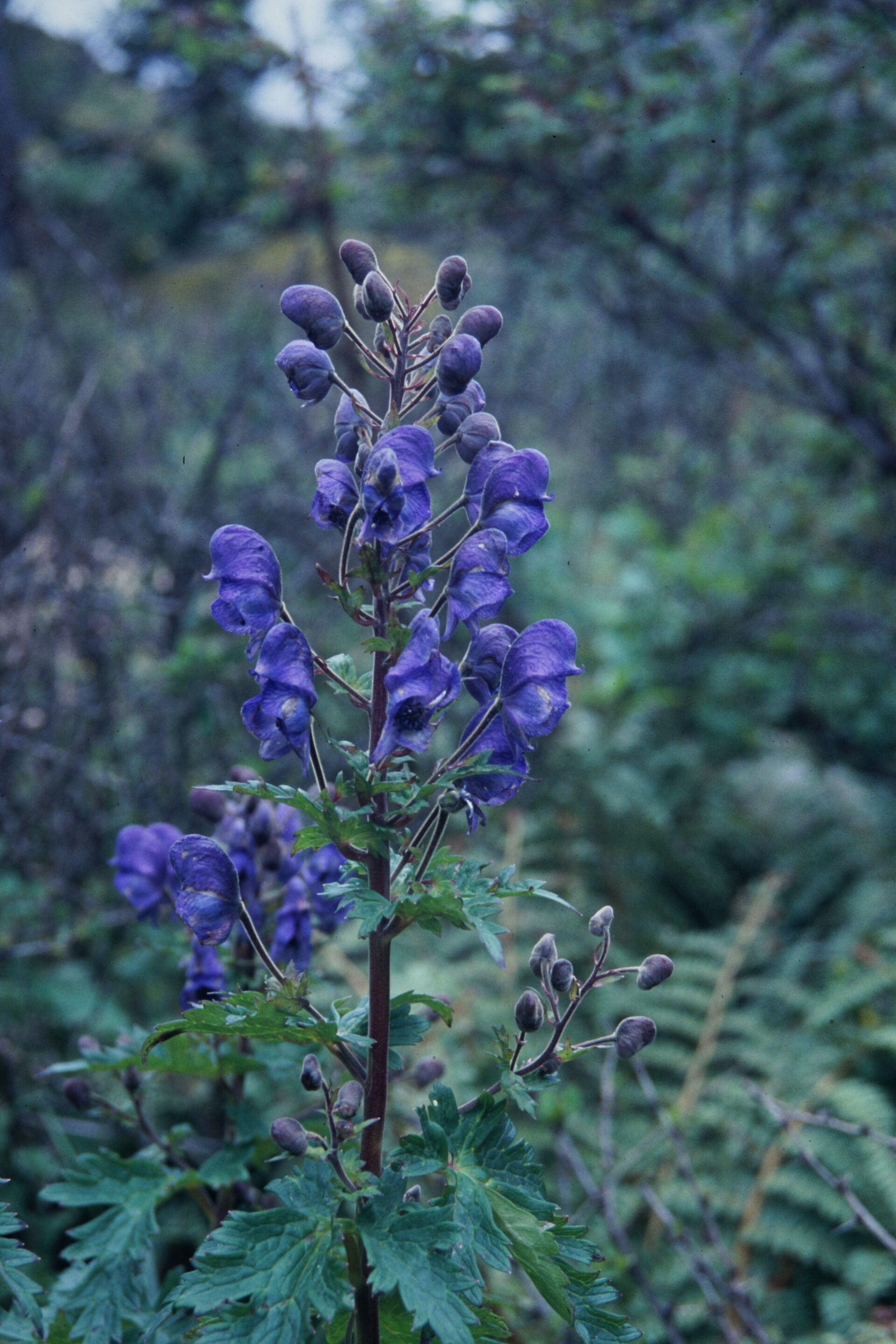
Griff.
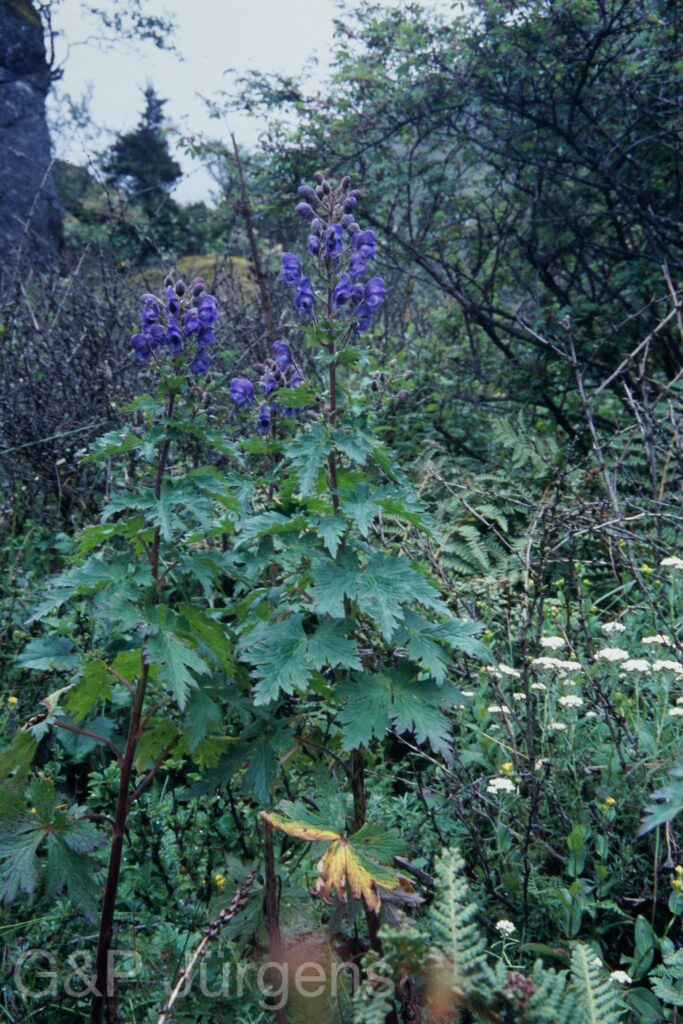
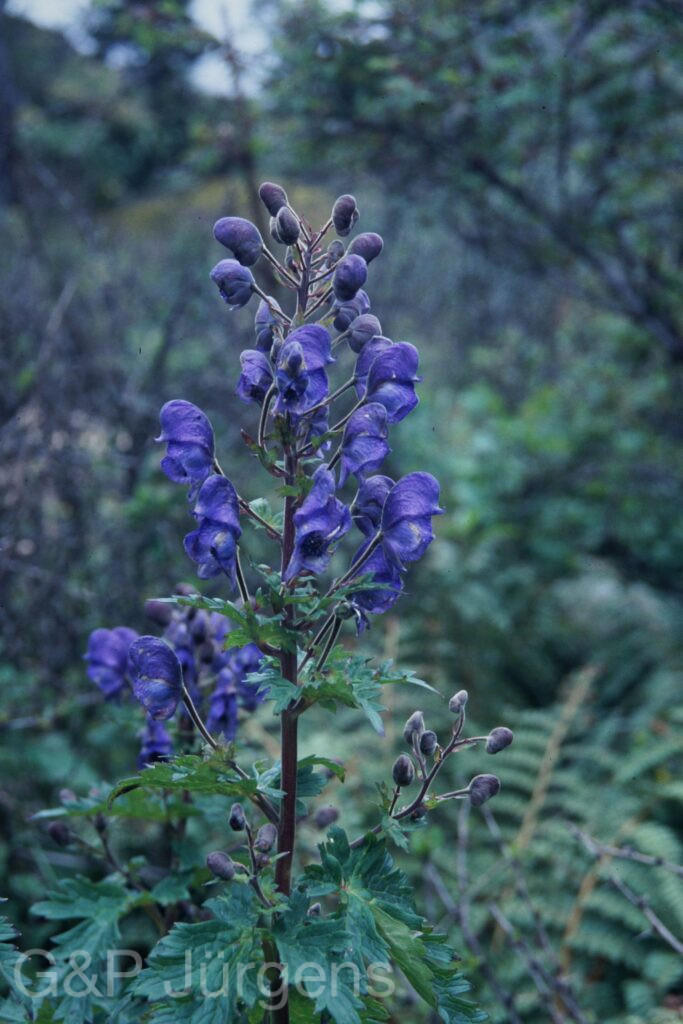
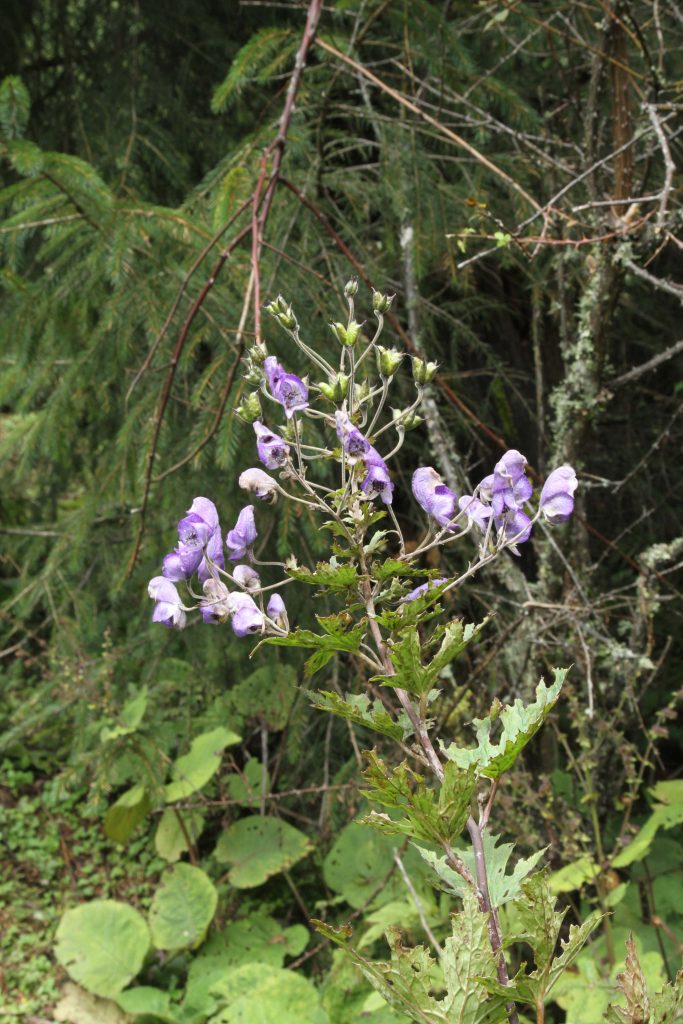
Description
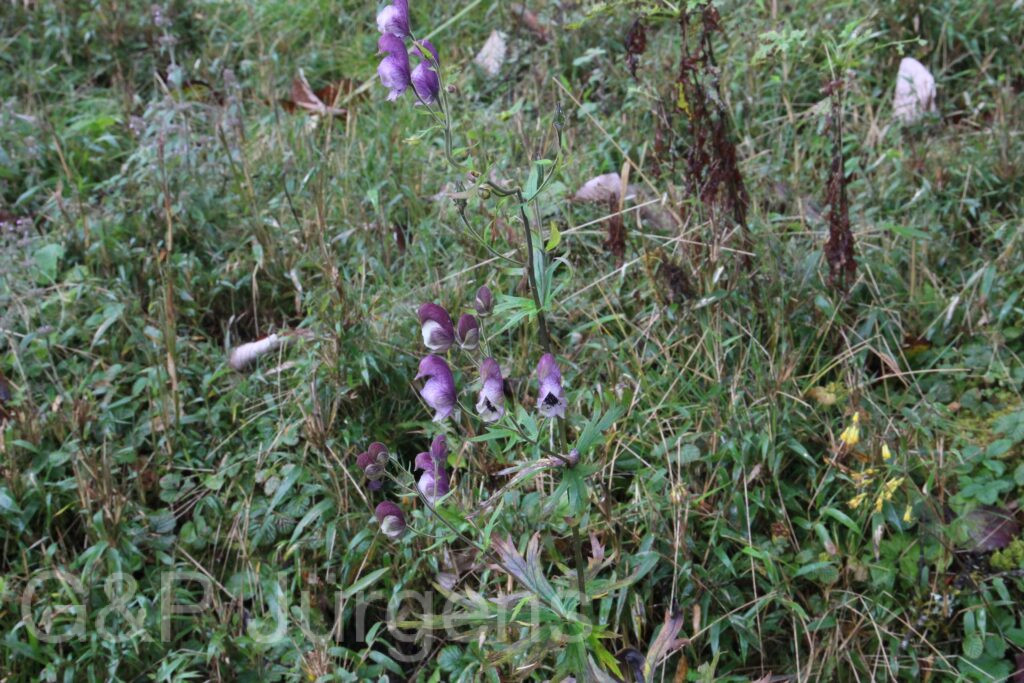
Aconitum lethale is an eastern Himalayan monkshood restricted to Nepal, India and Bhutan, with about 176 GBIF records concentrated in Sikkim and Bhutan. It is a plant of the upper subalpine and alpine zone, growing among tall-herb meadows, rhododendron and juniper scrub, and along moist, open slopes. The cited collections trace its habitat closely: the Chopta Valley in Sikkim at around 3900 m in August, and several Bhutanese sites including Shele-La at about 3600 m, the Haar Valley at 3500 m and Dochu-La near 3000 m, flowering from late summer into October. It favours cool, humid, well-drained mountain soils where the monsoon sustains lush herbaceous growth.
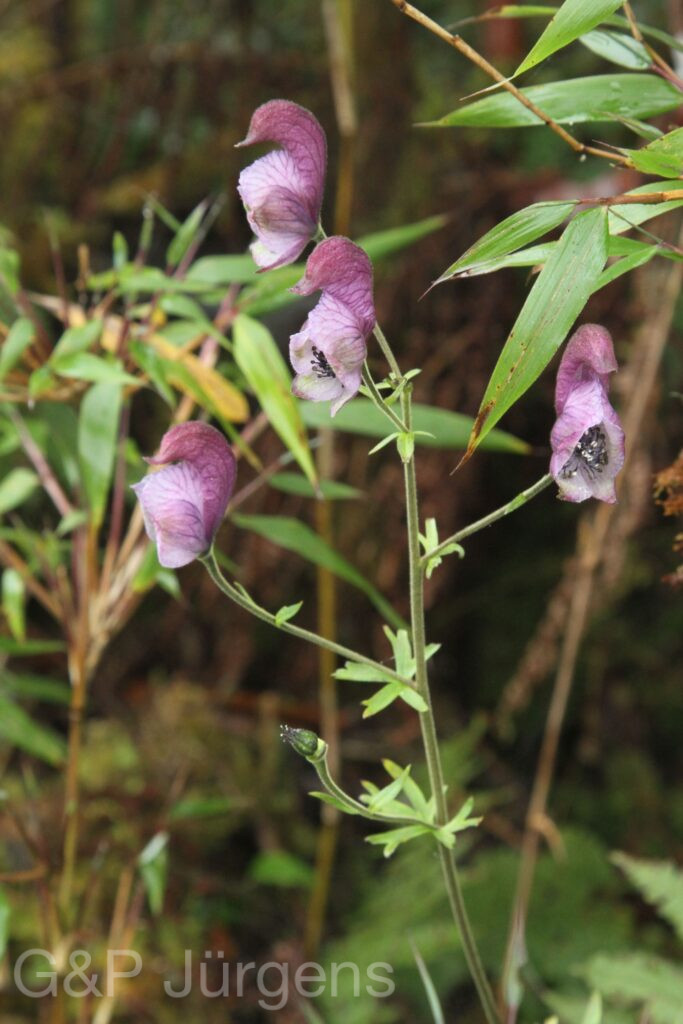
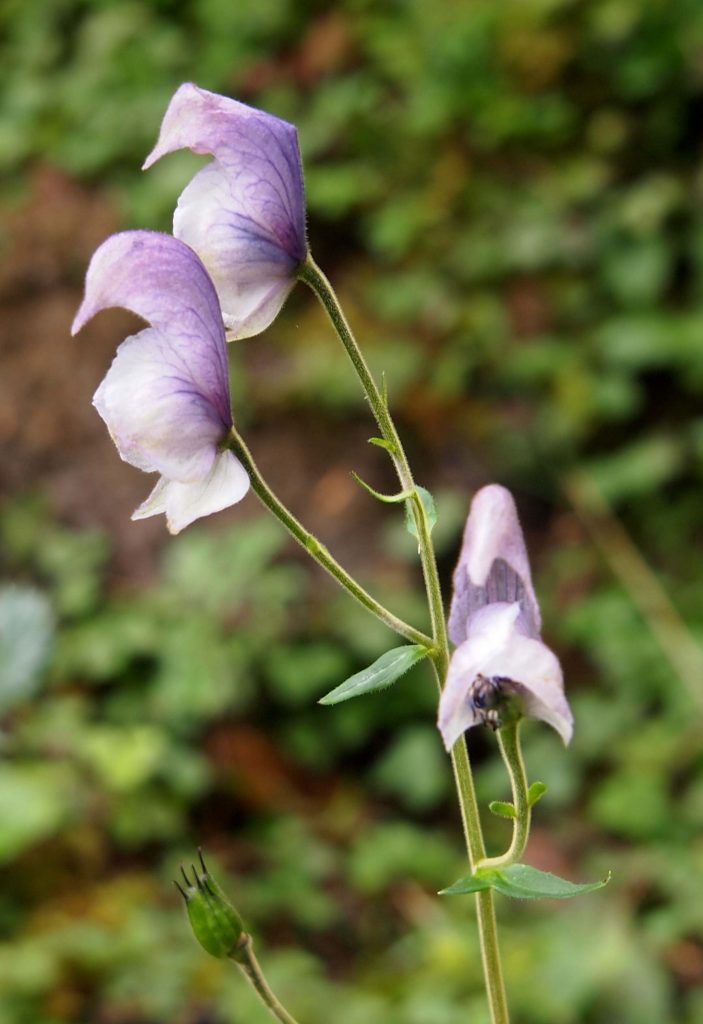
The plant is an erect perennial herb arising from tuberous roots, with a leafy stem bearing palmately divided, deeply lobed leaves whose segments are further incised. The inflorescence is a terminal raceme or panicle of the characteristic zygomorphic flowers, in which the upper sepal is enlarged into a tall, helmet-shaped or hooded galea concealing two long-clawed nectaries; the flowers are typically deep blue to violet. Numerous stamens surround several free carpels, which ripen into a cluster of dehiscent follicles releasing winged or angular seeds.
Described by Griffith, A. lethale is, as both its epithet and generic affinity warn, intensely poisonous, containing diterpenoid alkaloids of the aconitine type throughout the plant and especially in its tubers. Such alkaloids underlie the cautious medicinal use of Himalayan aconites in traditional pharmacopoeias. As a narrow-range endemic of the eastern Himalaya, it warrants attention to grazing pressure and habitat change, though it remains locally frequent within its restricted distribution.
Author: Griff. · Sources: POWO (Kew), GBIF, Flora of Bhutan, Annotated Checklist of the Flowering Plants of Nepal, Tamura's treatment of Aconitum