
L.
Description
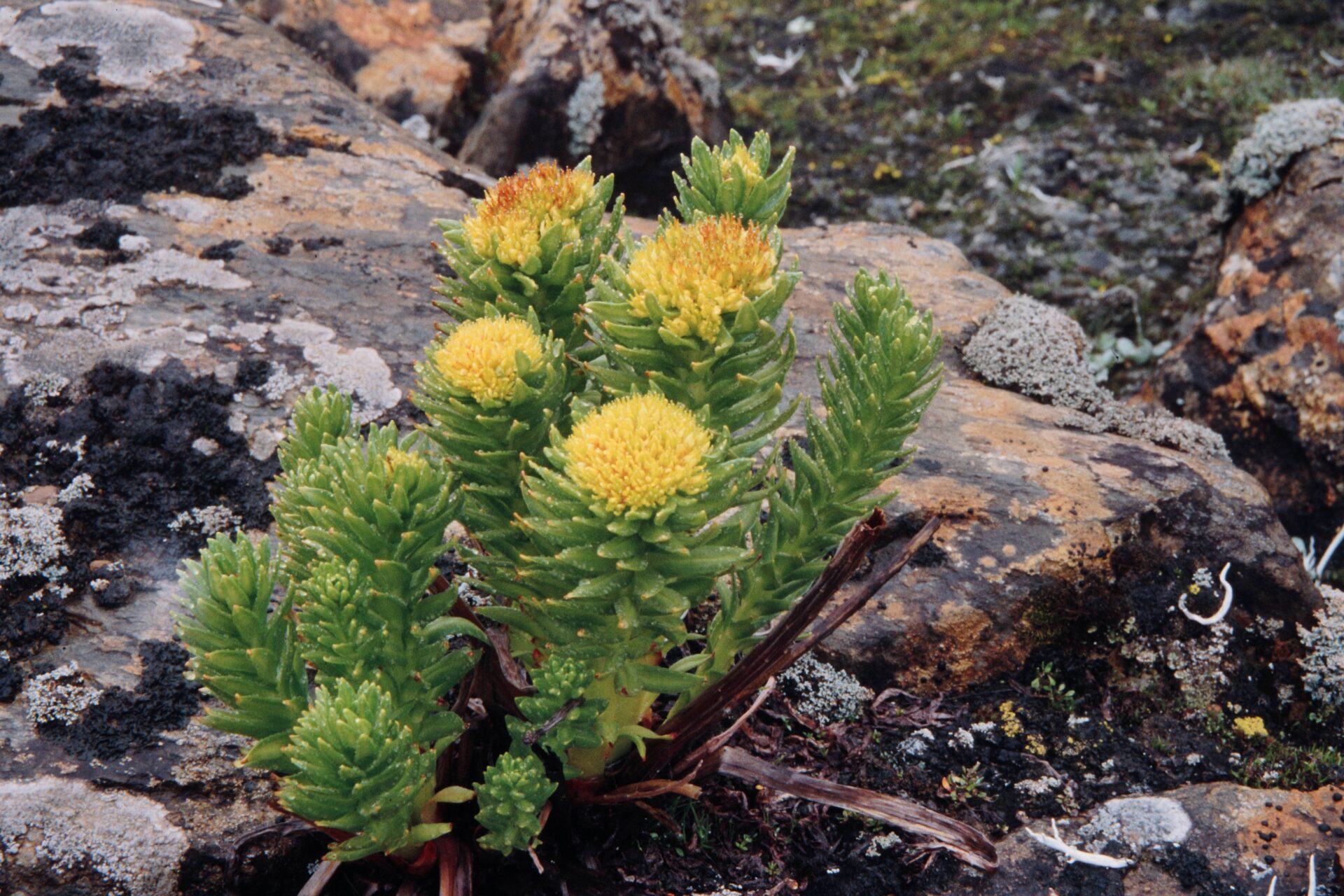
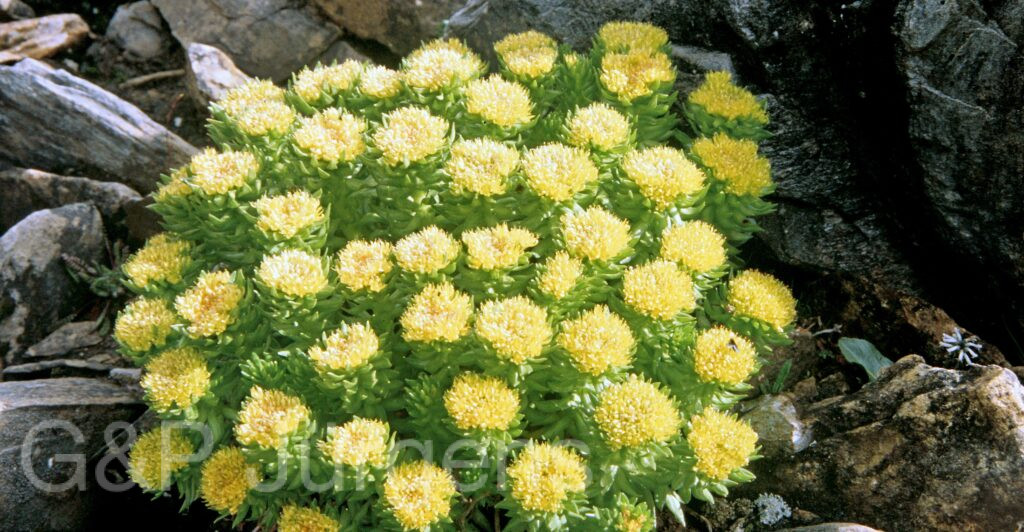
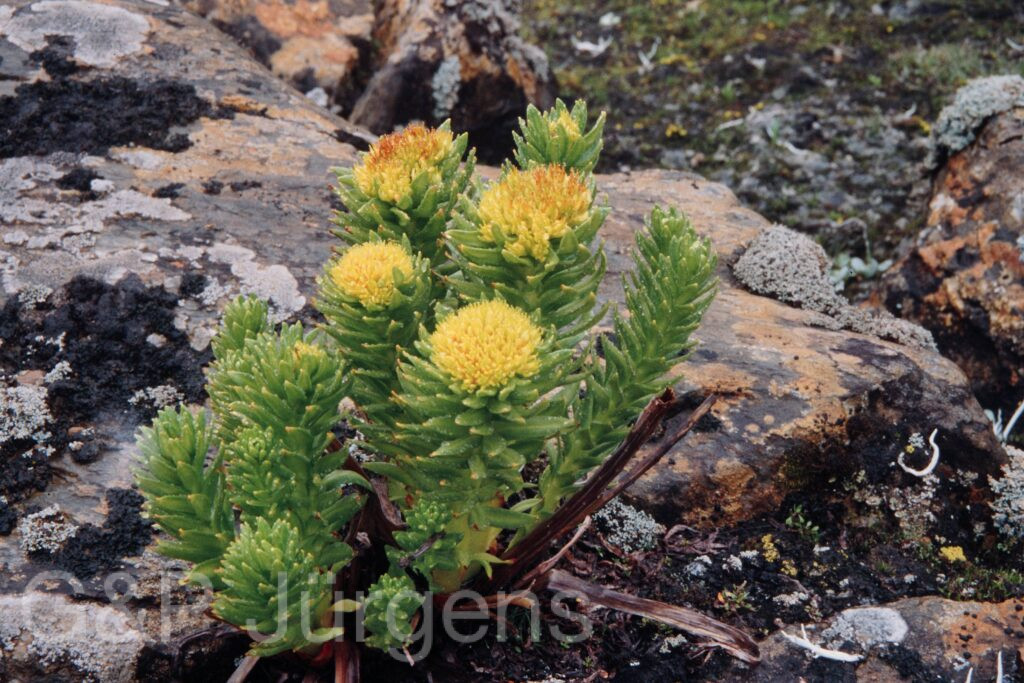
Rhodiola rosea is a circumboreal, arctic-alpine succulent with one of the broadest ranges in its genus, GBIF documenting over 54,000 occurrences across Scandinavia, the British Isles, Iceland, Greenland, Russia, the Alps, Japan, China, Mongolia and North America. It grows on cliff ledges, scree, stony tundra, rock crevices and stream banks from Arctic sea level to above 4000 m in Asia. The Nepalese material photographed at Kagmara Phedi (4000 m) and the Kagmara-La pass (4100 m), flowering in July, illustrates its occurrence at the upper margins of its Himalayan range on cool, well-drained, base-rich rock.
It is a glabrous, glaucous perennial herb arising from a thick, branched, woody rootstock that smells of roses when cut. Numerous unbranched erect stems, 5–35 cm tall, bear sessile, fleshy, oblong to ovate leaves, flat and entire or apically toothed. The species is dioecious: flowers are densely clustered in terminal corymbose cymes, the parts in fours or fives; male flowers are yellow with conspicuous stamens, female greenish-yellow to reddish, maturing into erect, often purplish-red follicles.
Linnaeus described the species, long placed in Sedum (S. rosea) before transfer to Rhodiola; its taxonomy remains intricate, with numerous infraspecific and segregate taxa. The rose-scented rhizome has a long ethnobotanical history as an adaptogen ("golden root"), driving harvesting that has caused local depletion and prompted conservation and cultivation programmes. Ecologically it is a hardy pioneer of disturbed alpine and arctic rock.
Author: L. · Sources: POWO (Kew), GBIF, Flora of China, Flora Europaea, Crassulaceae of the World (Eggli, ed.)