
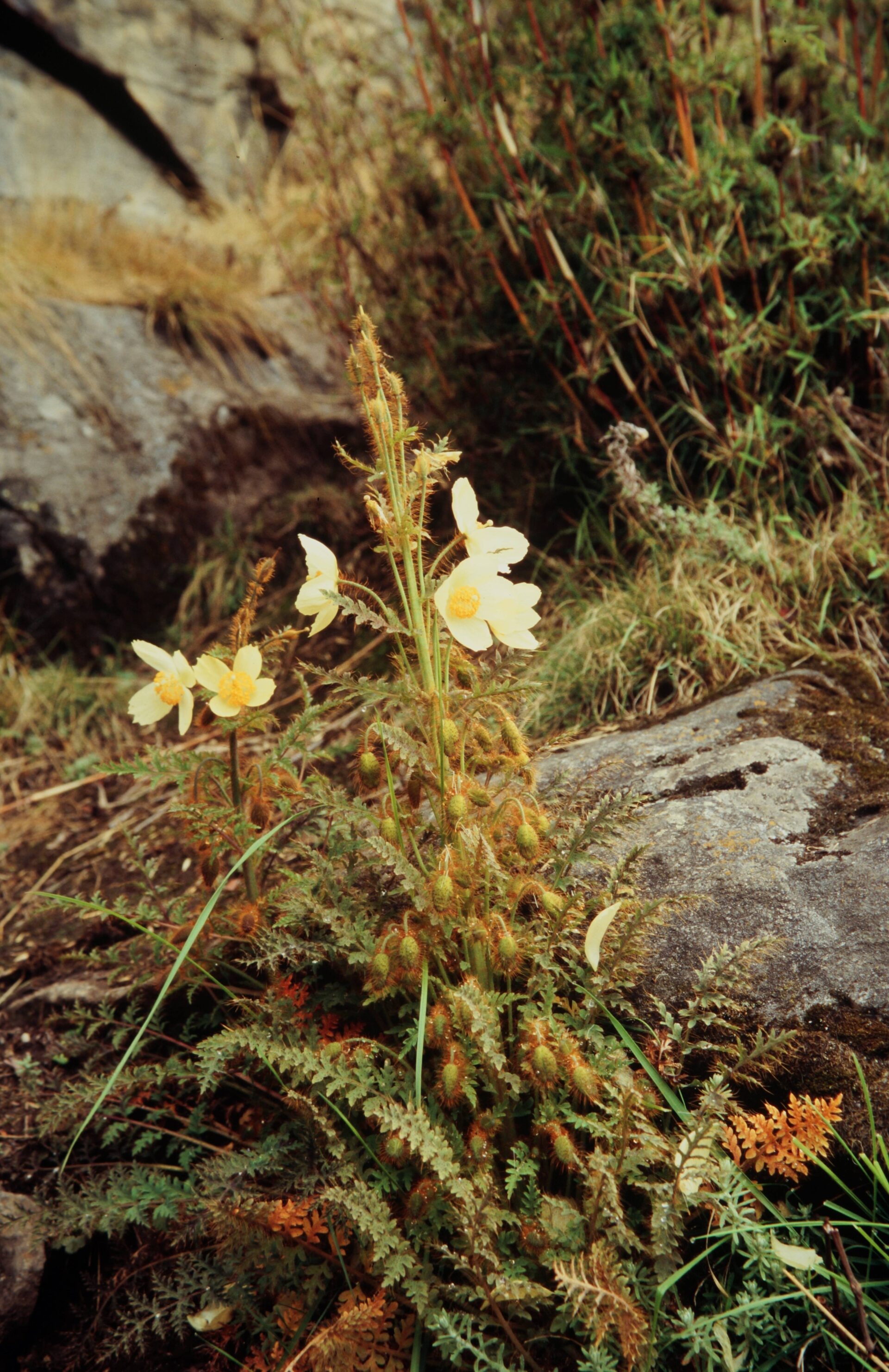
G.Taylor
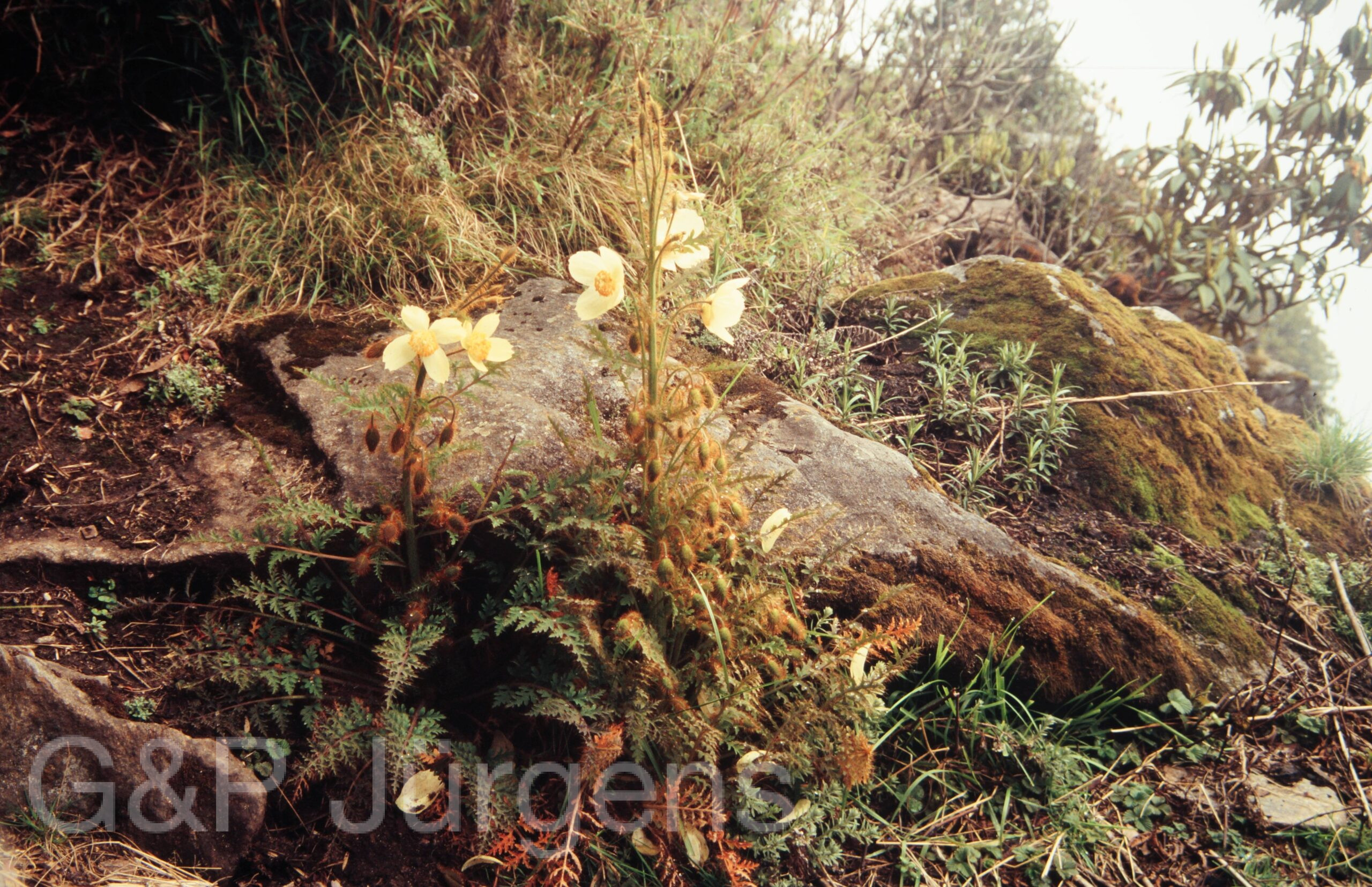
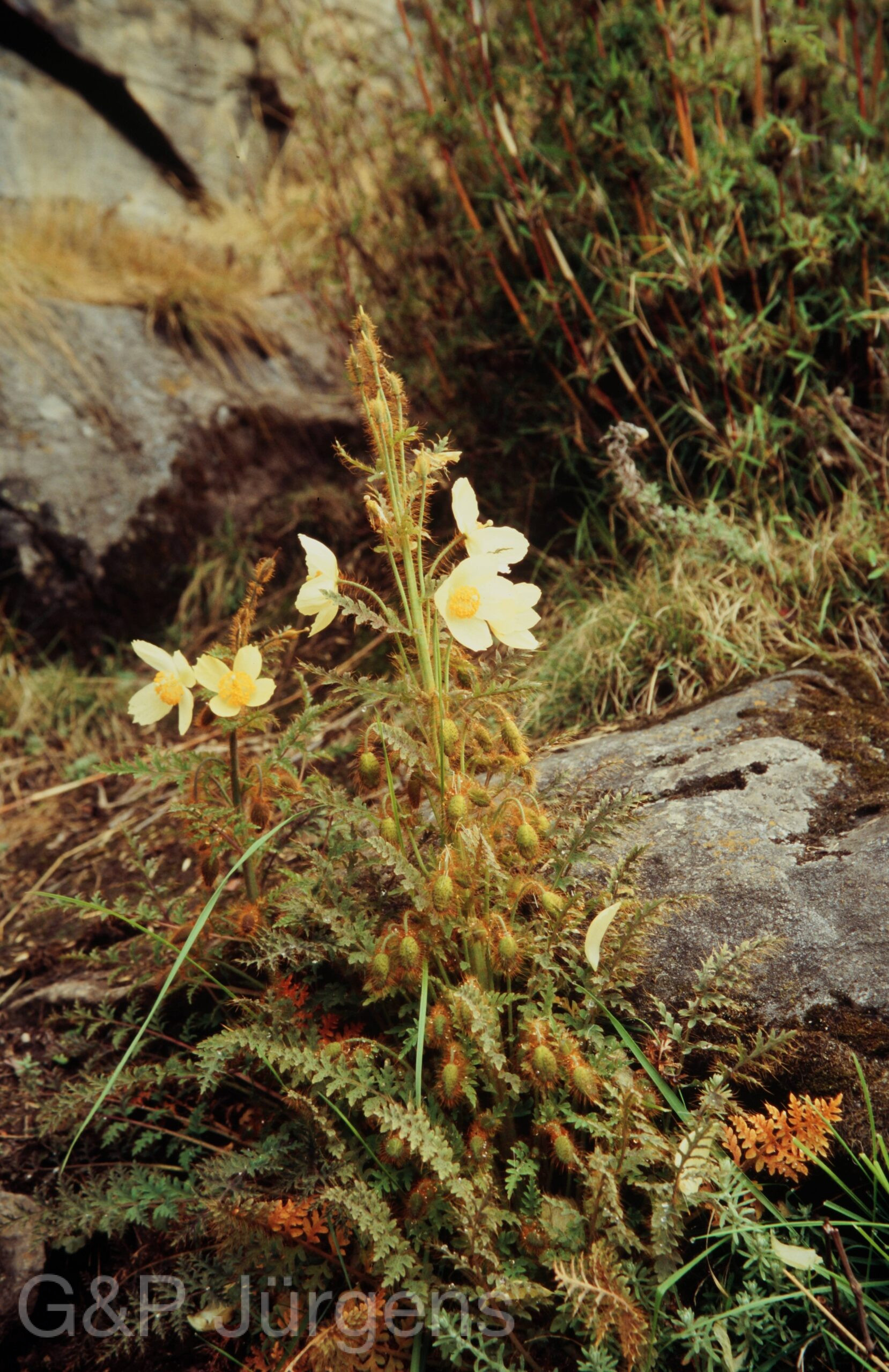
Description
Meconopsis gracilipes is a rare Himalayan poppy of restricted range, recorded from Nepal and adjacent south-western China. The low GBIF tally of 50 occurrences reflects both its scarcity and its confinement to remote high-mountain terrain. It grows in the subalpine and lower alpine zone, on shaded rocky banks, moist cliff ledges, mossy boulders and the margins of forest and shrubbery, generally between about 3000 and 4000 m. The plant photographed at Koktrok in the Helambu region of Nepal at about 3100 m in May exemplifies this damp, sheltered montane habitat, where it flowers early in the growing season before the full monsoon.
It is a slender, monocarpic or short-lived herb forming a rosette of petiolate, lobed to pinnatifid leaves, the plant sparsely clothed in fine bristly hairs. From the rosette arise delicate, thread-like (gracile) flowering stems, the specific epithet referring to these slender pedicels. The nodding flowers have four broad petals in shades of pale blue to lavender or purple; numerous stamens surround a short style with a small capitate stigma. The fruit is a narrow, few-valved capsule opening at the apex to shed many minute seeds.
Meconopsis gracilipes belongs among the blue-flowered Himalayan poppies and is allied to slender-stemmed species such as M. bella, sharing their preference for moist, shaded rock habitats rather than open scree. Its restricted distribution, low recorded abundance and dependence on specialised microhabitats make it of potential conservation interest, though it has not been formally assessed; the integrity of its high-elevation rock and forest-margin habitats is key to its persistence.
Author: G.Taylor · Sources: POWO (Kew), GBIF, Flora of Nepal, Annotated Checklist of the Flowering Plants of Nepal, Grey-Wilson Meconopsis monograph