
Lour.
Description
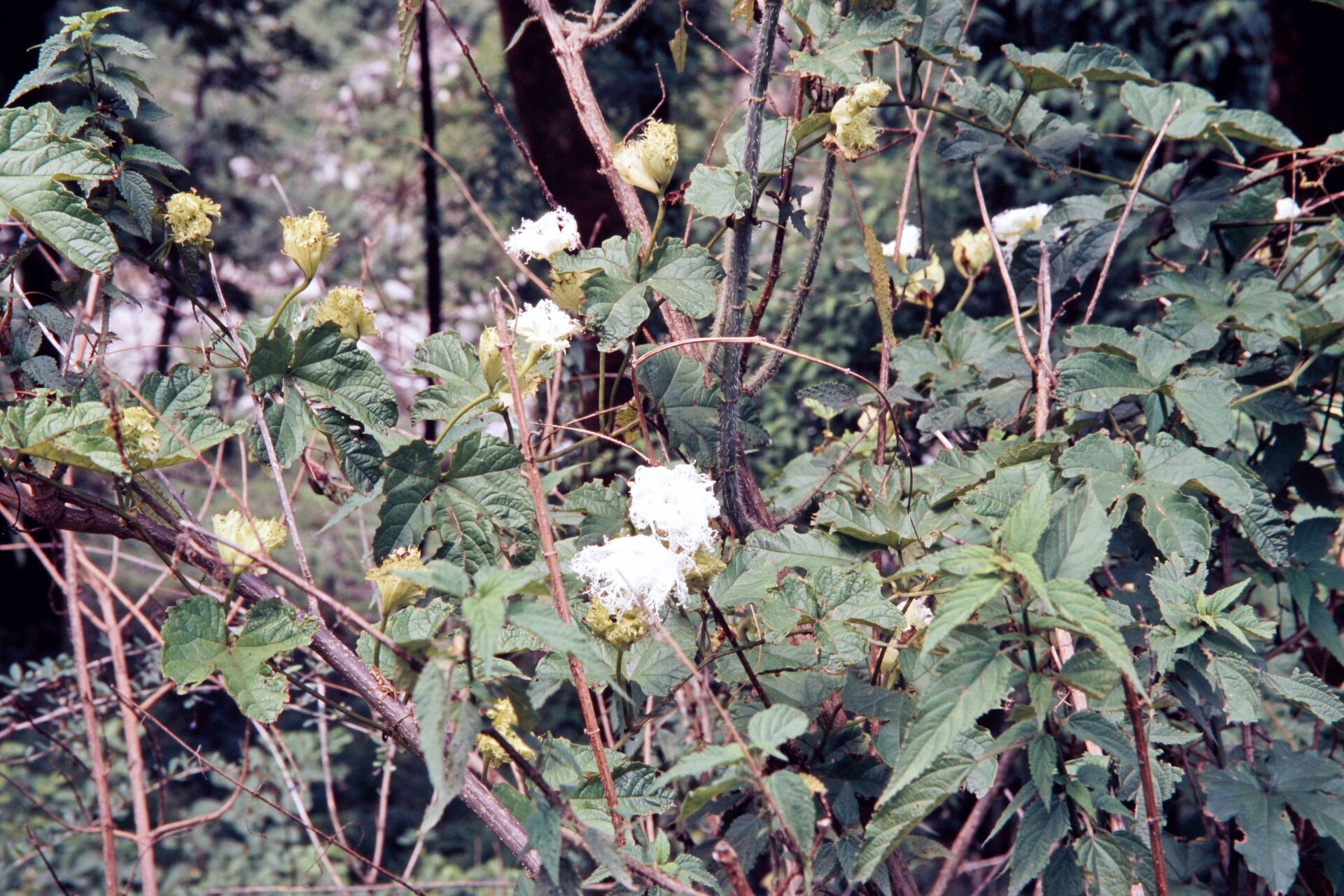
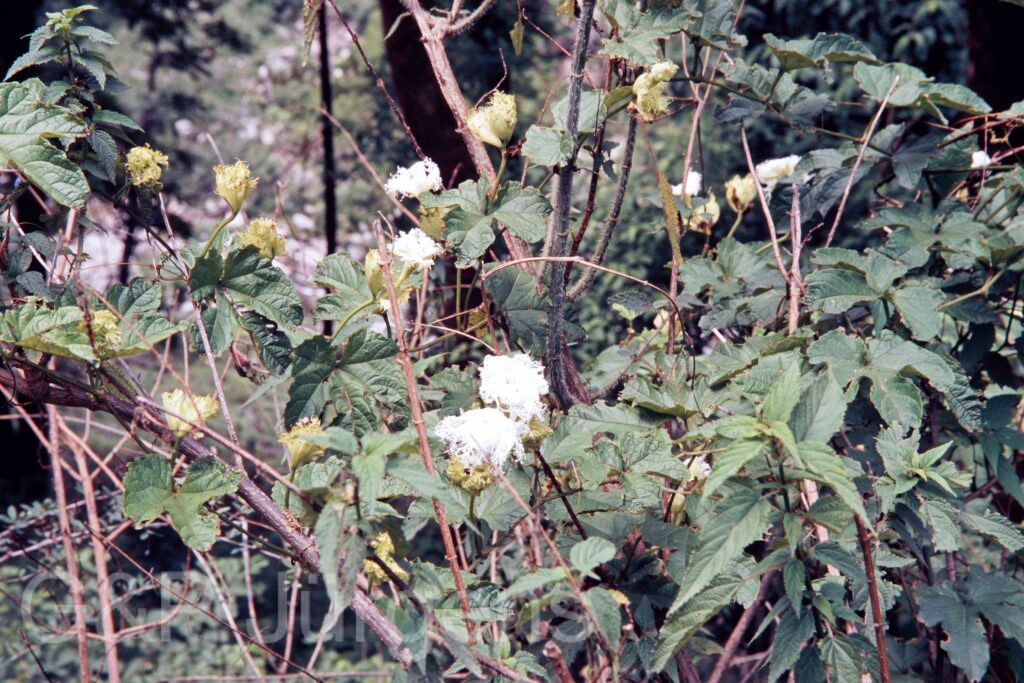
Trichosanthes tricuspidata is a climbing cucurbit widely distributed through tropical and subtropical Asia, from the Himalaya (India, Nepal, Bhutan) across China, Myanmar, Thailand and Indochina to Sri Lanka, Malesia, the Philippines and northern Australia. It is a liana of forest margins, thickets, secondary scrub and hedgerows, scrambling over shrubs and trees by means of tendrils. Though most frequent in the lowlands and lower hills, it ascends well into the temperate zone; the plant recorded at Belak Khal in Garhwal at 2,750 m in June marks an upper-elevation occurrence in the western Himalaya, flowering with the early summer warmth.
The plant is a perennial herbaceous to woody climber with branched tendrils and a tuberous rootstock. The leaves are alternate, broadly ovate to orbicular in outline and palmately three- to five-lobed, the lobes often again toothed or cuspidate, cordate at the base. The plant is dioecious; the flowers are white with the petals fringed into the long, lacy filaments characteristic of the genus, the male flowers in racemes and the females solitary. The fruit is a globose to ovoid berry that ripens bright orange-red, marked with pale stripes when young, containing flattened seeds embedded in pulp.
The genus Trichosanthes, distinguished by its delicately fimbriate corolla lobes, is a large Indo-Pacific group of considerable ethnobotanical importance. Trichosanthes tricuspidata, described by Loureiro, is well known in traditional medicine, its roots and fruit used in Ayurvedic and folk preparations despite the toxic, purgative nature of the fruit pulp. Widespread and ecologically versatile, ranging from tropical lowland to temperate montane forest, the species is common and is not regarded as threatened.
Author: Lour. · Sources: POWO (Kew), Flora of China Vol. 19, Flora of Bhutan Vol. 2, GBIF, de Boer & Thulin: Trichosanthes revision