
Hara
Description
Viola bhutanica is a rare and range-restricted species endemic to Bhutan with marginal occurrence in adjacent parts of southern China. With only eight occurrences recorded in GBIF, it is among the least collected violets in the Himalayan region. The species inhabits moist, shaded forest floors in warm-temperate to subtropical broadleaved forests at elevations of 1,800–2,500 m, growing on humus-rich soils among mosses and leaf litter. The collection from Trashyangtse district in eastern Bhutan at 2,100 m typifies its preferred habitat in the moist valleys of the eastern Himalayan biodiversity hotspot.
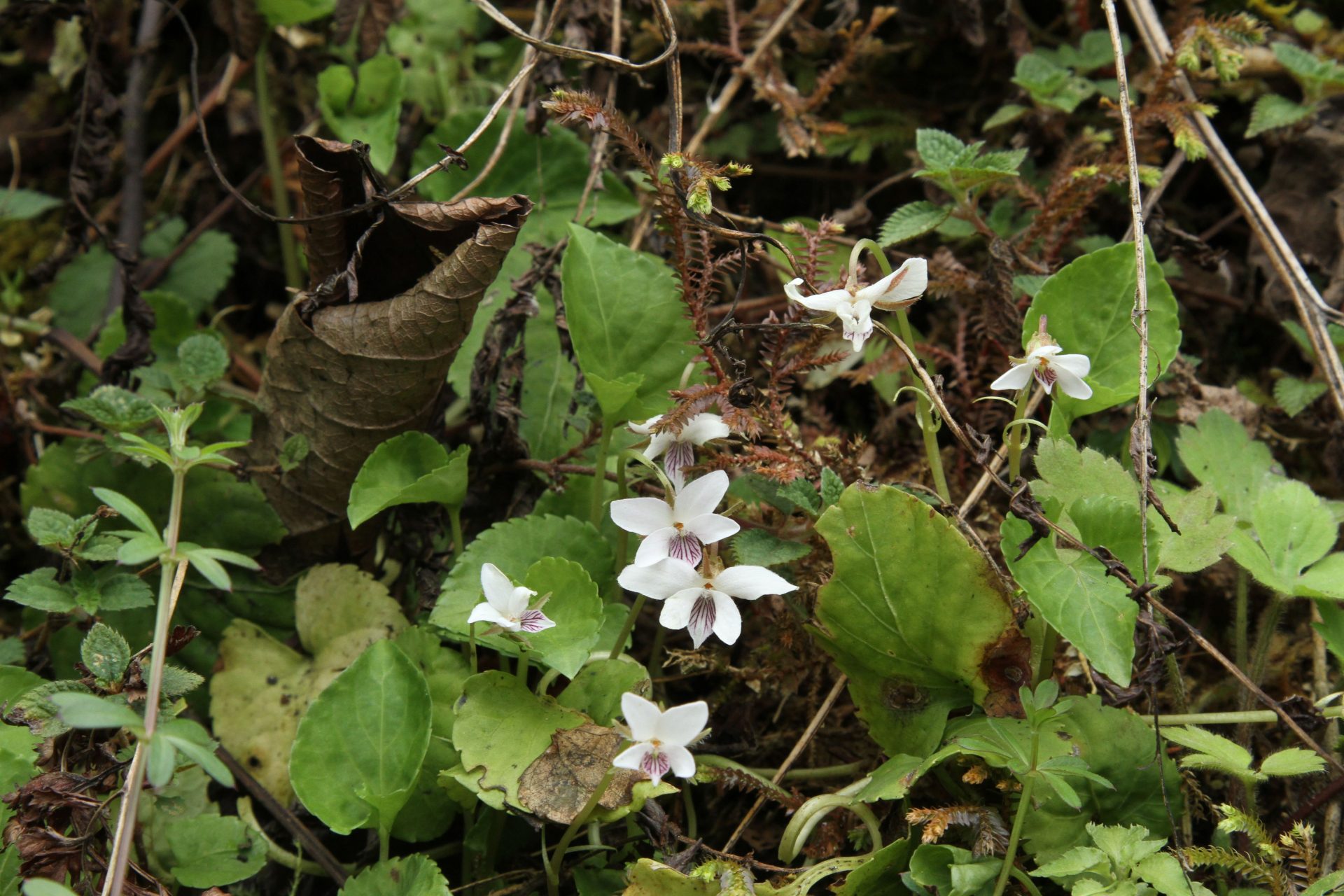
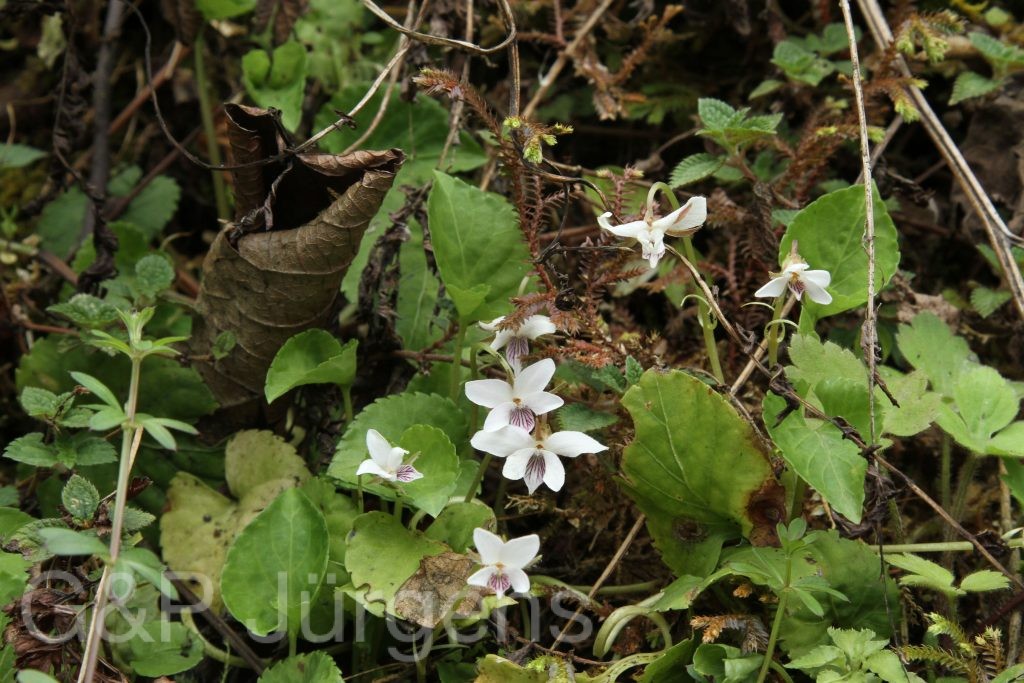
Viola bhutanica is a perennial, acaulescent herb with a short, erect rhizome. Leaves are basal, long-petiolate, with ovate to broadly ovate blades 3–6 cm long, cordate at the base, crenate-serrate along the margins, and sparsely pubescent on both surfaces. Peduncles are slender, arising from the rootstock, exceeding the leaves, each bearing a single zygomorphic flower. Flowers are 1.5–2 cm across, with pale violet to lilac petals; the lateral petals are bearded, and the lowest petal bears a short, obtuse spur 3–5 mm long with darker violet veining that serves as a nectar guide. The fruit is an ellipsoid capsule dehiscing explosively by three valves, projecting seeds several centimetres from the parent plant.
Described by H. Hara in 1971, Viola bhutanica remains one of the most poorly known Himalayan violets. Its extreme rarity in herbarium collections and the very low number of GBIF records suggest either genuine scarcity or significant under-collection in its remote eastern Bhutanese habitats. The species belongs to the section Nomimium and is morphologically allied to V. pilosa, differing in its leaf indumentum and spur morphology. Given its highly restricted known range and the increasing pressures of land-use change in subtropical eastern Bhutan, V. bhutanica merits conservation assessment and targeted field surveys to clarify its population status.
Author: Hara · Sources: POWO (Kew), GBIF, Flora of Bhutan Vol. 1, Hara: Flora of Eastern Himalaya (1971), Noltie: Flora of Bhutan Vol. 3 (2000)