
Hook.f.
Description
Calanthe mannii is a terrestrial orchid distributed across the eastern Himalayas and East Asia, from Nepal and northeast India through Bhutan, Myanmar, southern China (Yunnan, Guizhou, Guangxi), to Japan (Ryukyu Islands). GBIF records nearly 100 occurrences across this range. The species grows in warm to temperate broadleaved forests, often along streams and in ravines with rich humus soil, at elevations of 1,000–2,500 m.
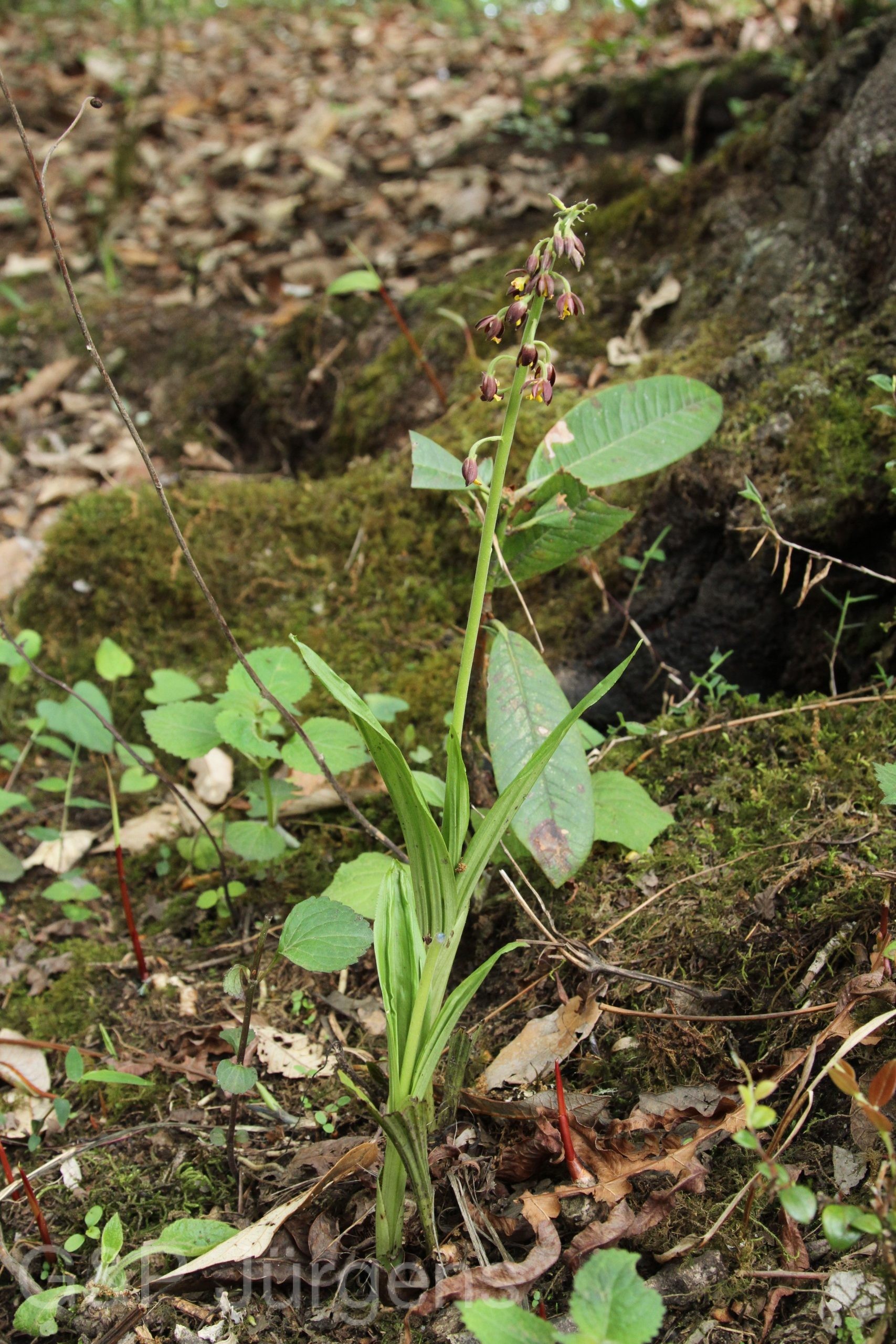
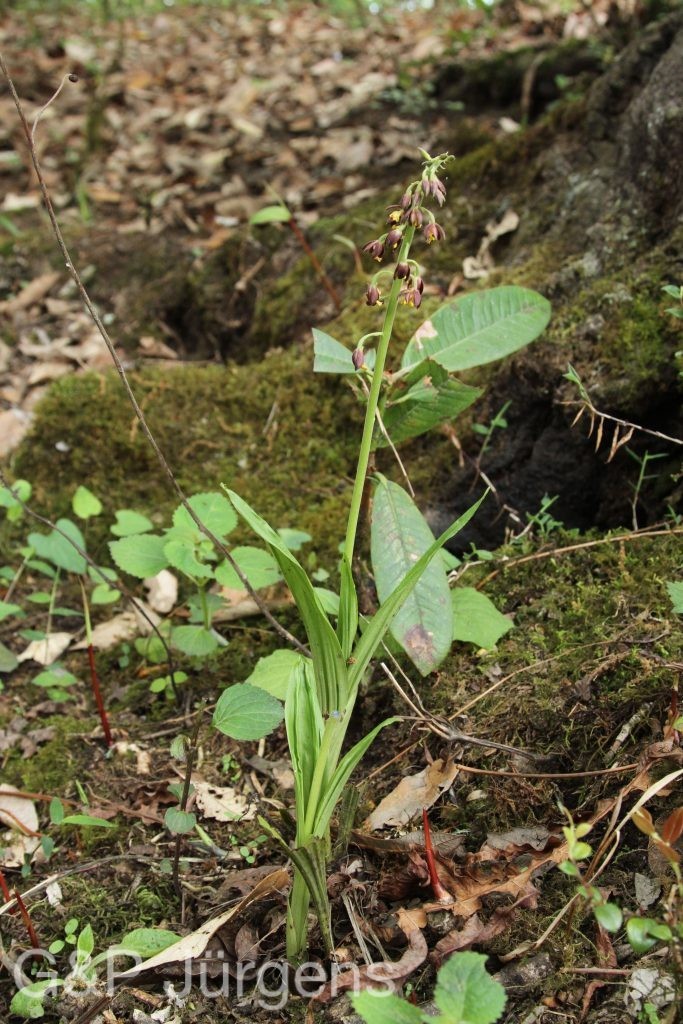
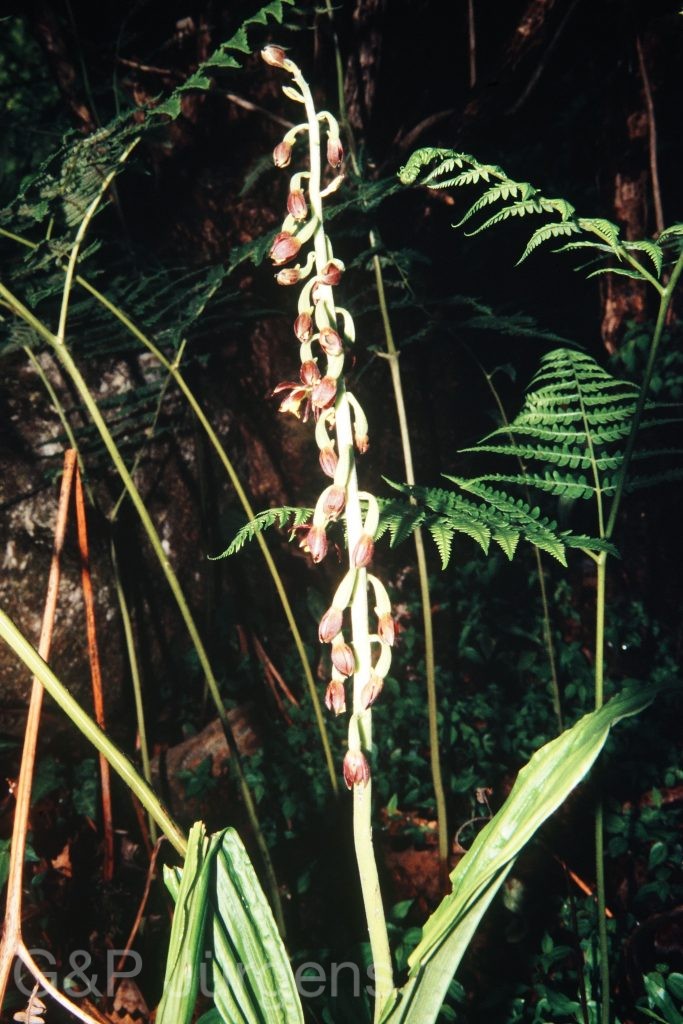
The plant is an evergreen Calanthe producing narrow, conical pseudobulbs partially enclosed by leaf sheaths. Leaves are 3–5, elliptic-lanceolate, 20–40 cm long, plicate, with prominent veins. The inflorescence is an erect, densely many-flowered raceme 30–50 cm tall, bearing 15–30 flowers. Flowers are 2–2.5 cm across, with a distinctive colour combination: the sepals and petals are yellowish-brown to olive-green, while the lip is pale, trilobed, with the mid-lobe deeply bilobed and a prominent yellow callus. The spur is curved, 8–12 mm long. Flowering occurs from April to June.
Calanthe mannii is named after Gustav Mann (1836–1916), the German-born botanical collector who worked in northeast India. The species is distinguished from the similar C. puberula by its more densely flowered raceme and different lip morphology. Its presence in both subtropical (Mo-Chu valley, 1,600 m) and temperate zones in Bhutan indicates broad ecological tolerance.
Author: Hook.f. · Sources: POWO (Kew), Flora of Bhutan Vol. 3, GBIF, Flora of China Vol. 25, Pearce & Cribb: The Orchids of Bhutan (2002)