
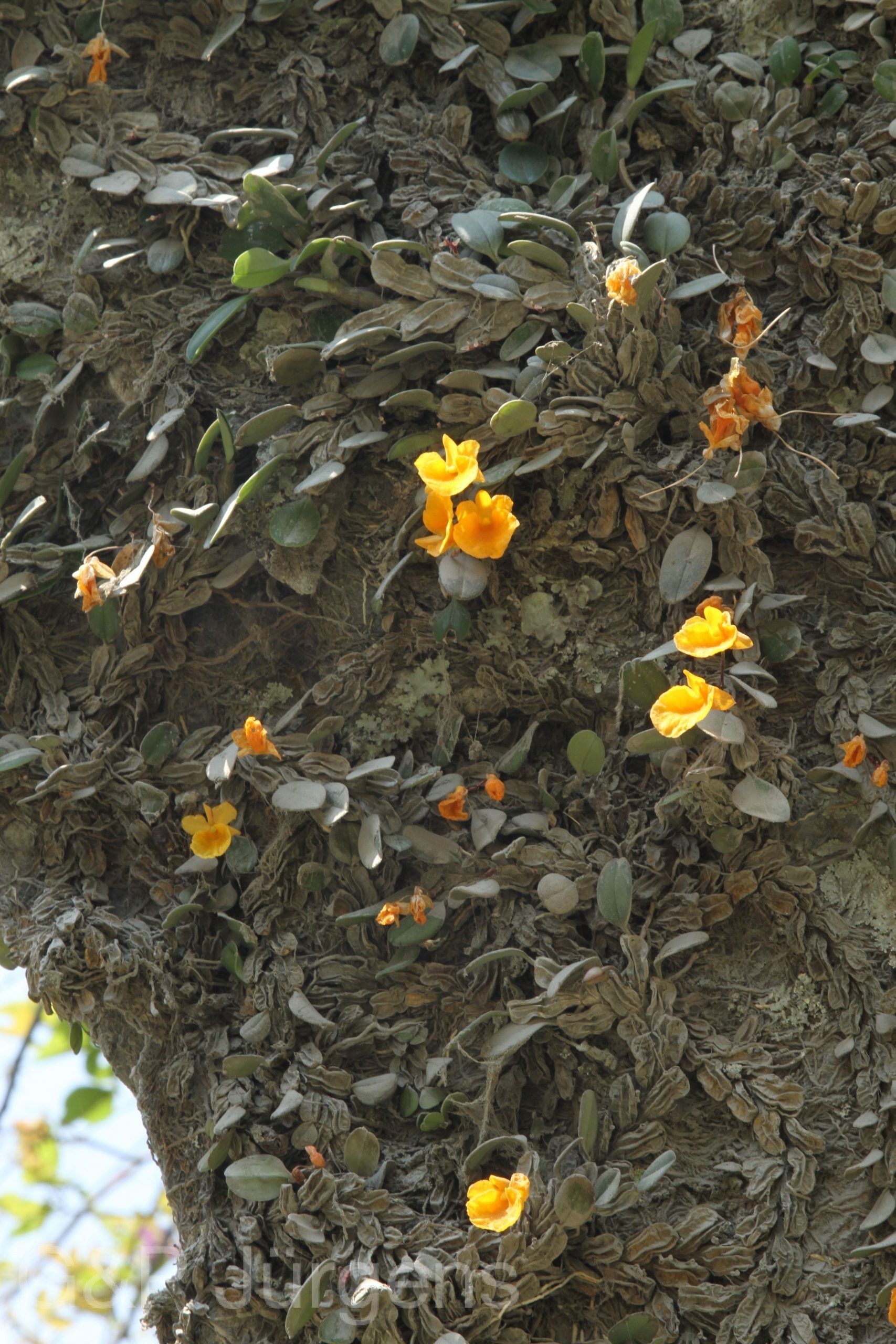
Wall. ex Lindl.
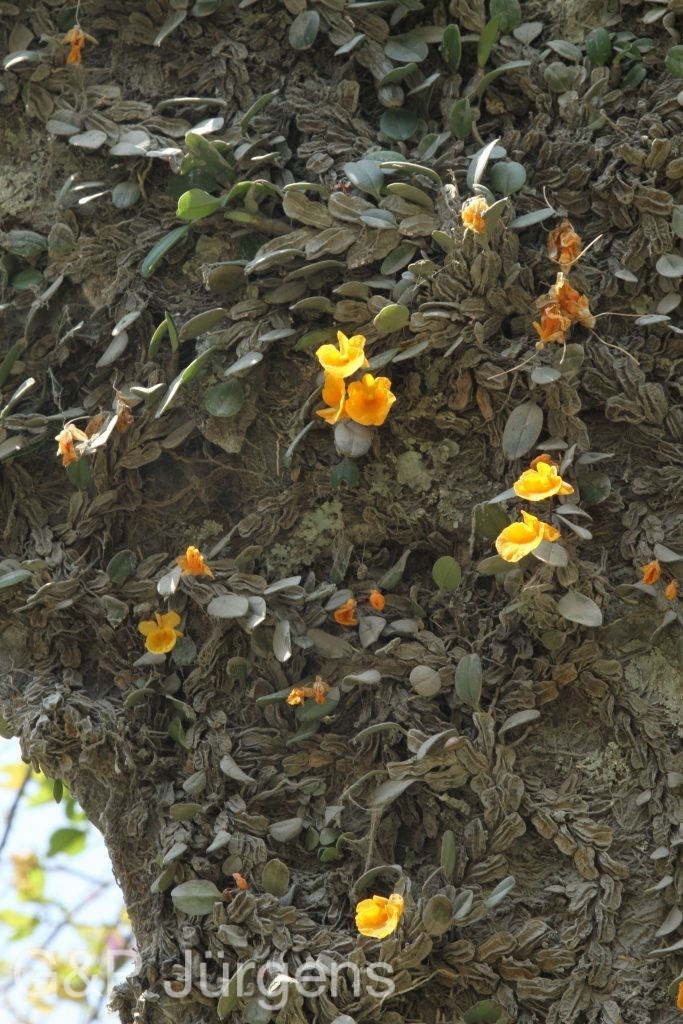
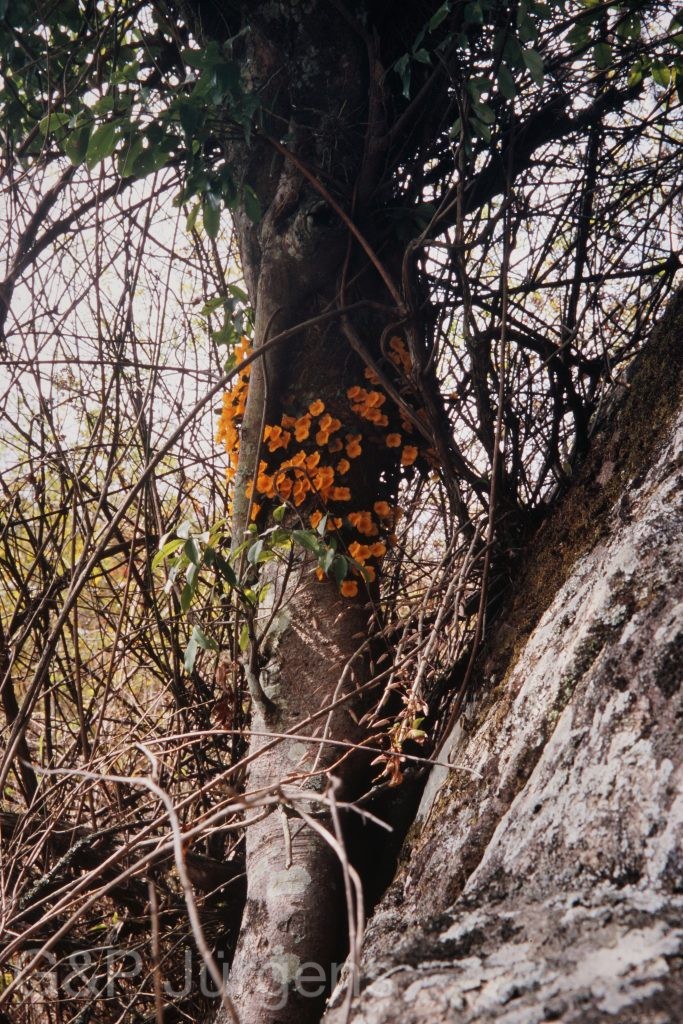
Description
Dendrobium jenkinsii is a small epiphytic orchid distributed across the Eastern Himalaya, southern China and mainland Southeast Asia, with GBIF occurrences from China, Bhutan, India, Vietnam, Myanmar, Laos and Thailand among others. It grows as an epiphyte on tree trunks and large branches in open, well-lit montane and submontane forest, often on exposed boughs where it endures a marked seasonal alternation of monsoon moisture and a dry, cool resting period. It occurs at low to middle elevations; the Bhutanese records from Wangdue Phodrang at about 2280 m in June and from the Tsang-Chu valley at 1520 m in April bracket its altitudinal range and indicate spring to early-summer flowering.
The species forms small, clustered, ovoid to discoid pseudobulbs pressed against the substrate, each compressed, wrinkled when mature and bearing a single leathery apical leaf. The inflorescence is short and few-flowered, arising near the pseudobulb apex. The flowers are comparatively large for the plant's size and bright golden-yellow, with spreading, broadly elliptic sepals and petals. The labellum is the showiest part, broad, orbicular-reniform and conspicuously fringed or fimbriate at the margin, with a densely hairy or velvety disc; the short column bears a foot forming a mentum with the lateral sepals. The fruit is a small capsule.
D. jenkinsii belongs to Dendrobium section Densiflora and is closely allied to the larger D. lindleyi (D. aggregatum), from which it differs chiefly in its solitary or few-flowered inflorescences and smaller stature; the two have at times been confused or treated as conspecific. The species is much sought in horticulture, and wild collection compounds the pressures of forest loss across its range, making it a taxon of potential conservation concern despite a wide overall distribution.
Author: Wall. ex Lindl. · Sources: POWO (Kew), GBIF, Flora of China, The Orchids of Bhutan (Pearce & Cribb), Dendrobium and its Allies (Lavarack et al.)