
Lindl.
Description
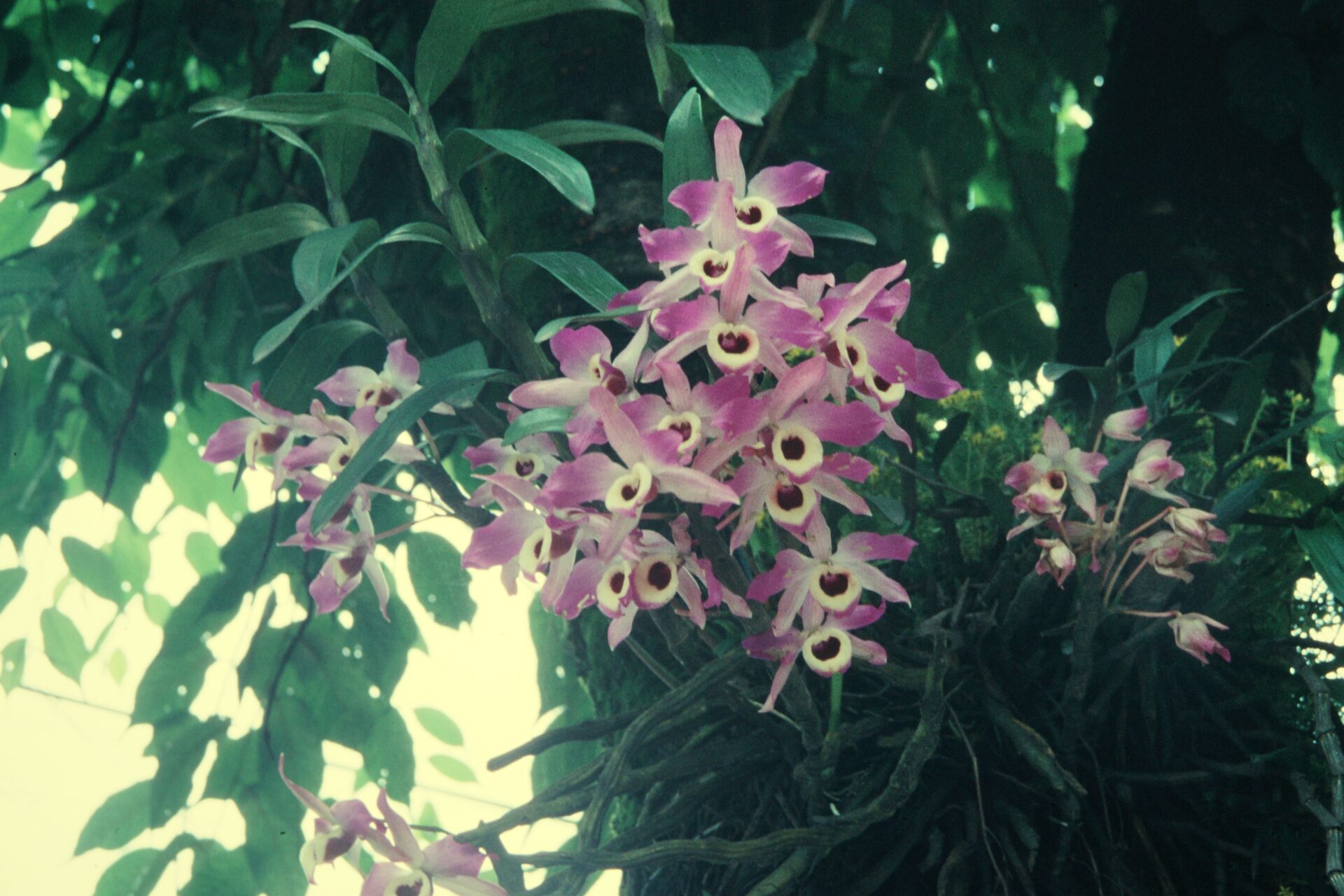
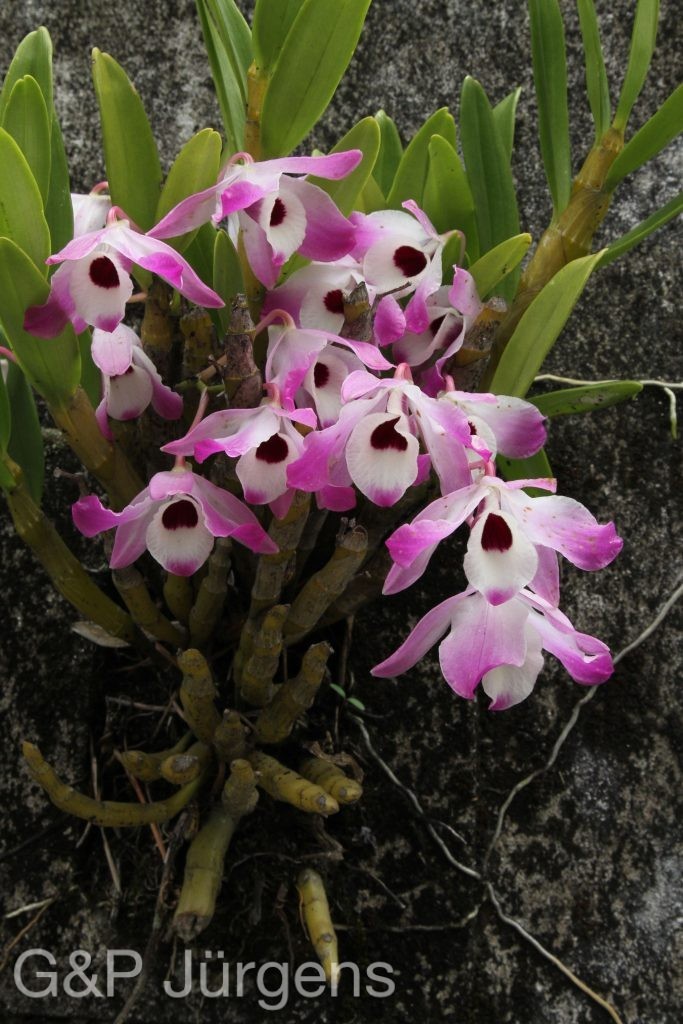
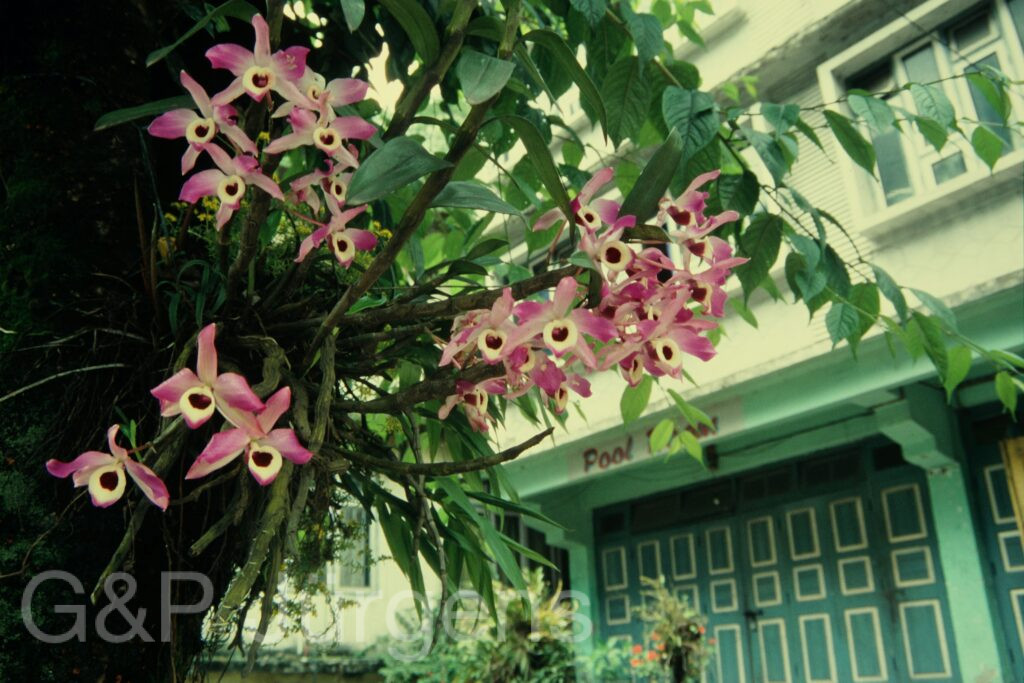
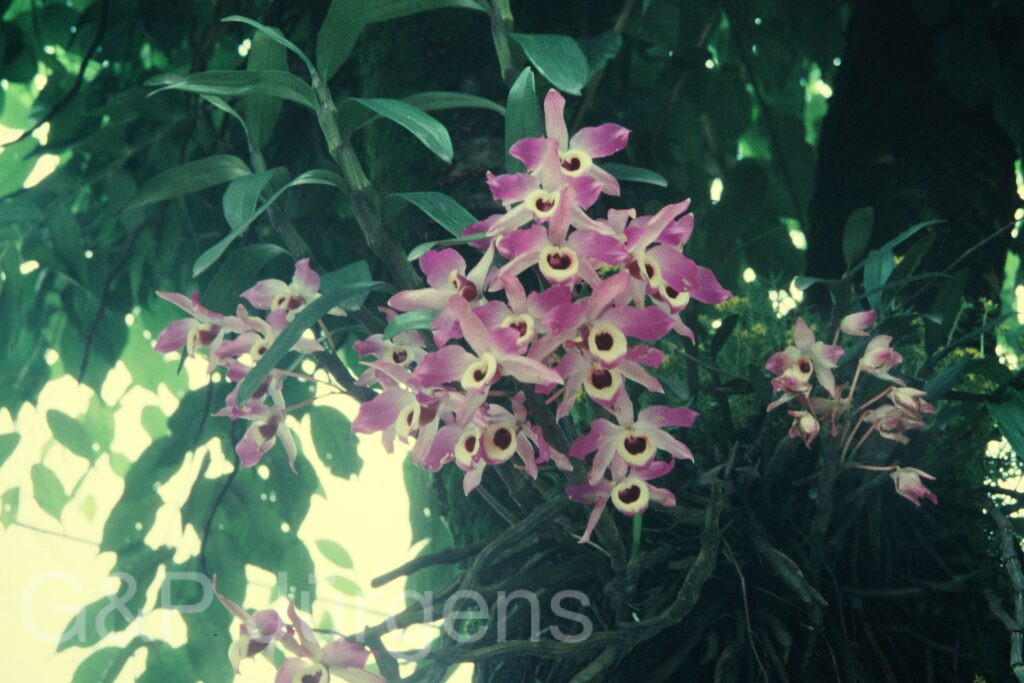
Dendrobium nobile is a widespread epiphytic orchid of the Himalaya and Indochina, native to China, India, Bhutan, Nepal, Myanmar, Vietnam and Laos, and now cultivated and naturalised far beyond, with records reported from many countries reflecting its enormous horticultural popularity. In the wild it grows as an epiphyte on mossy tree trunks and on shaded rocks in subtropical to warm-temperate broadleaved forest, chiefly between about 1000 and 2500 m. The plants documented here come from Trashiyangtse in eastern Bhutan at 2120 m and from the Tista Valley in Sikkim at 2400 m, both flowering in May at the close of the dry season.
The plant forms clustered, erect to pendulous, cane-like pseudobulbous stems that are fleshy, jointed and longitudinally grooved, bearing distichous, oblong-lanceolate leaves along their length; the leaves are usually deciduous before flowering. Inflorescences arise from the nodes of the leafless canes, each short raceme bearing one to three large, showy, fragrant flowers. The sepals and petals are white to rose-pink, deepening toward the tips, while the broad, rounded labellum is downy and conspicuously marked with a deep maroon-purple blotch in its throat ringed by paler margins. The column is short and the pollinia waxy; the fruit is an elongate dehiscent capsule releasing dust-like seeds.
As the nomenclatural type of section Dendrobium, this species is among the most important and intensively bred orchids in cultivation, with countless hybrids and named clones. Wild populations, however, have been heavily depleted by over-collection for horticulture and traditional medicine, and the species is listed on CITES Appendix II. Continued habitat loss across its native range makes in-situ conservation and sustainable trade regulation a significant concern.
Author: Lindl. · Sources: POWO (Kew), GBIF, Flora of China, The Orchids of Bhutan (Pearce & Cribb), Flora of Bhutan, CITES Appendices, Dendrobium monograph