
Sam.

Description
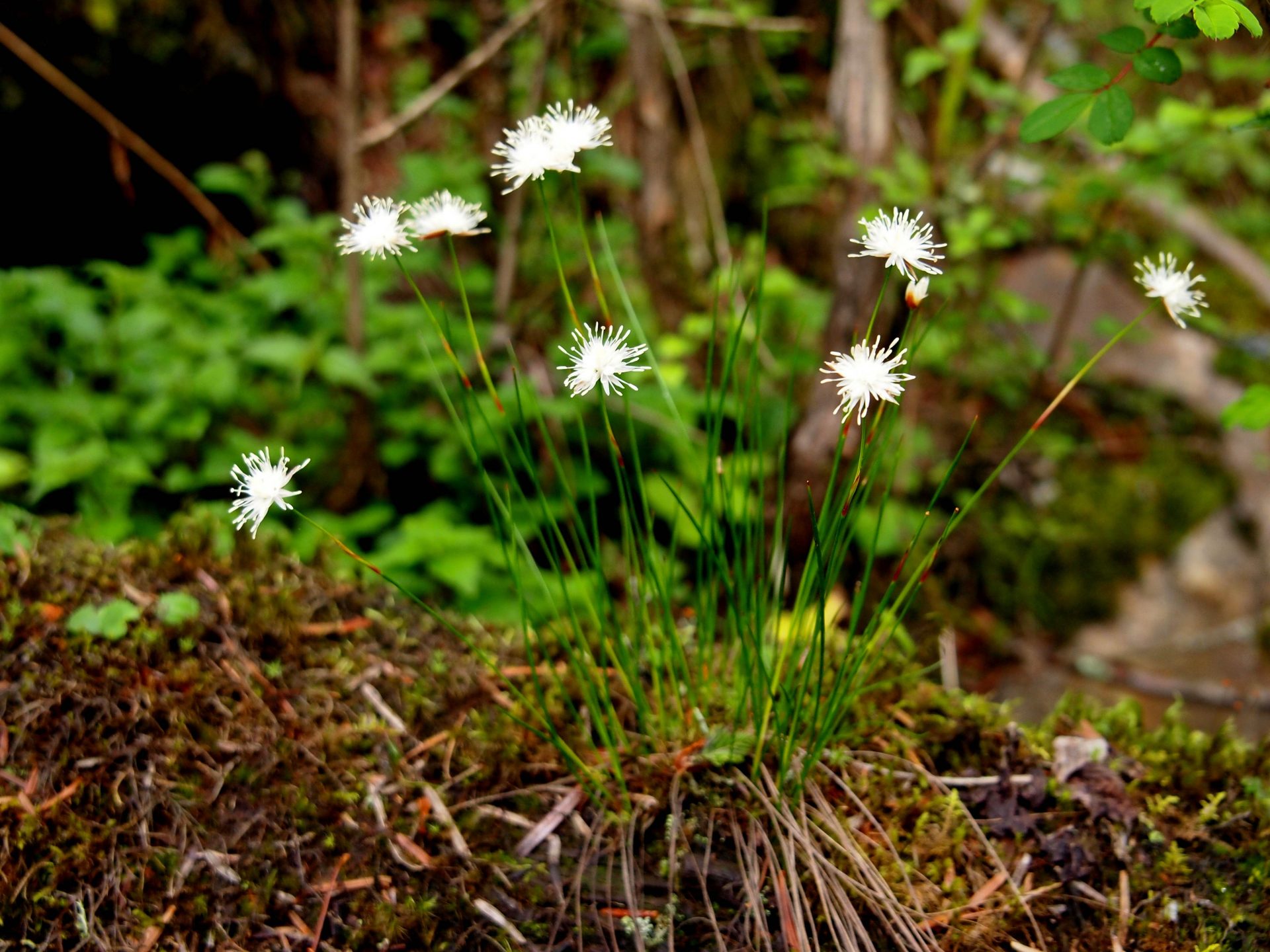
Juncus cephalostigma is a Himalayan rush distributed from Nepal through Sikkim and adjacent India to Bhutan, northern Myanmar and south-western China, with about 139 GBIF records reflecting a restricted eastern Himalayan to Sino-Himalayan range. It is a plant of wet alpine and subalpine habitats: marshy meadows, streamsides, seepage slopes, springs and the margins of pools, generally between about 3,000 and 4,200 m. The plant photographed at Lada-La in Sikkim at 3,400 m, flowering in June, is typical of the cool, perennially moist high-montane grasslands and mires where rushes of this group thrive.
The plant is a tufted perennial herb growing from a short rhizome, with slender, erect, terete to compressed stems. The leaves are basal and cauline, grass-like, with the characteristic open or closed tubular sheaths of the genus. The inflorescence is a small terminal or pseudolateral cluster of few flowers, often condensed into a head (the epithet cephalostigma alluding to the head-like stigmatic arrangement); each flower has six small, scarious-margined, brownish to greenish tepals, six (or three) stamens, and a superior ovary crowned by a style with three stigmas. The fruit is a small loculicidal capsule containing numerous minute seeds.
Juncus is the largest genus of Juncaceae, a wind-pollinated family of cosmopolitan, mostly cool-climate and wetland graminoid herbs. The Himalayan rushes form a taxonomically demanding assemblage in which species are separated by fine characters of the inflorescence, capsule and seed. As an inhabitant of high-altitude wetlands, J. cephalostigma is sensitive to hydrological change and grazing, though it is not currently regarded as threatened.
Author: Sam. · Sources: POWO (Kew), Flora of China Vol. 24, Flora of Bhutan Vol. 3, GBIF, Kirschner: Juncaceae (Species Plantarum: Flora of the World)