
(L.) All.
Description
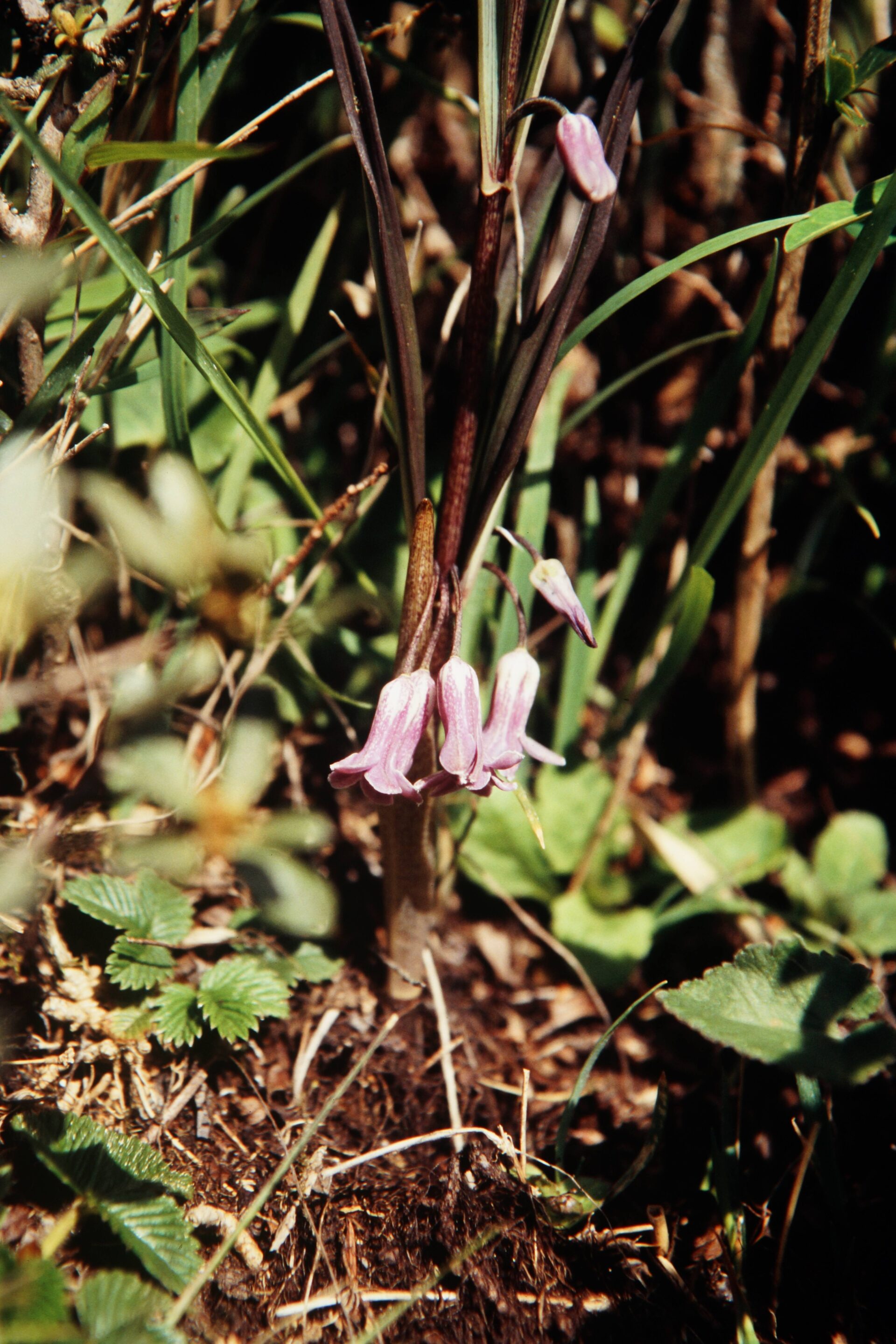
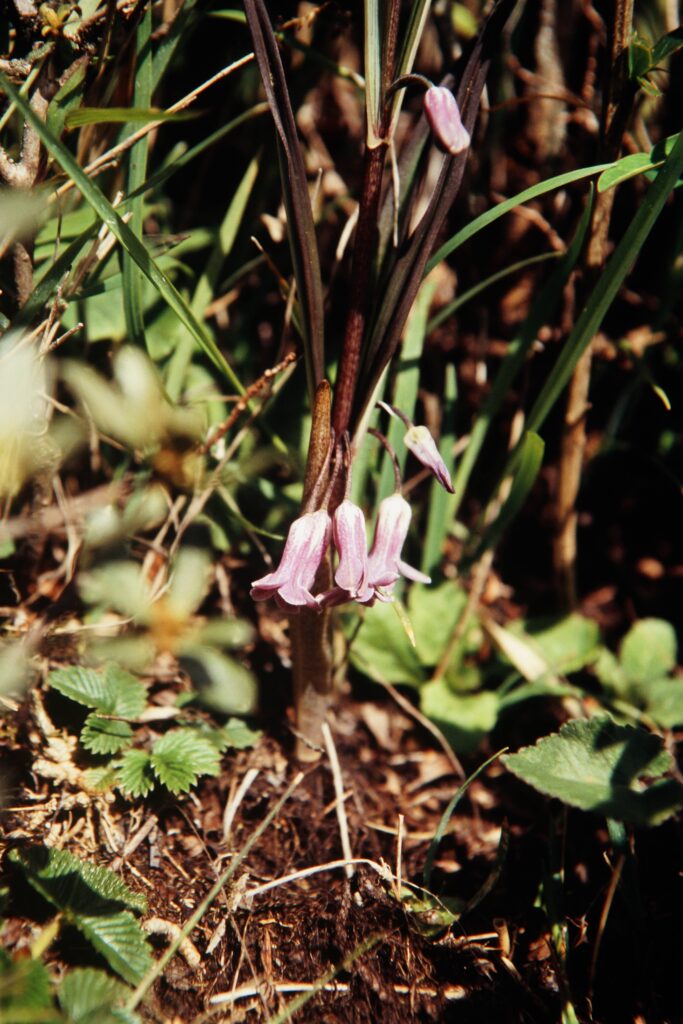
Polygonatum verticillatum ((L.) All.), the whorled Solomon's-seal, is a temperate to subalpine rhizomatous herb with a remarkably broad Eurasian range. It extends from western and central Europe across Russia and the Caucasus to Central Asia, the Himalaya and southwest China; the very large number of GBIF occurrences (over 121,000) reflects its abundance across European mountains, though the Himalayan populations recorded from Nepal and Bhutan represent the easternmost segment of its distribution. It grows in shady deciduous and coniferous woodland, on grassy slopes and among rocks in alpine meadows, ascending to around 3,800 m, as exemplified by the collection from Jili-La in Bhutan at 3,500 m in May.
The plant arises from a creeping, knotted, horizontal rhizome and produces erect, terete, glabrous stems 30–80 cm tall. The leaves are sessile and arranged in distinct whorls of three to eight at each node, narrowly lanceolate to linear-oblong and acuminate, with the upper ones often subverticillate. The pendent, tubular-campanulate flowers are greenish-white, borne singly or in axillary clusters of two to four on slender pedicels; the perianth tube is six-lobed at the mouth and encloses six included stamens. The fruit is a globose berry that ripens from green through red to a deep purplish-black.
Within the genus the species is distinguished by its whorled leaf arrangement, contrasting with the alternate, distichous leaves of the related P. multiflorum and P. odoratum. The Himalayan rhizomes are valued in Ayurvedic and Tibetan medicine, where the plant is one of the sources traded as "Meda," a use that locally threatens wild stands through overharvesting. Across its wide global range, however, the species remains common and is assessed as of least concern.
Author: (L.) All. · Sources: POWO (Kew), Flora of Nepal, GBIF, Flora of China Vol. 24, Jeffrey: The Genus Polygonatum (Liliaceae) in Eastern Asia (1980)