
Wall.
Description
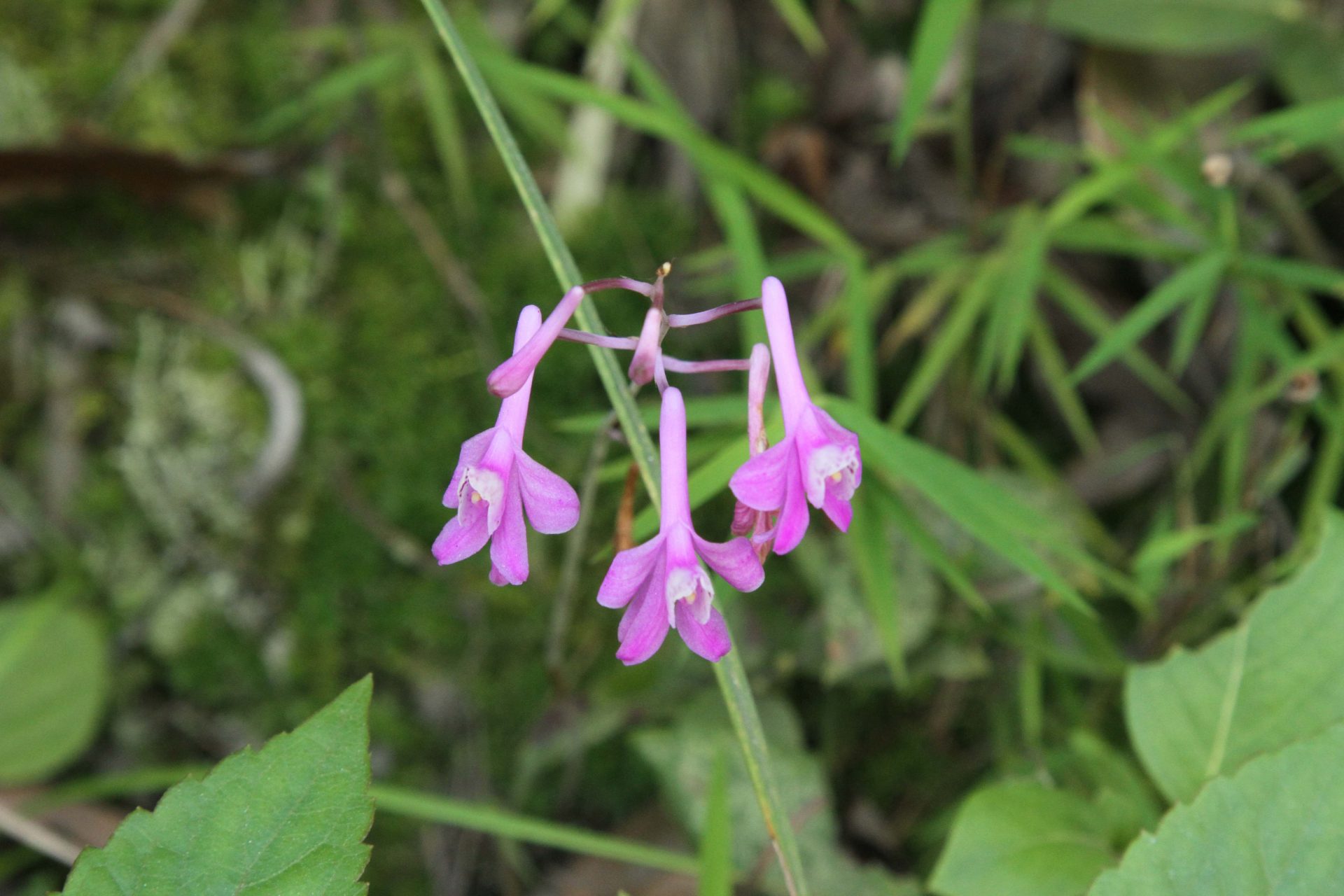
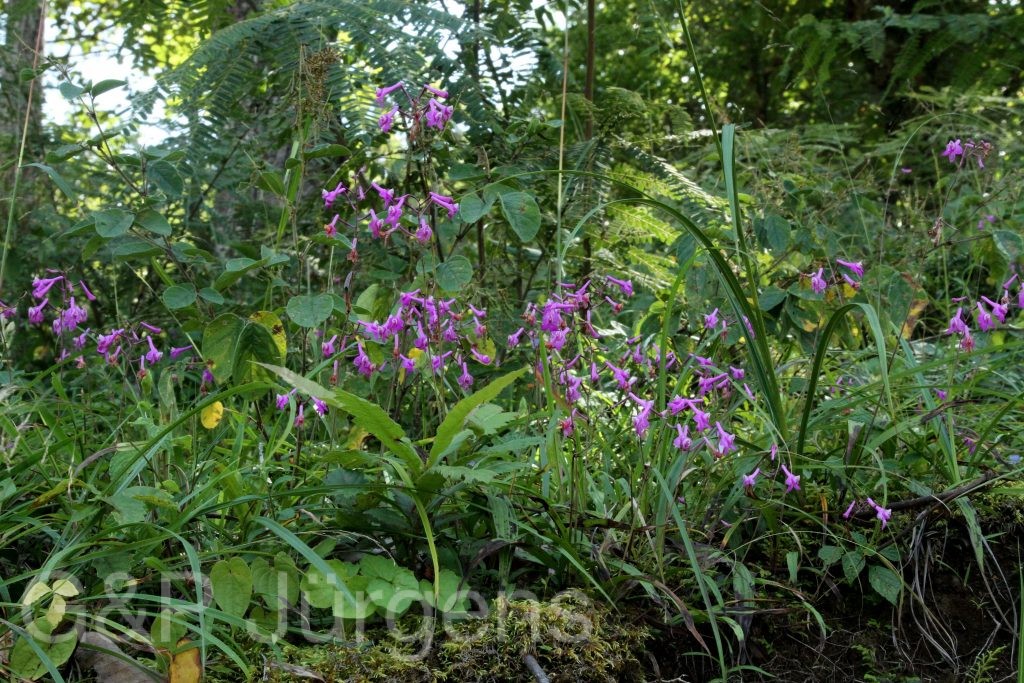
Anthogonium gracile is a terrestrial orchid and the sole species in the monotypic genus Anthogonium. It is distributed from Nepal through northeast India (Sikkim, Darjeeling, Assam, Arunachal Pradesh), Bhutan, and Myanmar into Thailand, Indochina, and southwest China (Yunnan, Guangxi). The species occurs in open, grassy hillsides, pine forests, and degraded forest margins at elevations of 1,000–3,000 m, often in seasonally moist grassland.
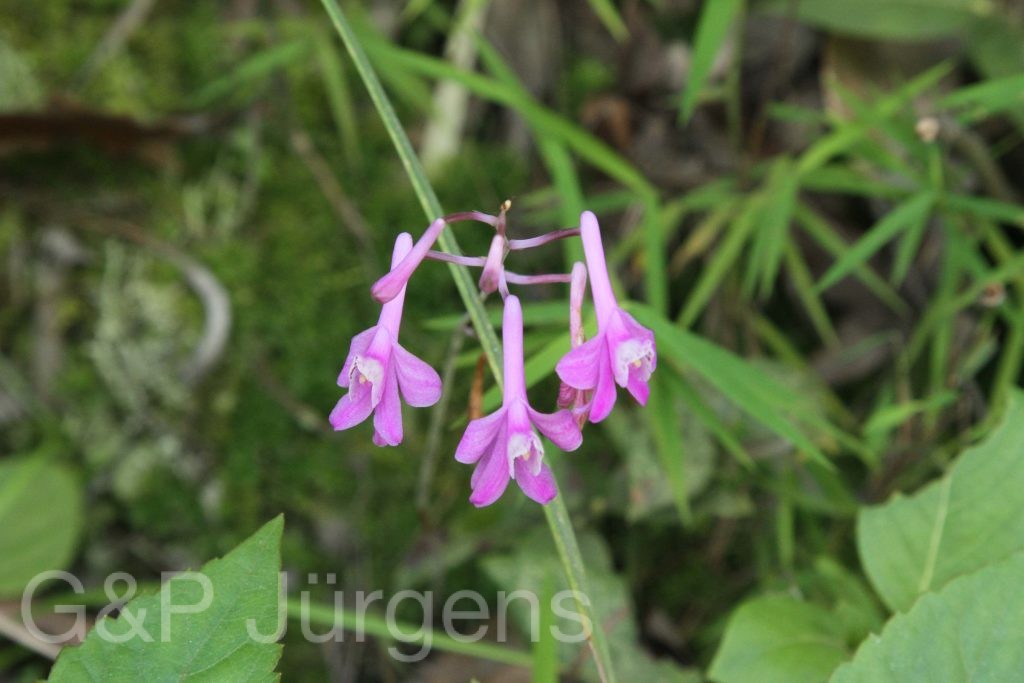
The plant produces slender, reed-like stems 30–80 cm tall from underground tubers, with narrow, plicate, grass-like leaves arranged along the upper portion of the stem. The inflorescence is a lax, terminal raceme bearing 5–15 flowers that open successively. Flowers are 3–4 cm across, typically rose-pink to magenta, with a broad, spreading lip that is darker pink with a yellow callus of parallel lamellae. The column is slender and gently curved. Flowering in the Himalayas occurs from August to October.
Anthogonium gracile is taxonomically isolated within the Orchidaceae, though molecular phylogenetic analyses place it close to Calanthe and Phaius. Its preference for open, fire-maintained habitats suggests adaptation to seasonal burning regimes characteristic of Himalayan montane grasslands.
Author: Wall. · Sources: POWO (Kew), Flora of Bhutan Vol. 3, GBIF, Pearce & Cribb: The Orchids of Bhutan (2002)