
Hook. f. & Thomson
Description
Hydrangea stylosa Hook.f. & Thomson is a Sino-Himalayan shrub recorded by GBIF from China, Bhutan, India, Vietnam and Japan, with cultivated occurrences from Canada and New Zealand, totalling about 85 records. It occupies a broad altitudinal range in moist broad-leaved and mixed forest, thickets and forest margins, on shaded slopes and along ravines. The Bhutanese material spans this amplitude strikingly, with collections from Galephu at 850 m in September and from the Dochu-La at 3000 m in June, showing occurrence from low submontane forest up into the cool temperate zone.
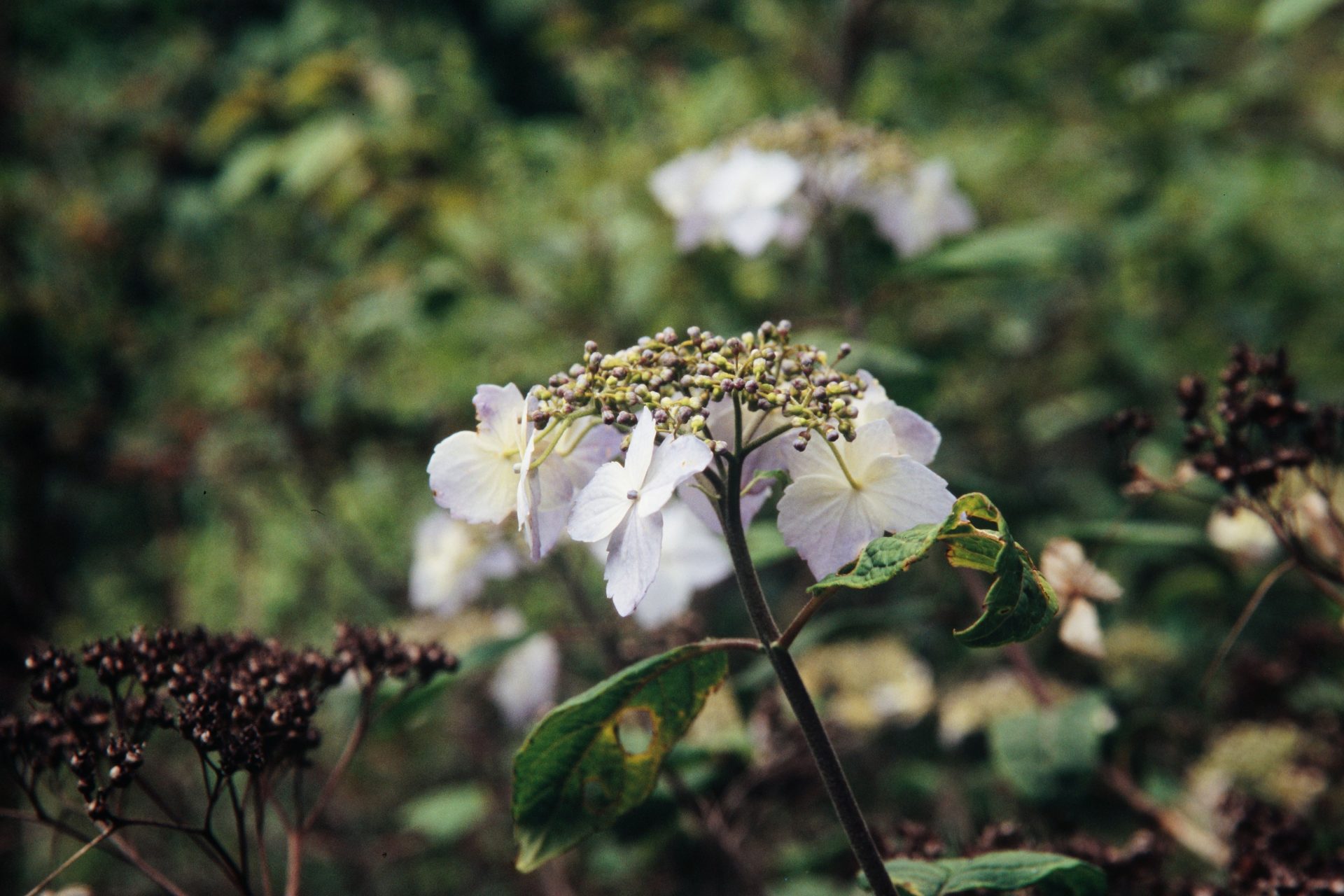
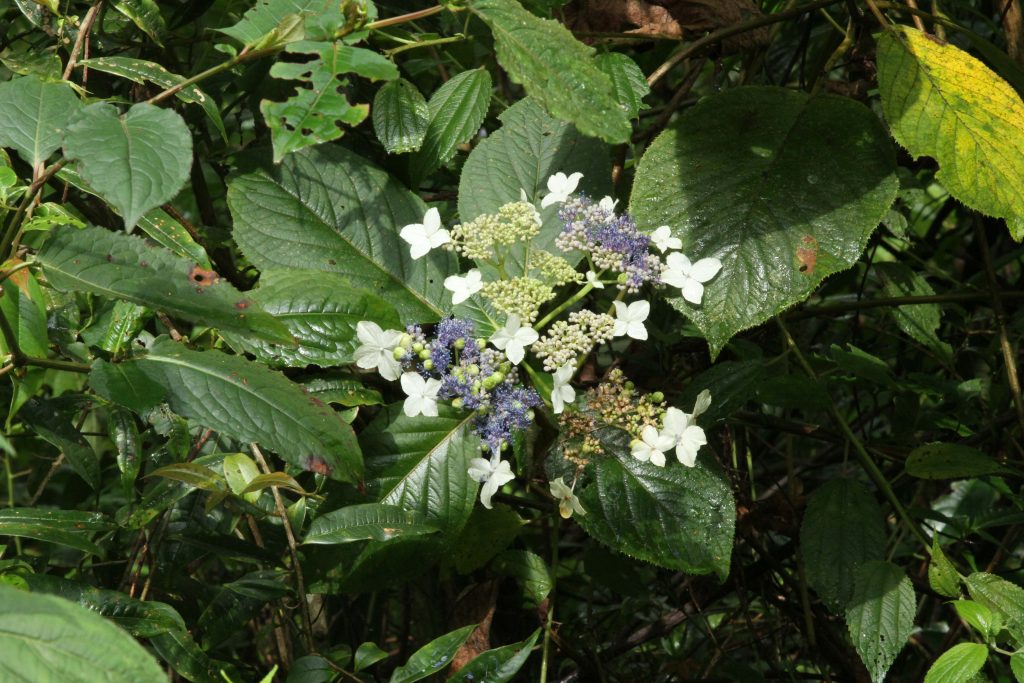
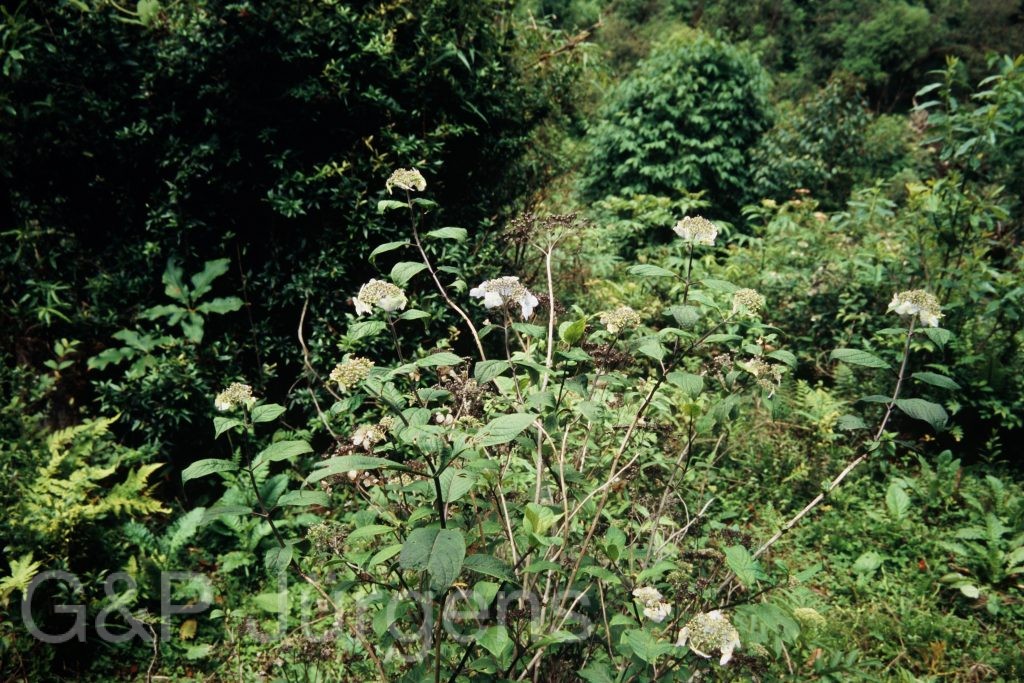
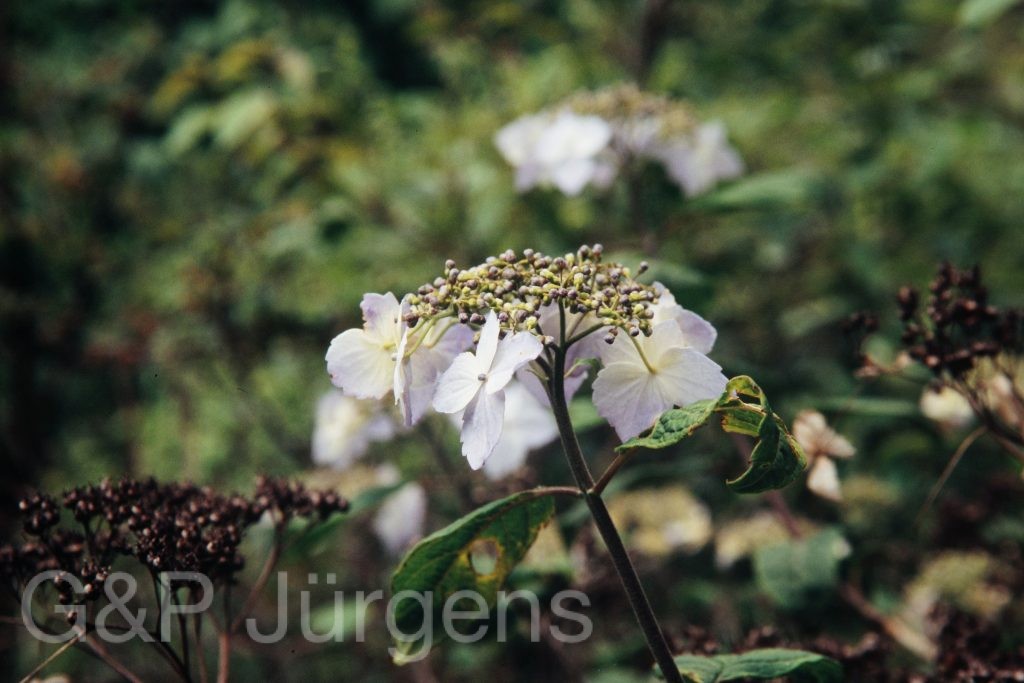
It is a deciduous shrub with terete branches, the young growth often pubescent and the bark exfoliating on older stems. The leaves are opposite, ovate to oblong-lanceolate, with a serrate margin, an acuminate apex and pinnate venation, pilose along the veins beneath. The inflorescence is a terminal corymbose cyme bearing two kinds of flowers: numerous small fertile flowers with minute petals, and a marginal ring of showy sterile flowers whose enlarged, petaloid white to pinkish sepals attract pollinators. The fertile flowers are notable for their elongate, persistent styles, emphasised by the epithet stylosa; the fruit is a small ribbed capsule opening between the styles.
Within Hydrangea, H. stylosa belongs to the lacecap-type species, in which marginal sterile flowers advertise the fertile centre to insects. Its distribution forms part of the eastern Himalayan to Sino-Japanese floristic continuum, and the species is of horticultural interest, accounting for the cultivated records beyond its native range. As a forest understorey shrub it depends on humid montane woodland.
Author: Hook. f. & Thomson · Sources: POWO (Kew), GBIF, Flora of Bhutan Vol. 1, Flora of China Vol. 8, McClintock monograph of the genus Hydrangea, Flora of Nepal