
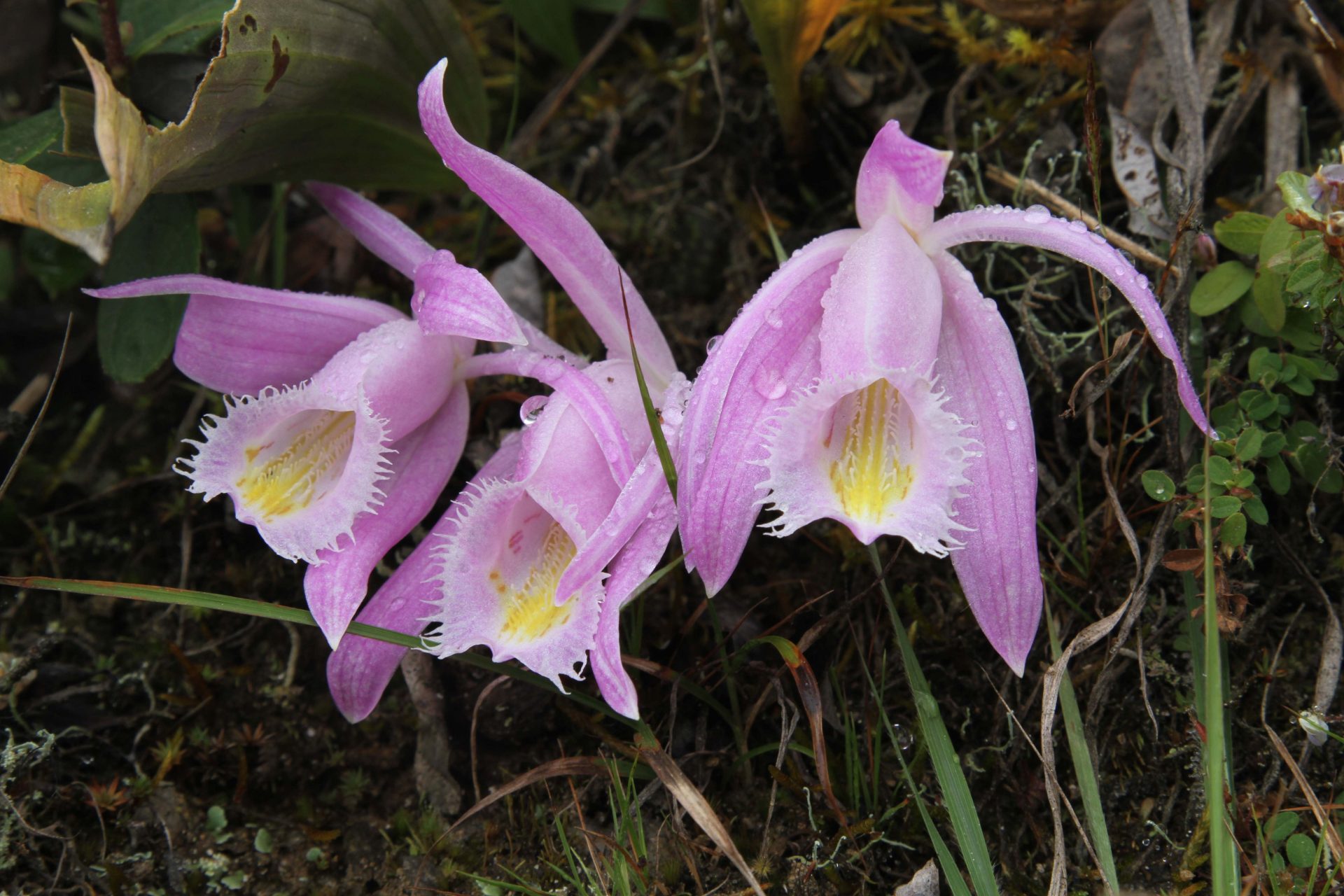
(Sm.) D.Don
Description
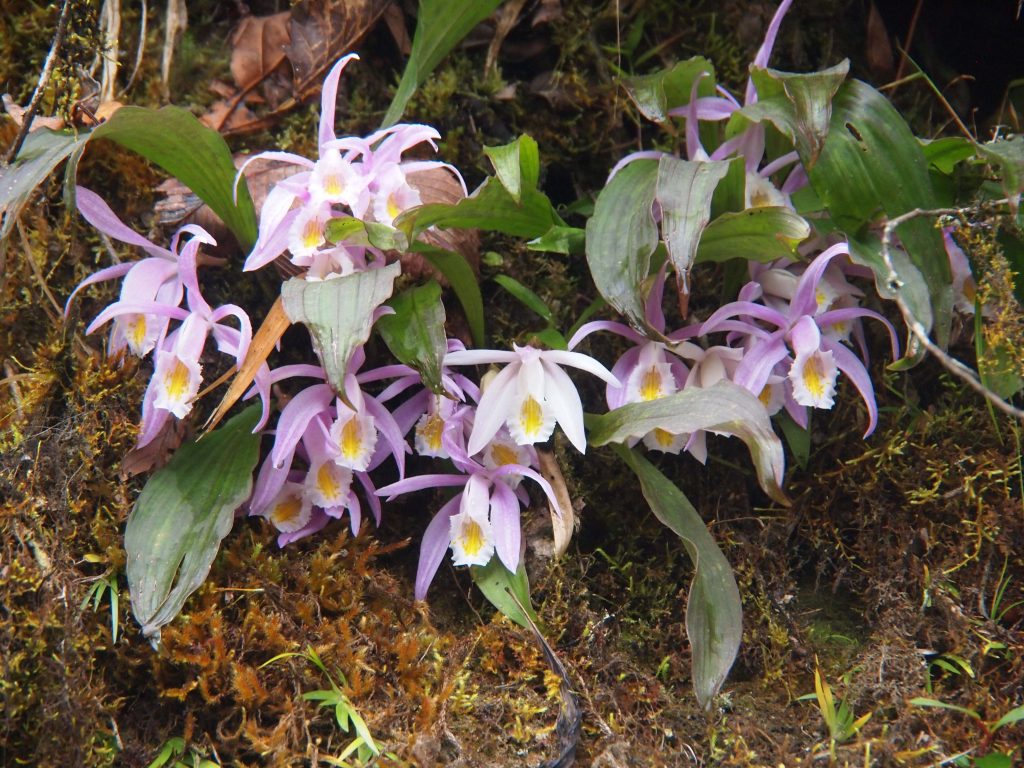
Pleione praecox is an autumn-flowering epiphytic and lithophytic orchid of the eastern Himalaya and Indo-Burmese region, ranging through India, Nepal, Bhutan, China, Thailand, Myanmar, Vietnam and Bangladesh, with cultivated records in Britain and the United States among its roughly 335 GBIF occurrences. It grows on mossy tree trunks, rocks and banks in humid broadleaved montane forest, typically between about 1200 and 2500 m. The cited Bhutanese plants from Trongsa (2050 m) and Trashigang (1900 m), both flowering in October, exemplify its diagnostic late-season anthesis, the epithet praecox referring to bloom appearing as or before the leaves develop.
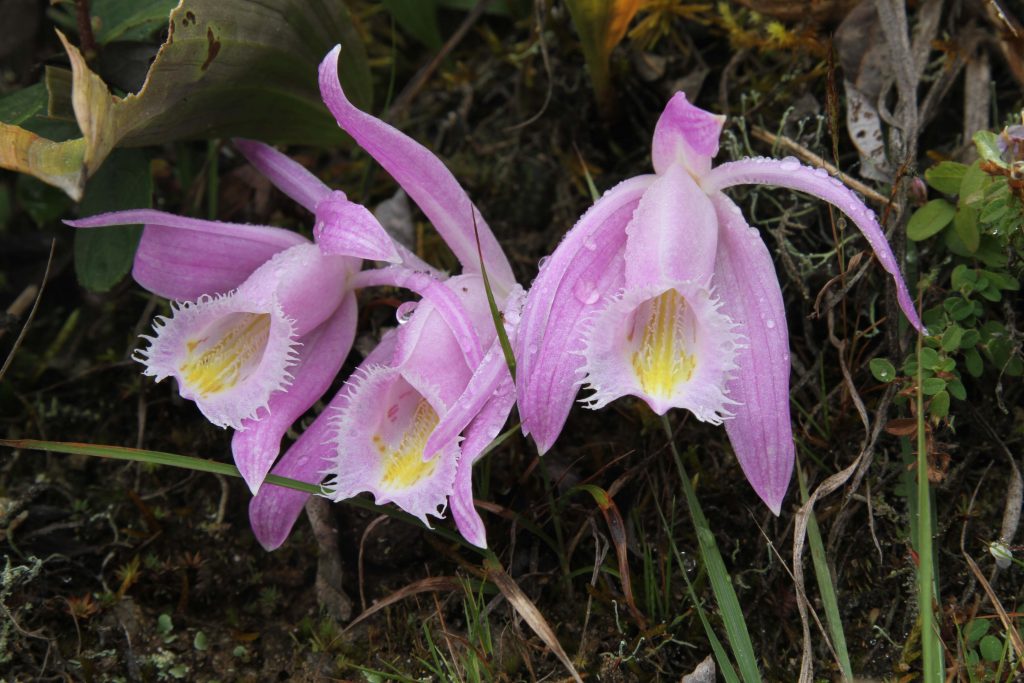
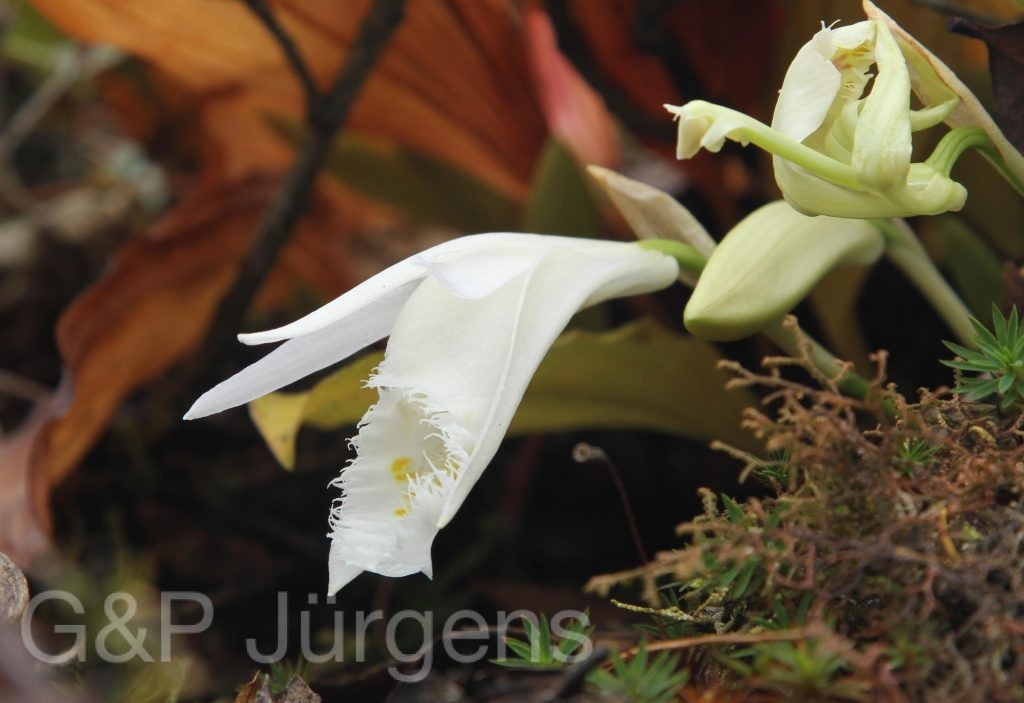
The species is a deciduous sympodial orchid producing conspicuous, flask-shaped to conical pseudobulbs, often mottled green and purple, each typically bearing one or two pleated, lanceolate leaves that are shed in the dormant season. The showy flowers, borne singly (rarely paired) on a short scape from the base of a pseudobulb, have spreading rose-pink to magenta sepals and petals. The funnel-shaped labellum is the showpiece: broad, fimbriate at the margin, and marked internally with several toothed or lamellate crests and reddish-brown blotching. The column is slender and winged, and the fruit is an ellipsoid capsule.
Pleione is a small genus of subtribe Coelogyninae, and P. praecox is among its most horticulturally prized species, widely cultivated by alpine and orchid growers, which accounts for its scattered records in Europe and North America. Its showy labellum attracts bee pollinators despite offering little reward. Although locally frequent, wild populations face pressure from commercial and amateur collection of pseudobulbs and from clearance of montane forest, making in-situ conservation of its epiphytic habitat important.
Author: (Sm.) D.Don · Sources: POWO (Kew), GBIF, Flora of Bhutan, Flora of China (Orchidaceae), Cribb & Butterfield The Genus Pleione