
W.W. Sm.
Description
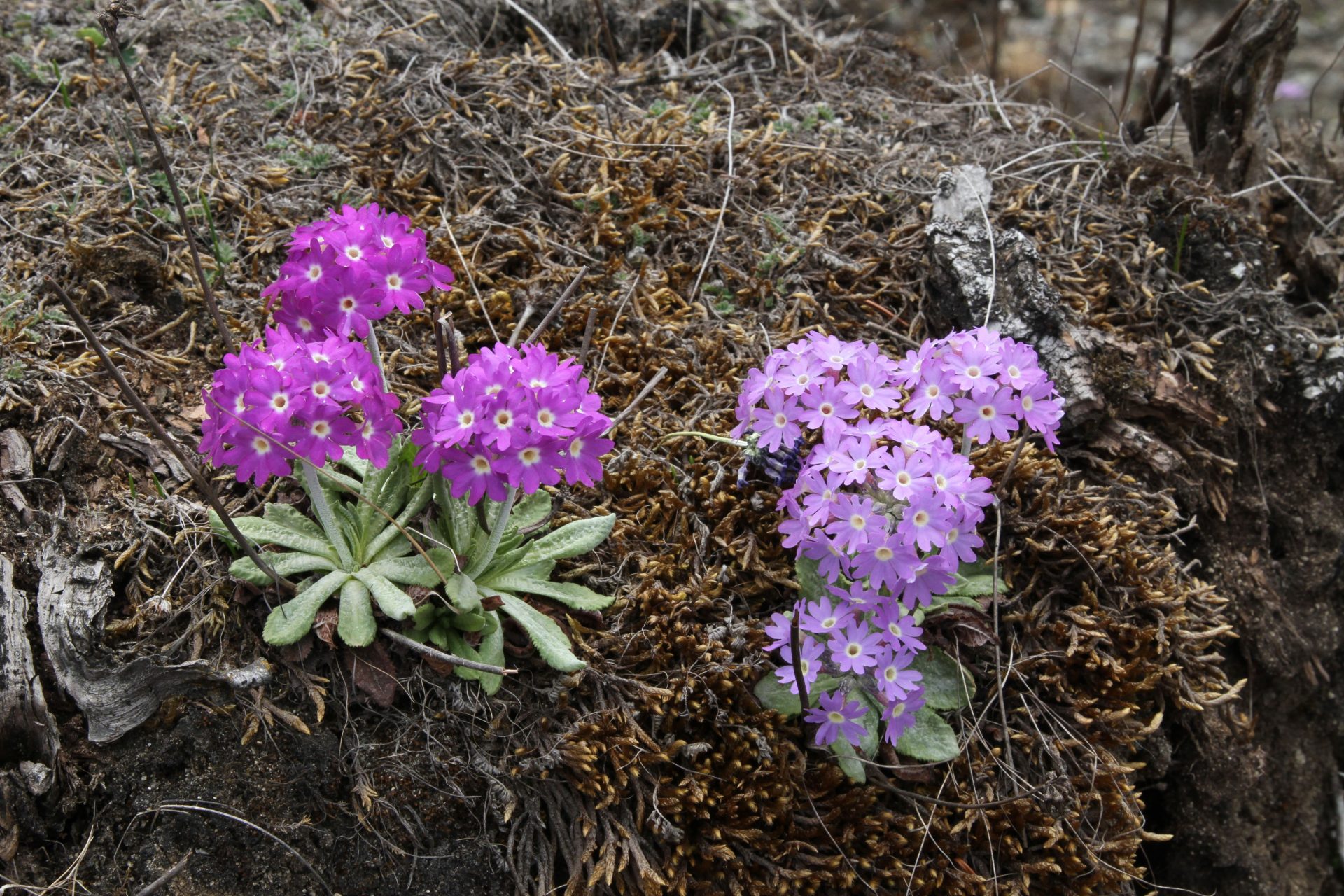
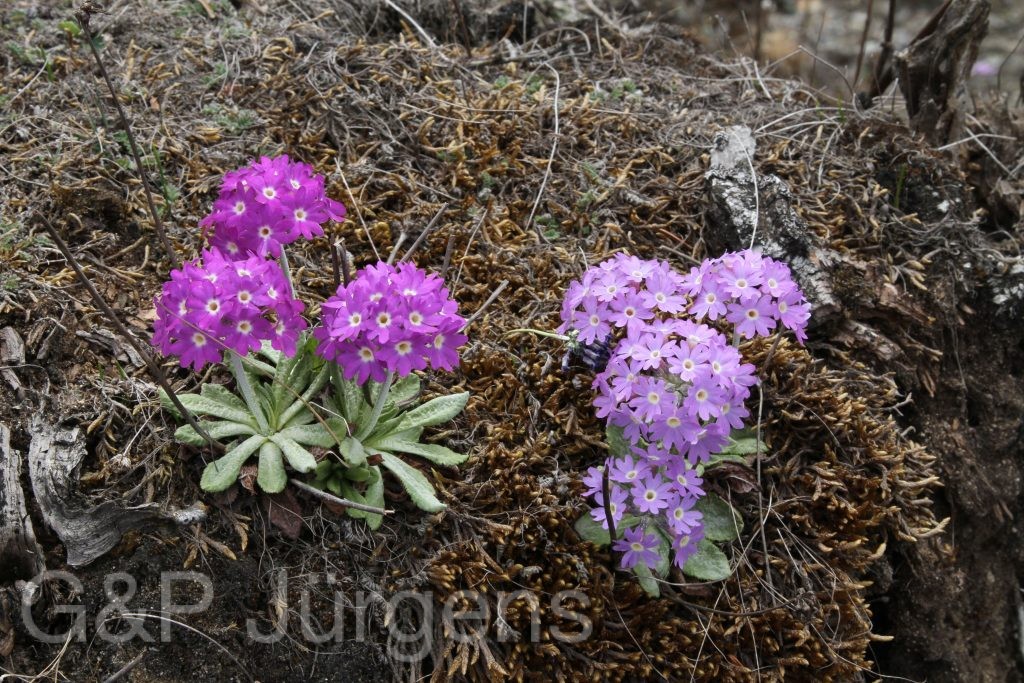
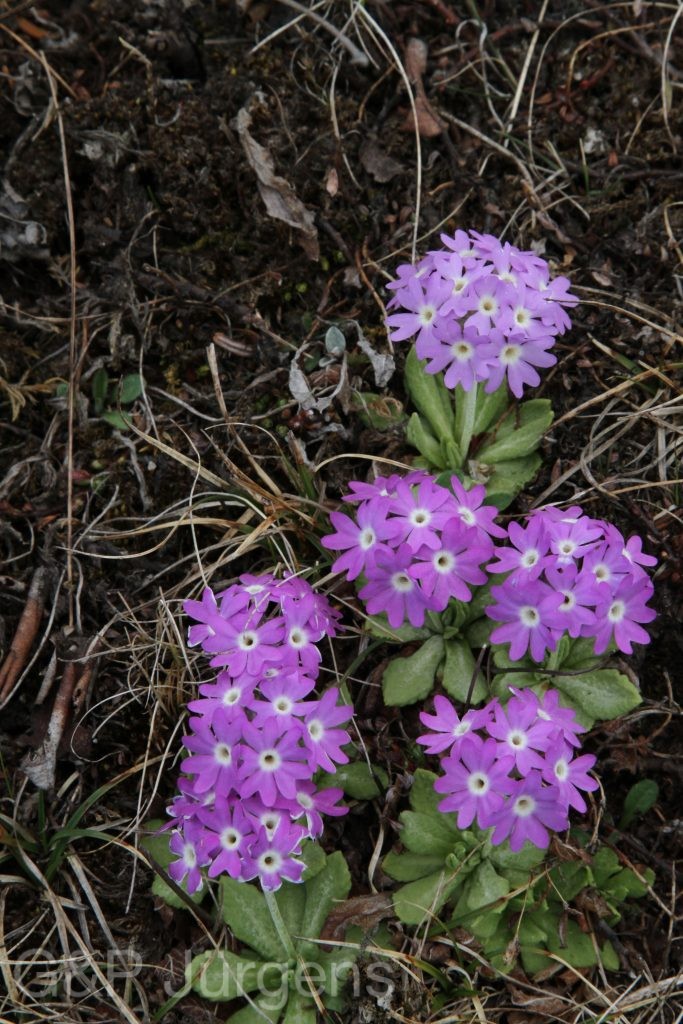
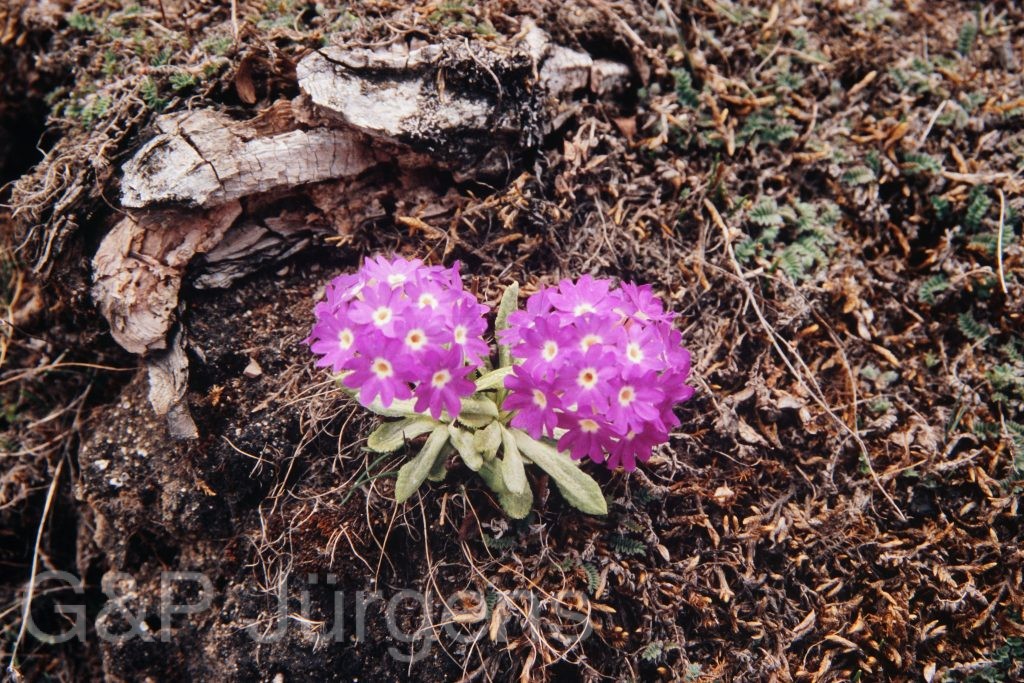
Primula atrodentata is a small alpine primrose of the high eastern and central Himalaya, native to China, Nepal, India, Bhutan and Pakistan, with about 161 georeferenced records confined to the upper subalpine and alpine zones. It grows on damp open slopes, alpine meadows, rocky turf and the margins of snow-melt seepages, typically between about 3000 and 4500 m. The photographed plants were recorded at the Chele-La in western Bhutan at 3900-4000 m, flowering in April and May immediately after snow-melt, when these cushion-forming primulas carpet the freshly exposed turf.
The species is a low, tufted perennial herb with a short rhizome and a basal rosette of obovate to spathulate leaves, the blade narrowed to a winged petiole, the margins finely toothed and the undersurface mealy with white or yellowish farina; the rosettes are often clothed at the base with persistent bud-scales. The flowers are borne in a dense, globose terminal umbel atop a slender, farinose scape that elongates after anthesis. The corolla is salver-shaped with a slender tube and spreading, notched lobes, coloured pale lilac to violet or rarely white, with a small yellow eye. The fruit is a small ovoid capsule shorter than the persistent calyx.
Primula atrodentata belongs to section Capitatae of the genus, the dense-headed primulas, distinguished by its compact globose umbel and toothed, farinose leaves; the epithet refers to the dark-tipped (atro-) teeth of the leaf margin and calyx. A characteristic early-flowering snow-melt species, it is heterostylous and insect-pollinated. Widespread and locally abundant across its alpine range, it is not regarded as threatened.
Author: W.W. Sm. · Sources: POWO (Kew), GBIF, Flora of Bhutan, Flora of China, The Genus Primula (Richards)