
(Wall.) Royle
Description
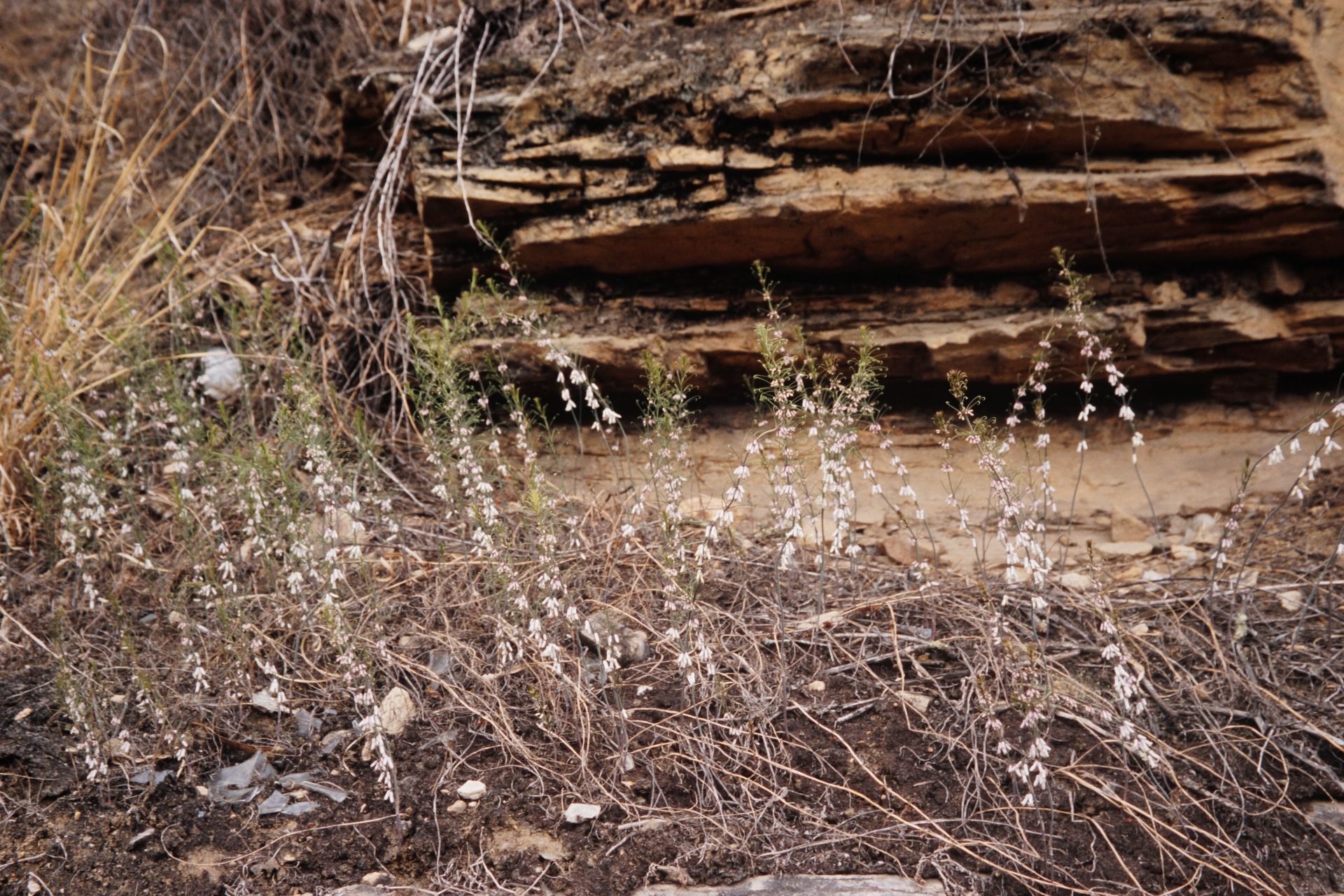
Polygonatum cirrhifolium is a rhizomatous perennial herb widely distributed across the Himalaya and the mountains of central and western China, recorded from China, Nepal, India, Bhutan, Myanmar and Vietnam, with around 2251 georeferenced records (records from Canada, Norway and Britain reflect cultivation). It occurs in temperate forest, forest margins, shrubberies and grassy alpine slopes, on moist humus-rich soils typically between about 2000 and 4000 m. The photographed plant from Punakha in Bhutan at 2400 m, flowering in May, sits near the lower edge of its broad altitudinal span.
It has a stout, knotted, horizontal rhizome from which arises an erect to arching stem. The narrow, linear-lanceolate leaves are borne in whorls of three or more, and the epithet cirrhifolium refers to their slender apices, which are characteristically prolonged and curled into tendril-like tips. The pendent flowers hang one to four together in the leaf axils; each perianth is tubular, pale rose-purple to whitish, the six tepals fused into a cylinder with short lobes and enclosing six stamens. The fruit is a globose berry that ripens from red to purplish-black.
Polygonatum, in Asparagaceae subfamily Nolinoideae, is here represented by a whorled-leaved species readily told from P. oppositifolium by its tendrilled leaf tips. The rhizome, known in Chinese and Himalayan medicine, is gathered as a tonic drug, and the species is among the sources of the herbal material huangjing. The pendent nectar-bearing flowers are bumblebee-pollinated and the berries bird-dispersed. Though widespread and not threatened overall, sustained medicinal harvesting locally depletes wild populations.
Author: (Wall.) Royle · Sources: POWO (Kew), GBIF, Flora of China, Flora of Bhutan, Annotated Checklist of the Flowering Plants of Nepal, Jeffrey monograph of Polygonatum