
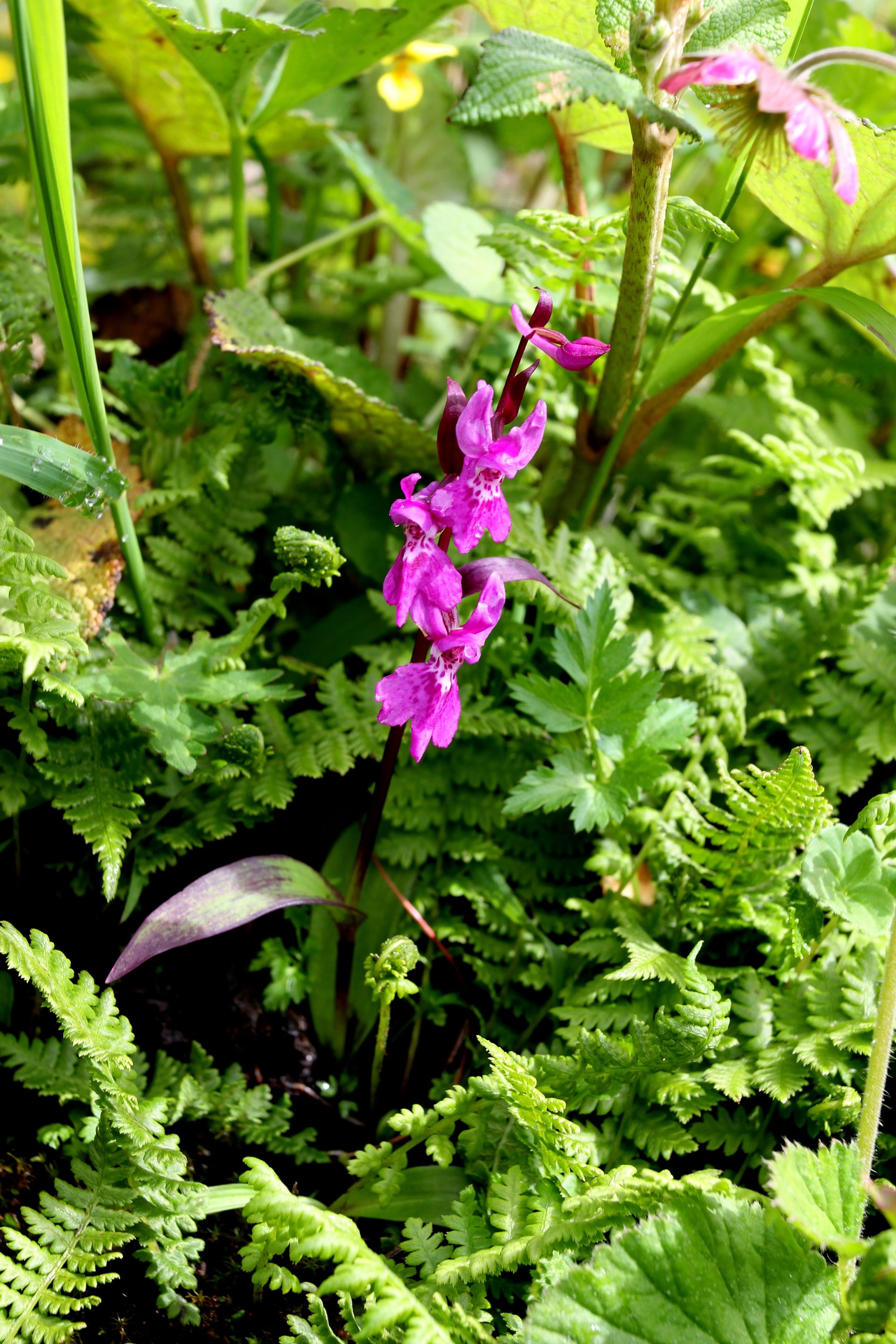
(D.Don) Y.Tang & H.Peng
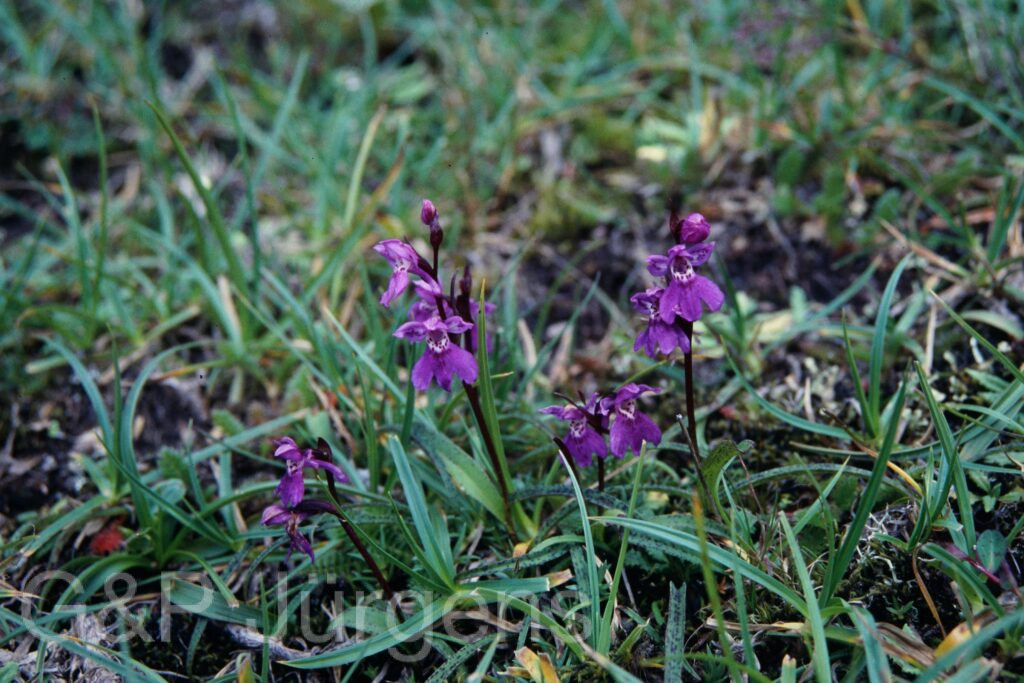
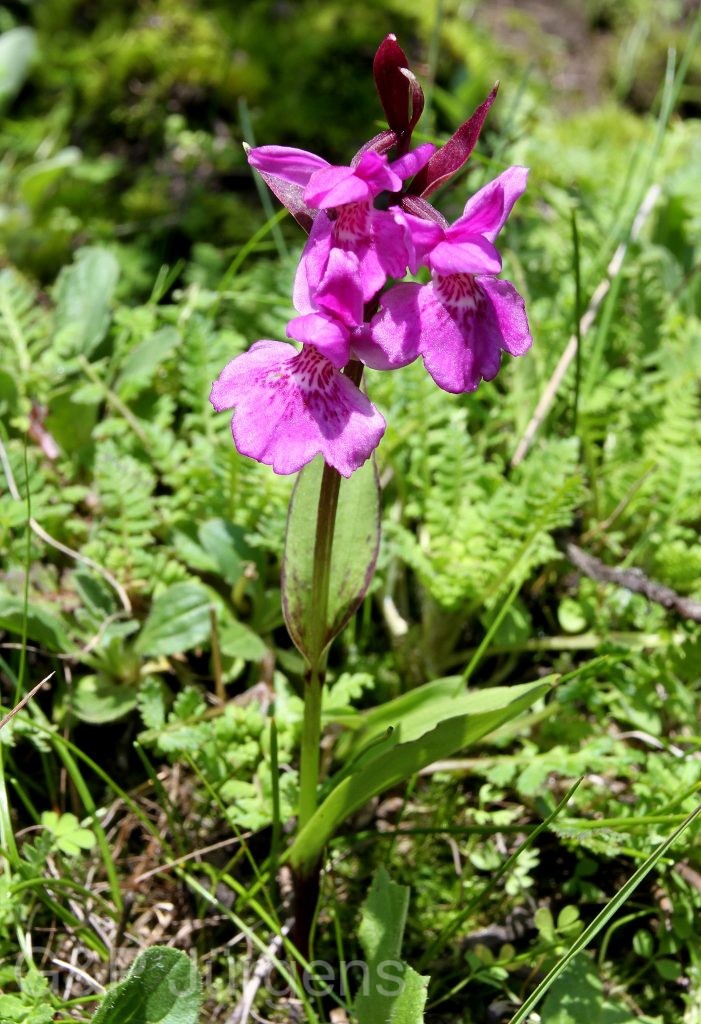
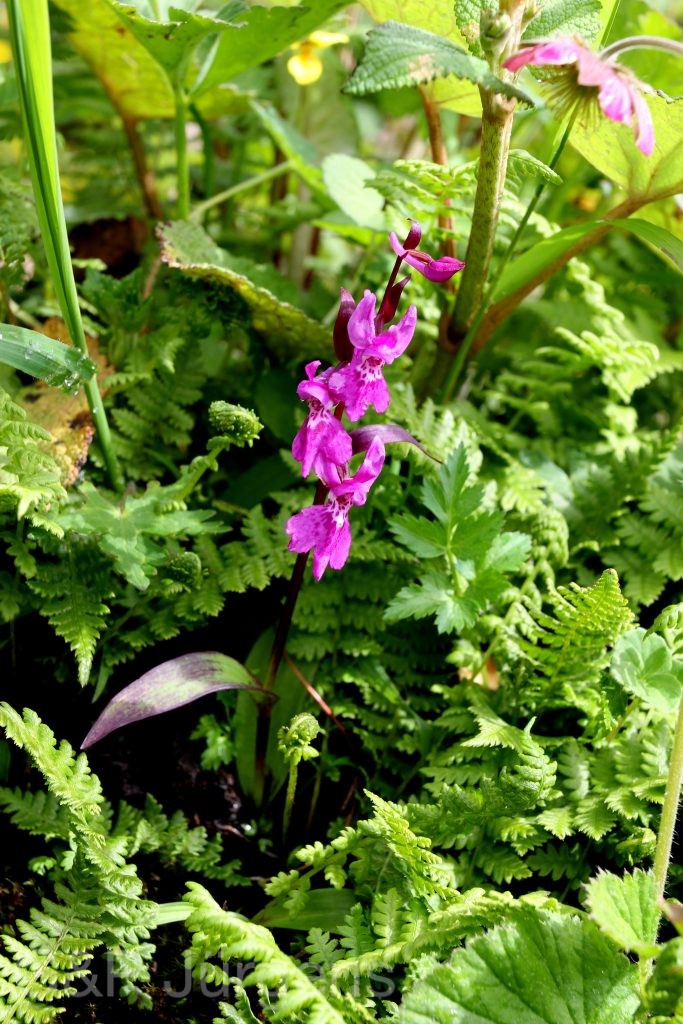
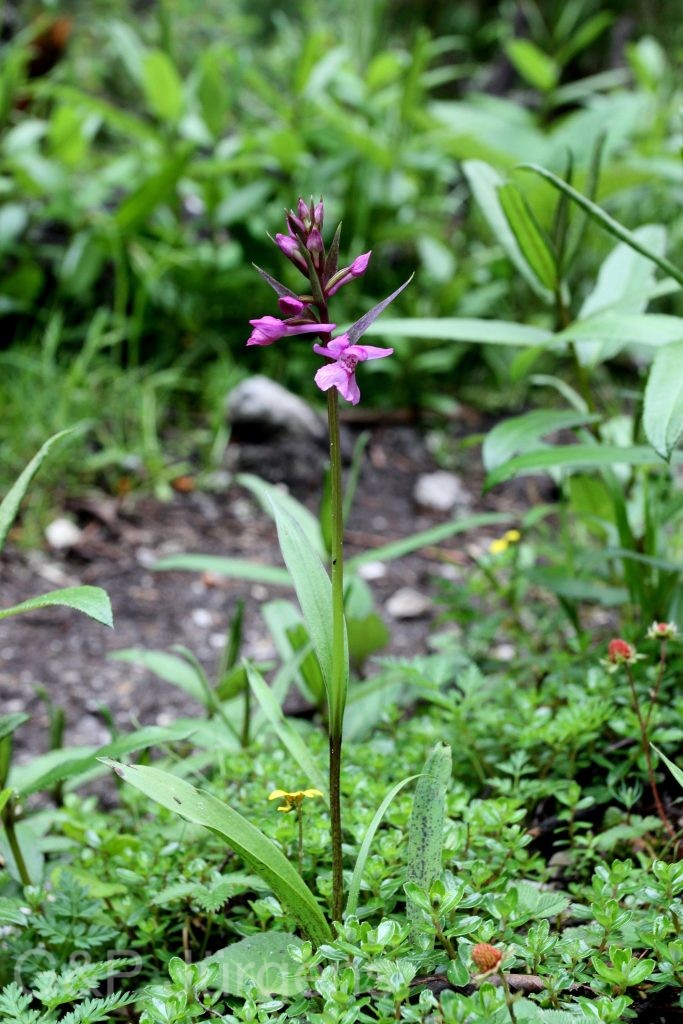
Description
Hemipilia chusua is a terrestrial orchid widely distributed across temperate and alpine Asia, recorded from China, Nepal, India, Bhutan, Myanmar, Russia, Japan and Korea, with over 1700 GBIF occurrences making it one of the best-documented orchids of the region. It grows in alpine and subalpine meadow, open turf, grassy slopes and the margins of dwarf-shrub heath, typically between about 2500 and 4500 m. The illustrated plants from Dzongri in Sikkim at 4100 m, flowering in August, and from Kem-La on the Ludlow-Sherriff Trail in Bhutan at 4300 m in July, exemplify its high-altitude grassland habitat.
It is a slender terrestrial herb arising from small ovoid to ellipsoid tubers, with an erect, glabrous stem bearing one or few leaves. The leaves are lanceolate to oblong-lanceolate, sheathing at the base and somewhat clasping the stem. The inflorescence is a lax, few-flowered terminal raceme of showy rosy-purple to magenta flowers; the lip (labellum) is broad, three-lobed and bears a slender, downward-pointing spur longer than the ovary, while the lateral sepals spread and the dorsal sepal and petals form a loose hood. The fruit is an erect, ribbed dehiscent capsule releasing dust-like seeds.
Long familiar as Orchis or Ponerorchis chusua, the species was transferred to Hemipilia by Tang and Peng following molecular reappraisal of the orchidine alliance. Though wide-ranging and locally abundant, like all wild orchids it is listed under CITES Appendix II, and its alpine populations are vulnerable to collection, grazing pressure and the upslope shift of montane vegetation under climate change.
Author: (D.Don) Y.Tang & H.Peng · Sources: POWO (Kew), GBIF, Flora of Bhutan, Flora of China, Pearce & Cribb The Orchids of Bhutan