
G. Taylor
Description
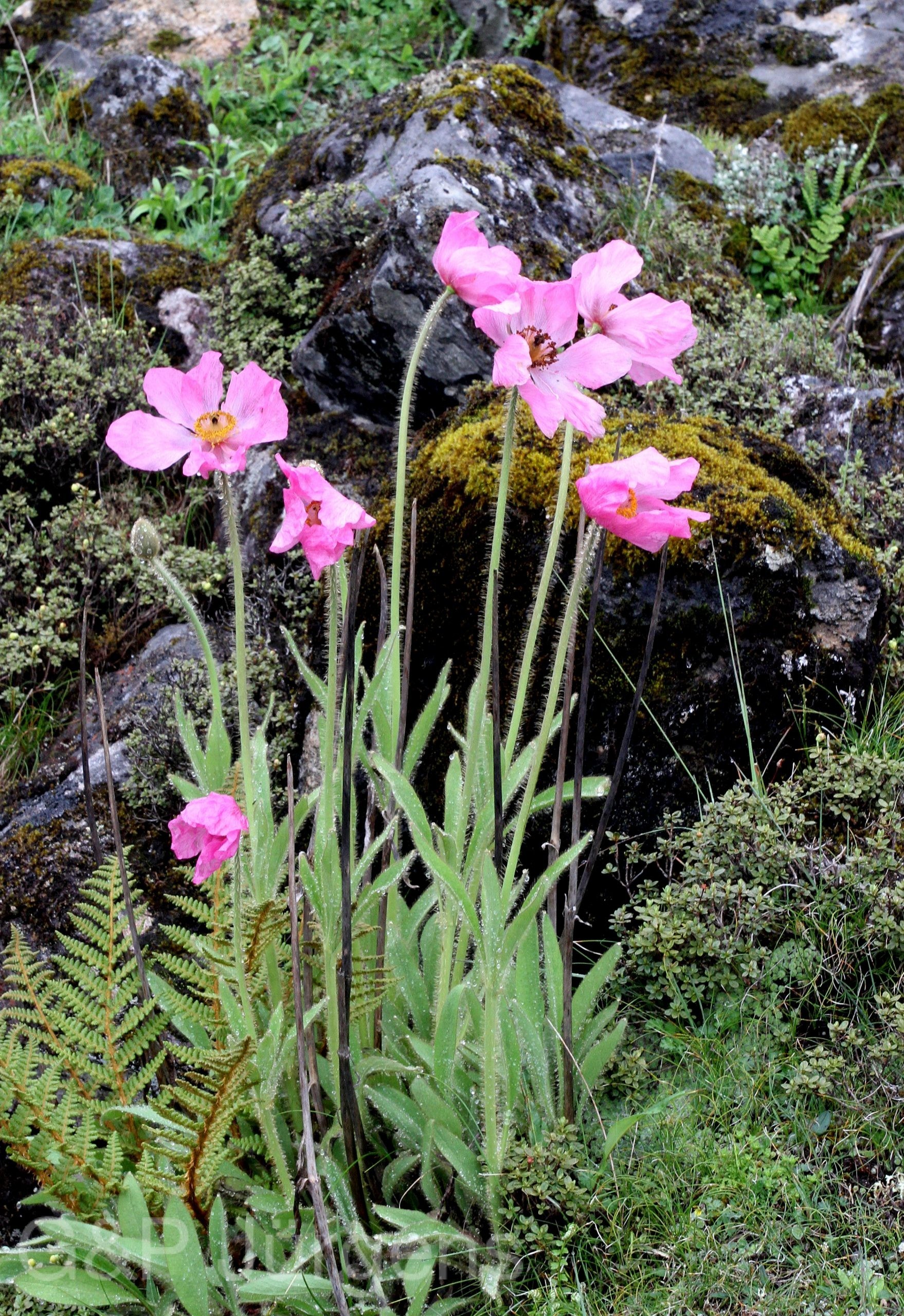
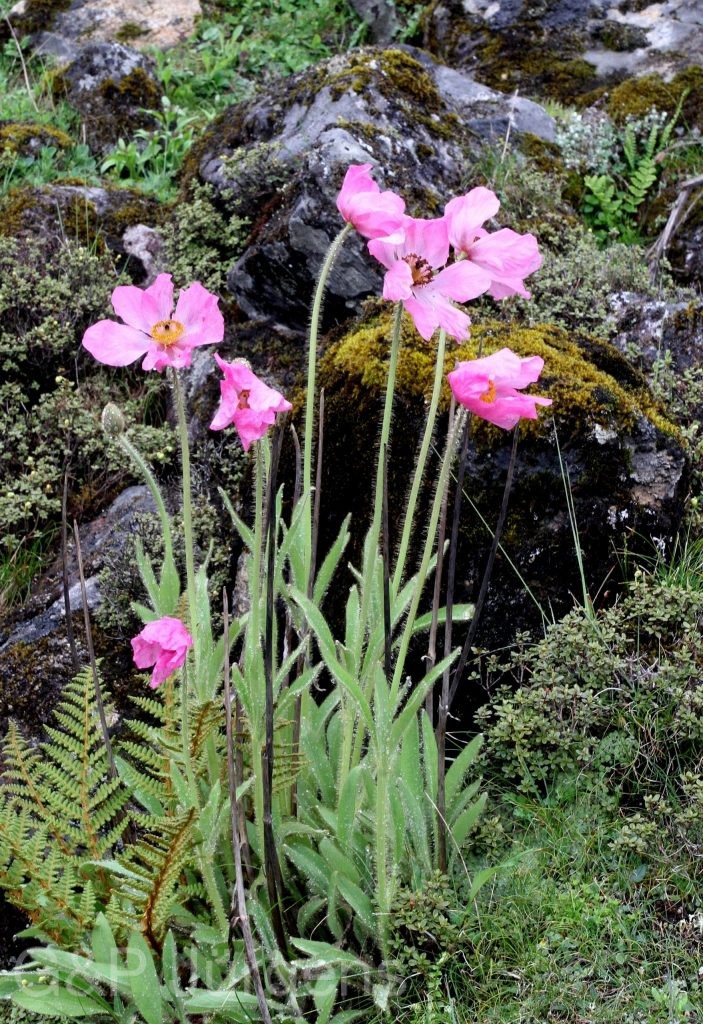
Meconopsis sherriffii is a rare and narrowly endemic Himalayan poppy known only from a small area of the eastern Himalaya straddling south-eastern Xizang (China) and adjacent northern Bhutan; with merely around 17 georeferenced occurrences (CN, BT) it ranks among the most localised members of its celebrated genus. It is a plant of high alpine turf, screes and rocky, well-drained slopes near the upper limit of vegetation, typically between about 4000 and 4800 m. The plant photographed at Warrtlang-La on the historic Ludlow-Sherriff Trail in Bhutan at 4400 m in June, flowering in the short alpine summer, occupies exactly this exposed, high-elevation habitat for which the species is named after its co-discoverer George Sherriff.
It is a tap-rooted perennial forming a low rosette of leaves clothed, like the scapes, in soft golden to rufous hairs. The leaves are oblong to oblanceolate, entire to shallowly lobed, and densely pilose. The flowers, borne singly or few on hairy scapes, are large and saucer-shaped, with four (occasionally more) broad, satiny petals of a distinctive soft pink to rose colour, unusual in a genus dominated by blue and yellow species; the boss of numerous golden stamens surrounds a superior ovary topped by a short style and lobed stigma. The fruit is an ellipsoid, hairy, several-valved capsule opening by apical pores to release many minute seeds.
Meconopsis sherriffii belongs to the section of monocarpic-to-perennial hairy Himalayan poppies and is prized in cultivation for its rare pink colouring. Its extremely restricted range, low population numbers and dependence on fragile high-alpine habitat make it of clear conservation concern, vulnerable to grazing, collection and climatic change.
Author: G. Taylor · Sources: POWO (Kew), GBIF, Flora of Bhutan, Flora of China, Grey-Wilson's monograph The Genus Meconopsis, Ludlow & Sherriff's Bhutan collections