
Description
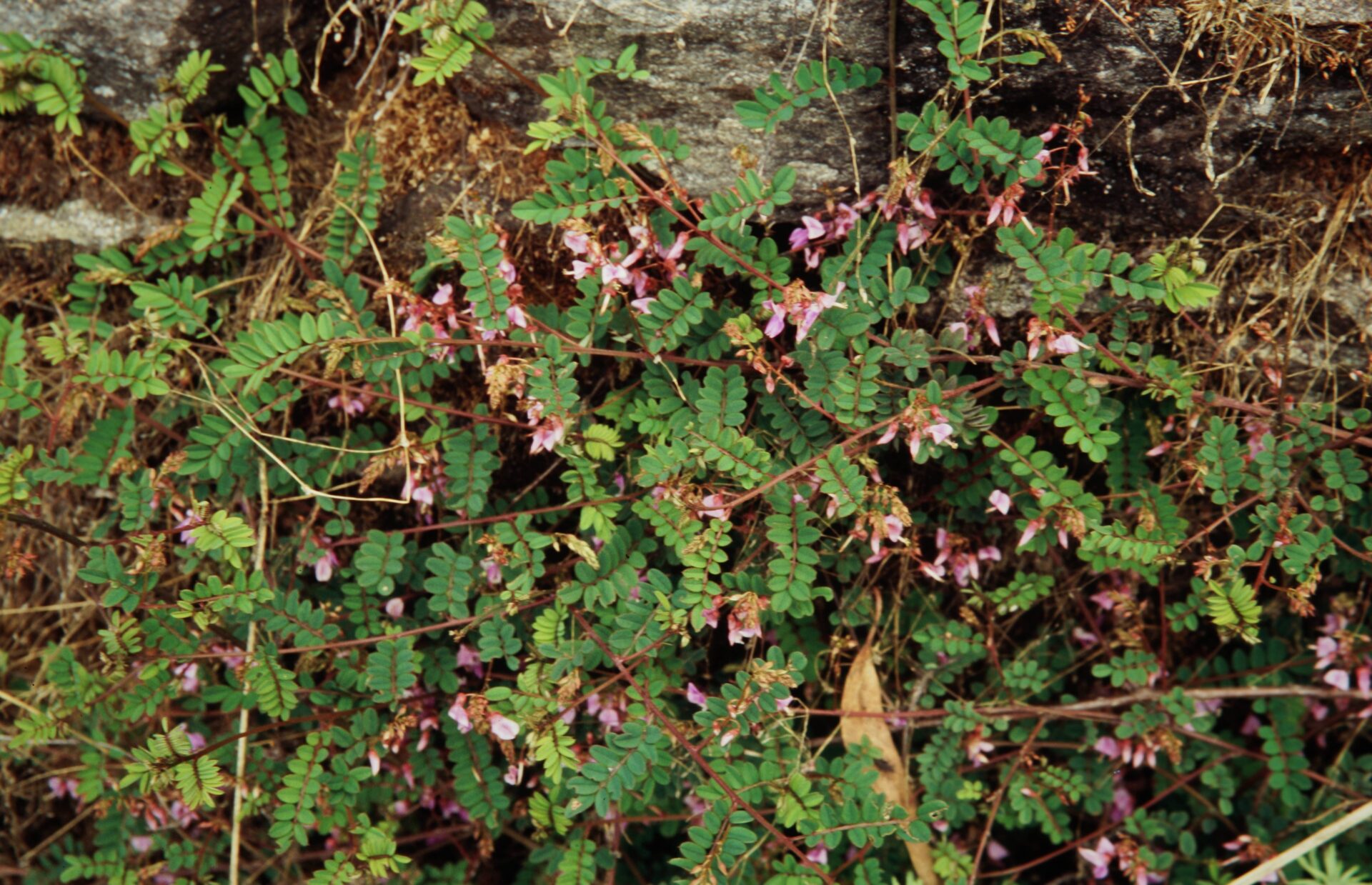
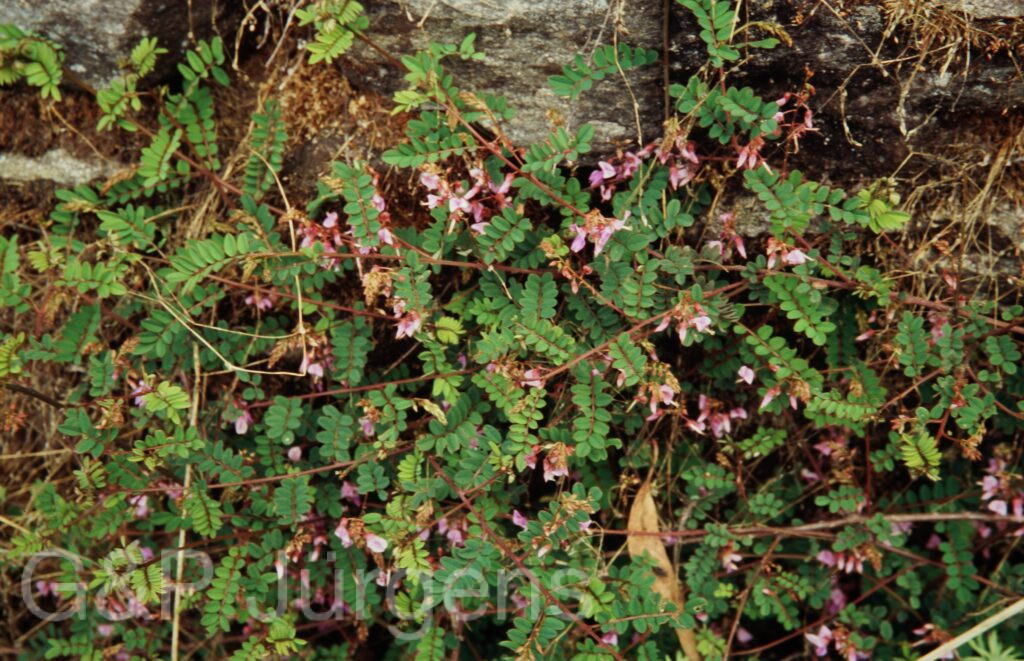
Indigofera dosua var. dosua is a Himalayan shrub of the indigo genus, recorded by GBIF from Nepal and India with a comparatively small number of occurrences, around 19, reflecting limited collection rather than rarity. It grows on open hillsides, in scrub, along forest margins and on disturbed slopes in the subtropical to warm-temperate montane belt. The photographed plant was found in Nepal in the Helambu region at Bolgoau, around 2030 m, in May, a typical mid-elevation setting for this colonising legume of sunny, well-drained terrain.
It is an erect, branching shrub whose young shoots bear the appressed, two-armed (medifixed) malpighiaceous hairs characteristic of Indigofera. The leaves are imparipinnate with several pairs of small, opposite, elliptic to obovate leaflets, each mucronate and finely hairy. The flowers are borne in slender axillary racemes and have the typical papilionaceous structure, with a standard, two wings and a keel, generally pink to reddish or purplish, the keel bearing lateral spurs. The stamens are diadelphous and the superior ovary develops into a slender, cylindrical, several-seeded legume, the pod straight to slightly curved and dehiscing along both sutures.
GBIF accepts the name and its autonymic variety. Indigofera is a large pantropical genus historically significant as a source of natural indigo dye, and several Himalayan species are nitrogen-fixing pioneers of degraded slopes. The recognition of var. dosua implies the existence of other infraspecific variants distinguished by indumentum and leaflet number. As a widespread early-successional shrub, it is of no conservation concern.
Sources: POWO (Kew), GBIF, Flora of Nepal, Flora of British India, monograph of Asian Indigofera