
Buch.-Ham. ex D.Don
Description
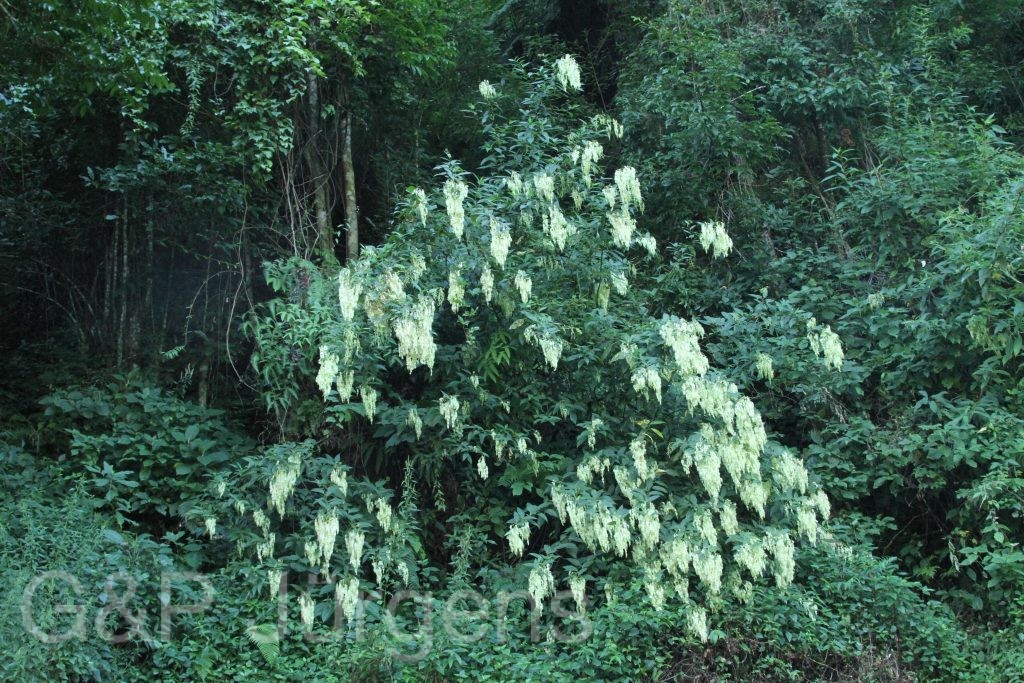
Dobinea vulgaris is a shrub or small subshrub of the eastern Himalaya and adjoining parts of southwestern China and northern Southeast Asia, recorded by GBIF from China, Nepal, India, Bhutan, Myanmar and Thailand across roughly 263 georeferenced occurrences. It is a plant of warm subtropical lower hill slopes, occupying open forest, scrub, rocky banks, ravines and disturbed roadside ground, generally at low to mid elevations. The Bhutanese records cited here, from Galephug at about 700 m and from Zhemgang at around 910 m, both in October, place it firmly in the low foothill zone of the southern Himalaya, where it flowers and fruits towards the close of the monsoon. It favours seasonally warm, humid conditions and is frequently found in secondary vegetation.
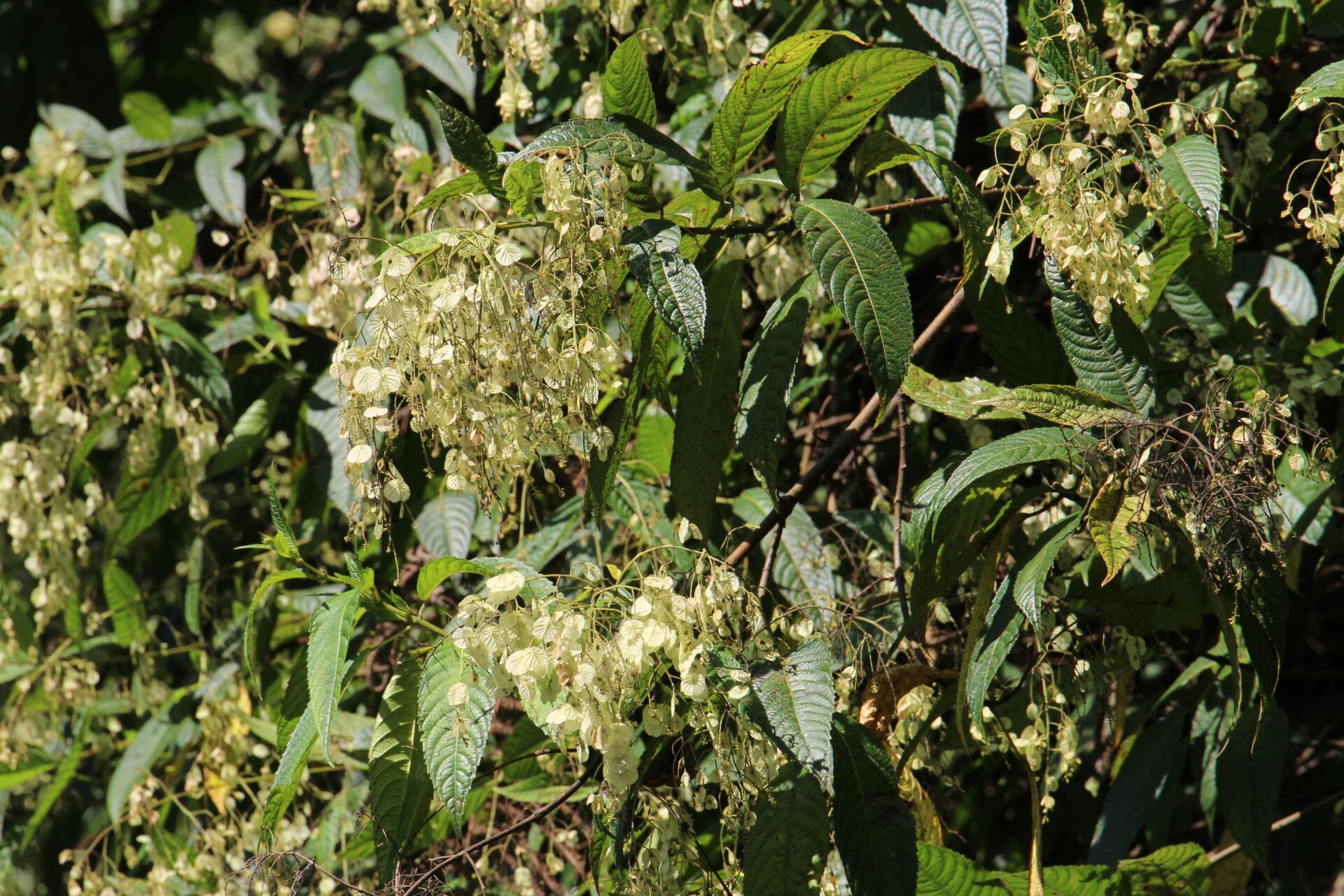
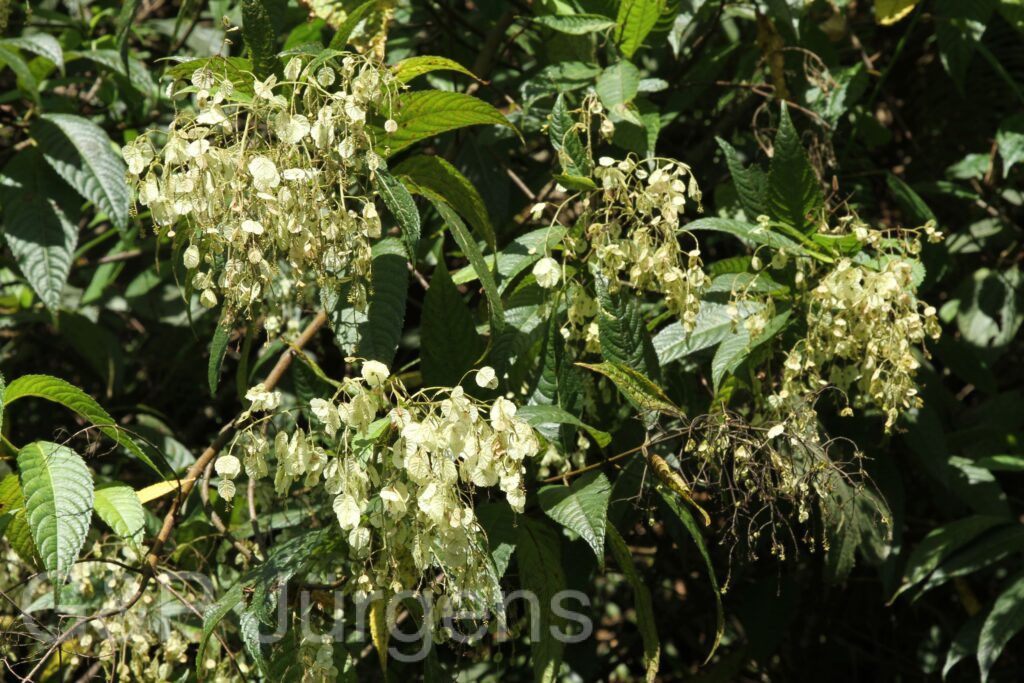
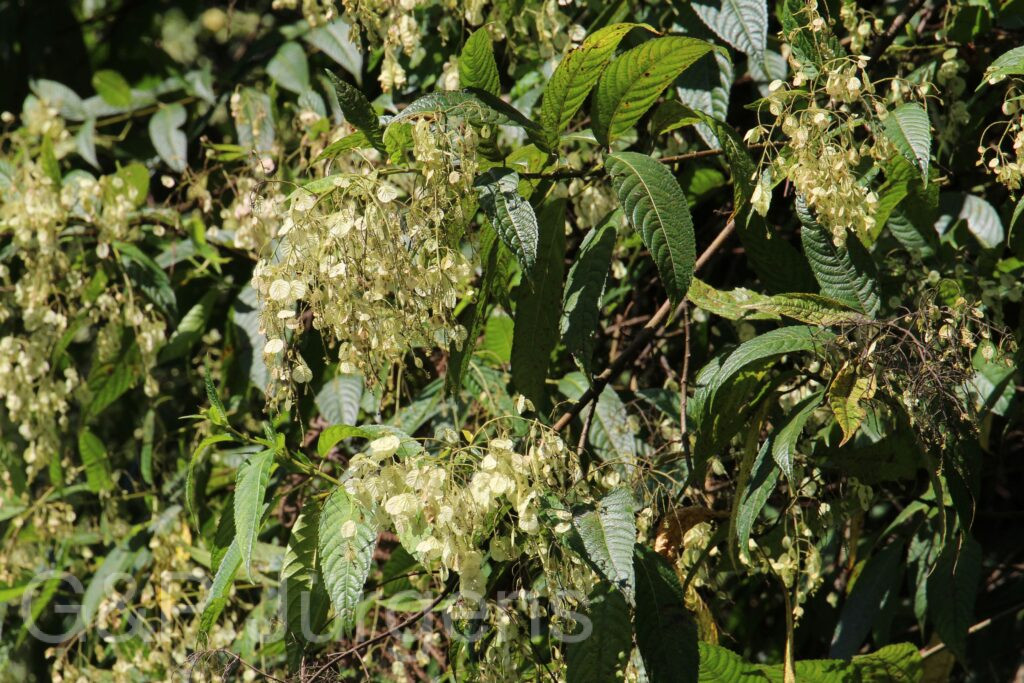
The plant has soft, somewhat herbaceous to weakly woody stems and opposite, simple leaves that are ovate to elliptic-lanceolate, acuminate, and conspicuously serrate or crenate-serrate along the margin, a foliage aspect unusual for the family. It is functionally dioecious: the small male flowers are borne in slender axillary or terminal panicles, while the female flowers are solitary or few and are remarkable for being adnate to an enlarged, persistent, leaf-like (foliaceous) bract that expands greatly in fruit and acts as a wing for wind dispersal. The fruit is a small compressed drupe-like structure carried on this accrescent membranous bract.
Dobinea is a small genus of only two species, and its placement within Anacardiaceae has historically been contentious; the herbaceous habit, opposite serrate leaves and unique bract-borne female flowers led some authors to segregate it (with Campylopetalum) into the family Podoaceae, although modern molecular phylogenetics confirms its position within an expanded Anacardiaceae, near the base of the family. This makes Dobinea vulgaris of particular interest to systematists studying the early diversification and morphological boundaries of the cashew family. The species is locally common within its range and is not regarded as of conservation concern.
Author: Buch.-Ham. ex D.Don · Sources: POWO (Kew), GBIF, Flora of China Vol. 11, Flora of Bhutan Vol. 2, Flora of Nepal, Flora of Pakistan, Pell et al.: systematics of the Anacardiaceae (including the Dobinea/Podoaceae problem)