
(D. Don) Fu
Description
Rhodiola himalensis is a characteristic high-alpine succulent of the Himalaya and adjacent Sino-Himalayan mountains, documented by some 562 georeferenced records from Nepal (NP), China (CN), India (IN), Bhutan (BT), Pakistan (PK) and Mongolia (MN), with a peripheral record in Japan (JP). It occupies the alpine zone, broadly between 3500 and 5000 m, on rocky slopes, screes, grassy alpine meadows, stream banks and moist ledges. The collections cited from Pataathi in Garhwal at 4150 m, Jimilangtso in Bhutan at about 4050 m and Lada-La in Sikkim at 4000 m, flowering between June and September, illustrate its broad occurrence across the central and eastern Himalaya at consistently high elevation.
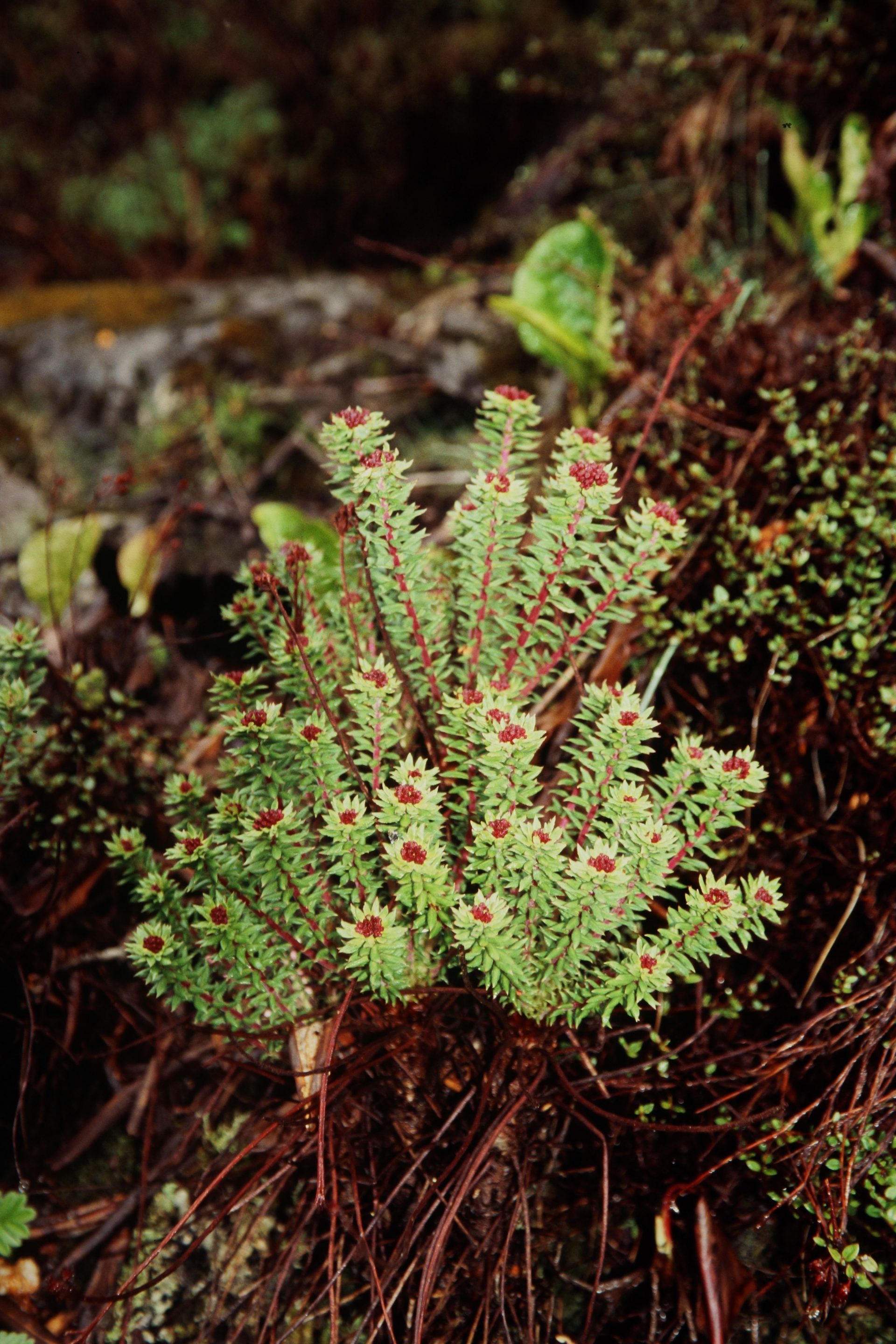
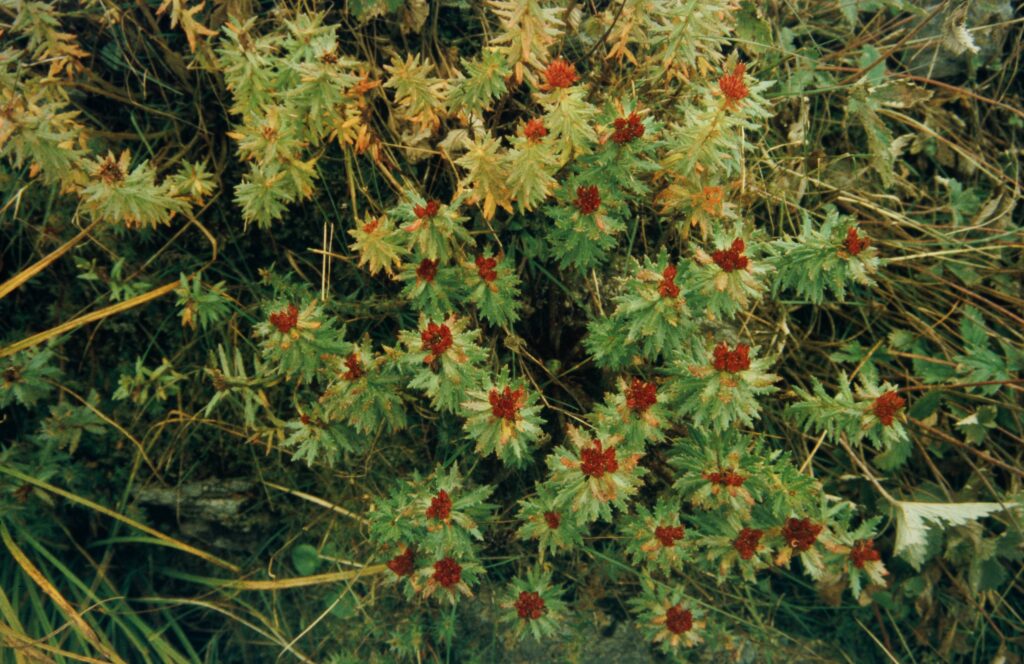
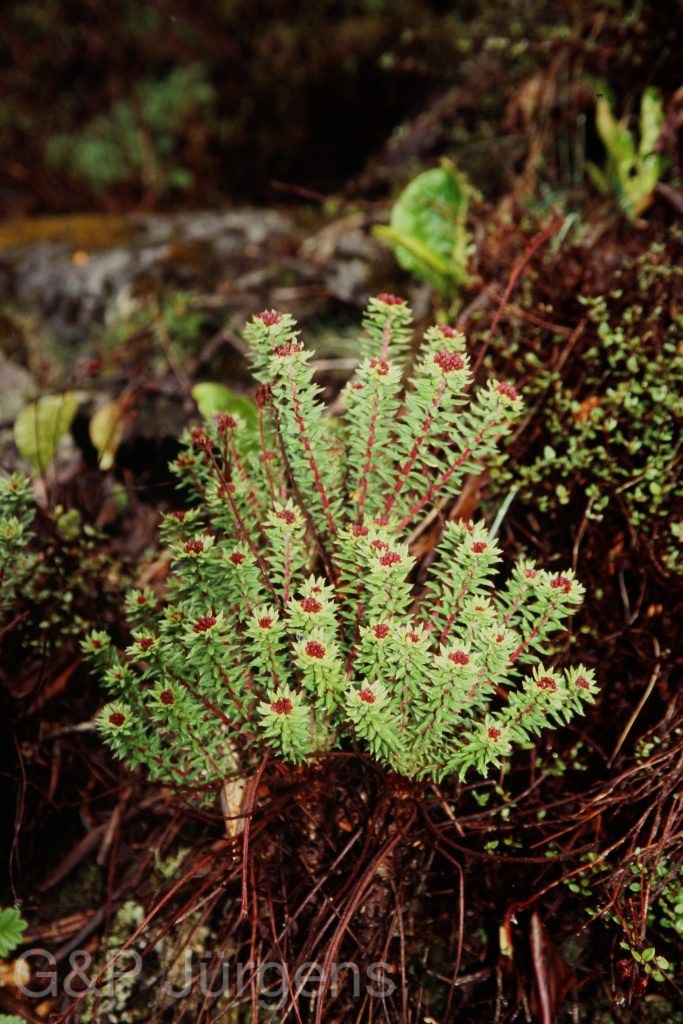
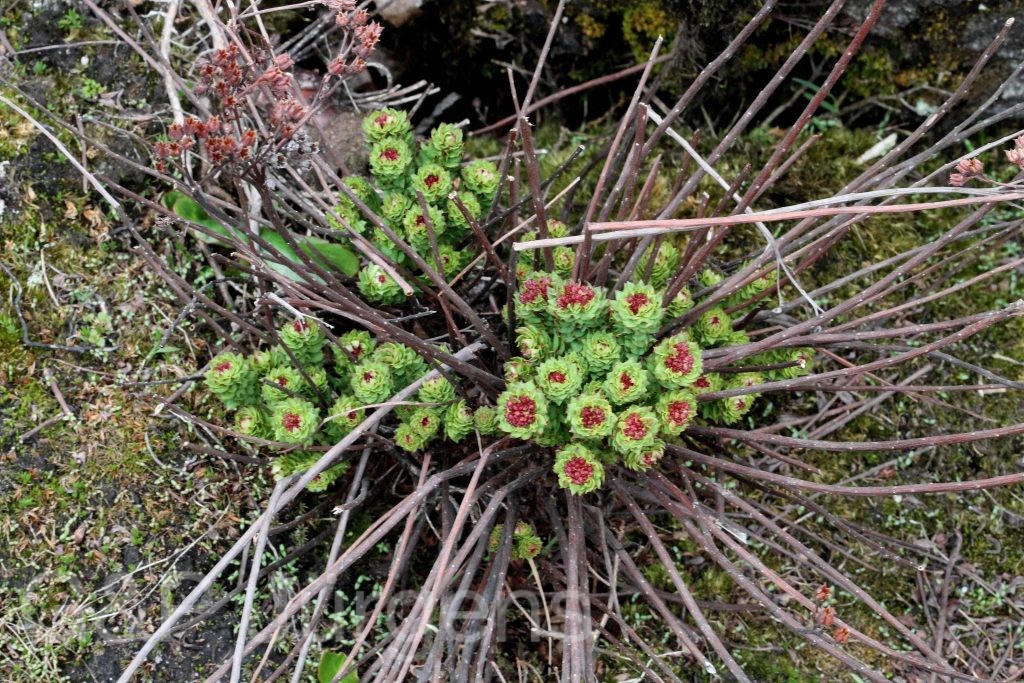
It is a perennial herb arising from a stout, scaly, branched caudex topped by a fleshy rootstock. The flowering stems are erect to ascending and clothed with numerous, spreading, flat, sessile leaves; these are oblong-lanceolate to elliptic, fleshy, entire to minutely toothed, and often somewhat glaucous. The species is dioecious, the small flowers gathered into a dense terminal corymb; the staminate flowers are dark red to purplish with four parts and eight stamens, while the pistillate flowers develop into clusters of erect, dark red to purplish follicles bearing numerous minute seeds. The dark, often blackish-purple inflorescence colour is a notable field character.
Rhodiola (Crassulaceae), segregated from Sedum, comprises cold-adapted, perennating CAM succulents whose persistent woody caudex enables survival of harsh alpine winters and short growing seasons. R. himalensis, like several congeners, is gathered for use in Tibetan and Himalayan traditional medicine, contributing to localised harvesting pressure. The species remains widespread and is not formally threatened, though slow regeneration makes high-altitude Rhodiola populations vulnerable to sustained overcollection.
Author: (D. Don) Fu · Sources: POWO (Kew), GBIF, Flora of China, Flora of Bhutan, Annotated Checklist of the Flowering Plants of Nepal, Ohba monographic studies of Himalayan Crassulaceae (Rhodiola)