
D.Don ex. Sims
Description
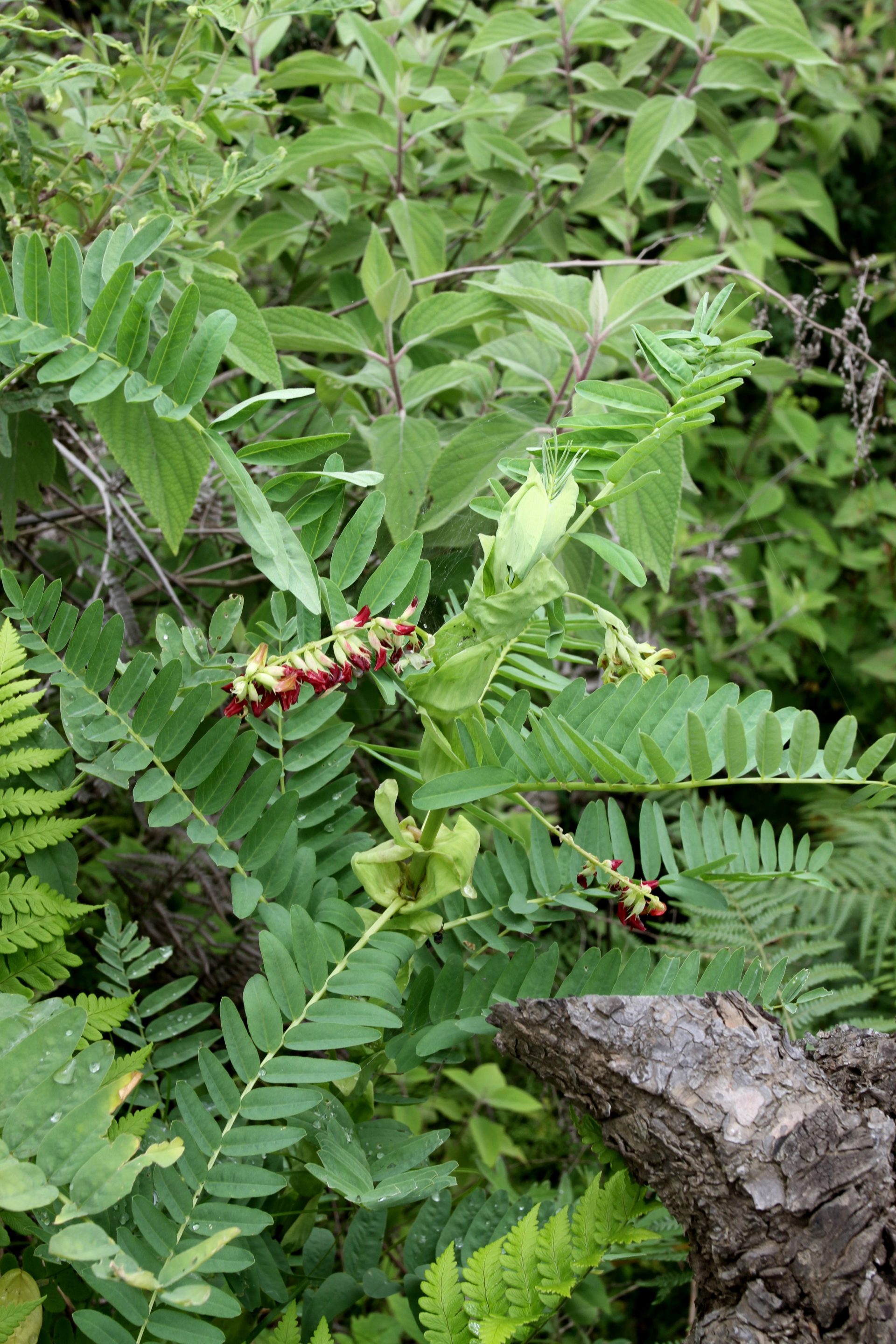
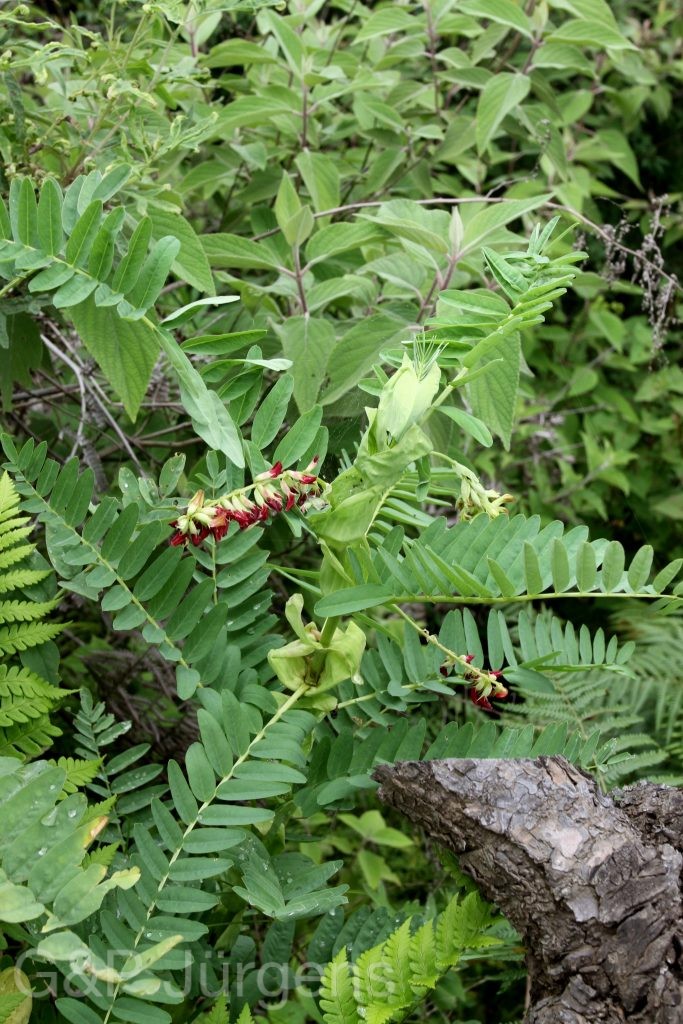
Astragalus stipulatus is a Himalayan milk-vetch distributed across Nepal, India, China and Bhutan, with around 83 GBIF occurrences. It is a plant of open, sunny situations in the temperate to lower subalpine zone, occupying dry grassy slopes, rocky banks, riverside terraces and disturbed ground, generally between about 2000 and 3500 m. The plant illustrated from the Paro Chu valley in Bhutan at 2400 m, flowering in July, is typical of its occurrence along well-drained, gravelly valley sides during the monsoon season.
It is a perennial or sometimes biennial herb with ascending to spreading, often somewhat straggling stems arising from a branched rootstock. The leaves are imparipinnate with several pairs of small elliptic to oblong leaflets and conspicuous, often connate stipules that give the species its epithet. The pea-like flowers are borne in axillary racemes; the papilionaceous corolla is purplish to pale violet or whitish, with the standard exceeding the wings and keel, and the calyx is tubular-campanulate with subequal teeth. The fruit is an oblong, often somewhat curved and inflated legume that may be bilocular through intrusion of the lower suture.
Astragalus, the largest genus of flowering plants, is richly represented in the Himalaya and Central Asia. A. stipulatus (D. Don ex Sims) belongs to the diverse Himalayan assemblage of the genus; it is widespread and of no conservation concern, contributing to early-successional and grazing-disturbed communities and, as a legume, to soil nitrogen enrichment through root nodulation.
Author: D.Don ex. Sims · Sources: POWO (Kew), GBIF, Flora of Bhutan, Flora of China, Podlech & Zarre monograph of Old World Astragalus