
(L.) Roxb.
Description
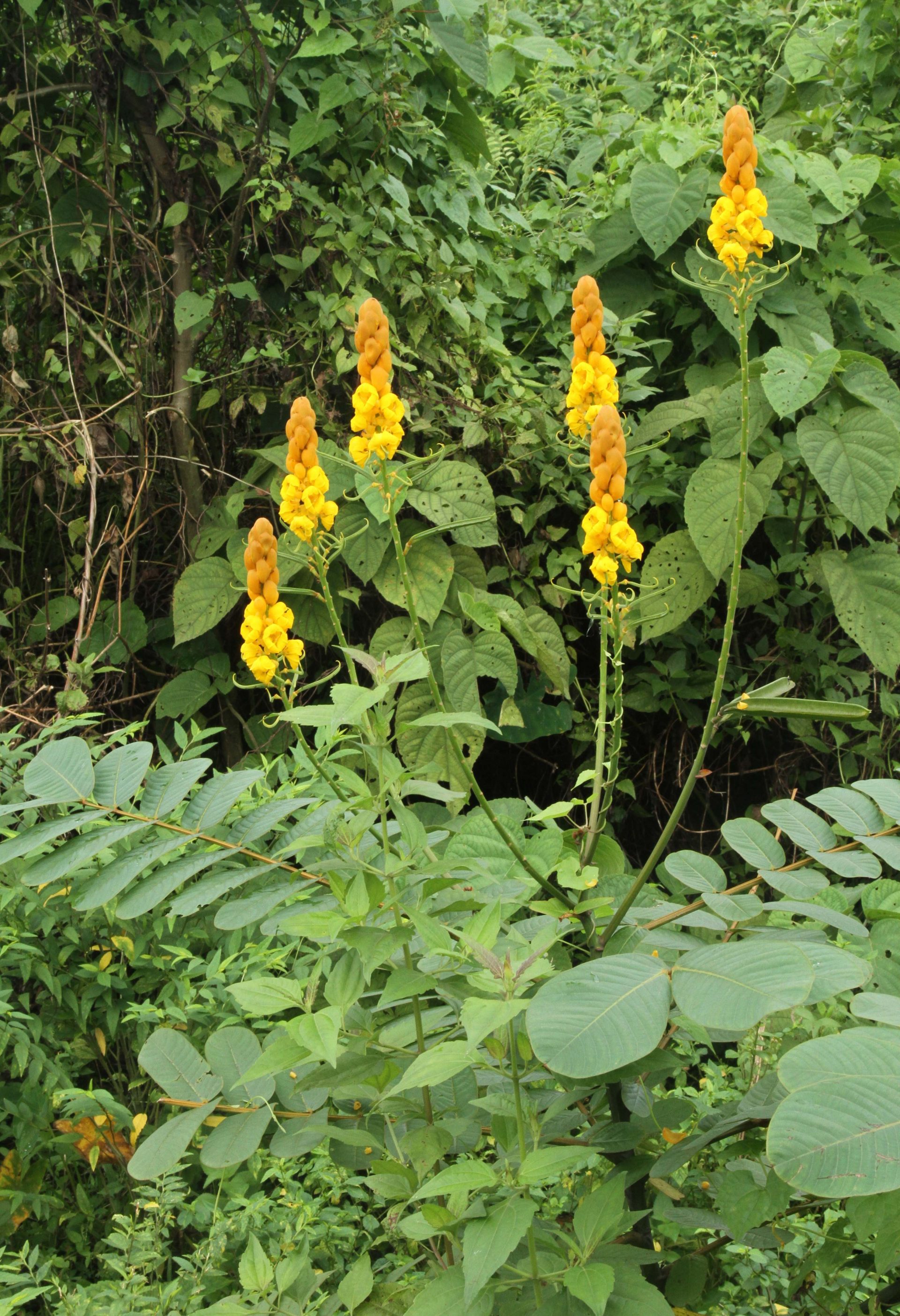
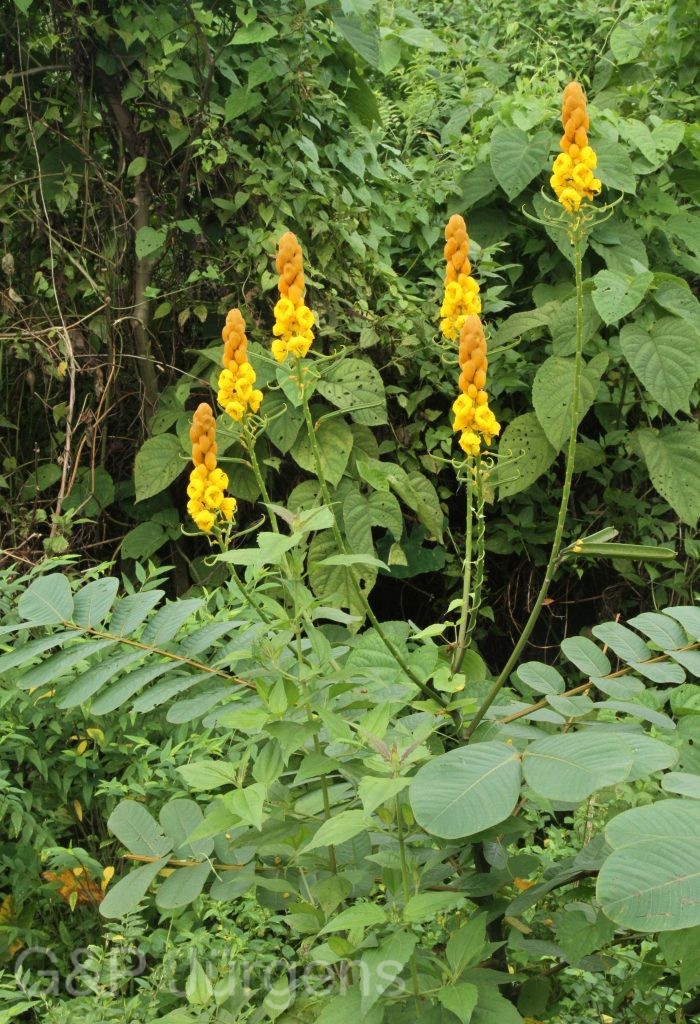
Senna alata, the candle bush or ringworm shrub, is a pantropical species of probable Neotropical origin, now widely naturalised throughout the tropics; GBIF records (12391 occurrences) span Brazil, the United States, Mexico, India, Australia, Indonesia, Taiwan, the Philippines, West Africa and much of Southeast Asia. It thrives in warm, humid lowland habitats, occupying riverbanks, ditches, waste ground, field margins and other disturbed, moist sites, generally below about 1000 m. The photographed plant from Galephu in southern Bhutan at only 380 m, flowering in September, marks its presence in the hot, subtropical Himalayan foothills where it occurs as an introduced or cultivated ornamental and medicinal plant.
The species is a robust, fast-growing shrub or small tree reaching 2-4 m, with stout, sparsely branched stems. The large pinnate leaves bear 6-14 pairs of oblong leaflets that are rounded at the apex, the rachis often narrowly winged. The inflorescence is a dense, erect, candle-like terminal raceme of bright golden-yellow flowers, each enclosed in bud by an orange bract that falls at anthesis. The flowers have five subequal petals and fertile and reduced stamens characteristic of Senna. The distinctive fruit is a straight, oblong, four-winged (alate) pod, dehiscing to release numerous flattened seeds, the wings giving the species its epithet.
Described by Linnaeus and transferred by Roxburgh, the species belongs to genus Senna (Fabaceae, subfamily Caesalpinioideae), segregated from the broad old concept of Cassia. It is renowned in ethnomedicine, its anthraquinone-rich leaves used as a topical antifungal treatment for ringworm and other skin conditions. While valued horticulturally and medicinally, its vigour and prolific seed make it a potential weed of disturbed tropical land. It is of least conservation concern given its enormous, partly anthropogenic range.
Author: (L.) Roxb. · Sources: POWO (Kew), GBIF, Flora of China, Flora of Bhutan, Cassiinae: A Synoptic Revision of Senna (Irwin & Barneby)