
Salisb.
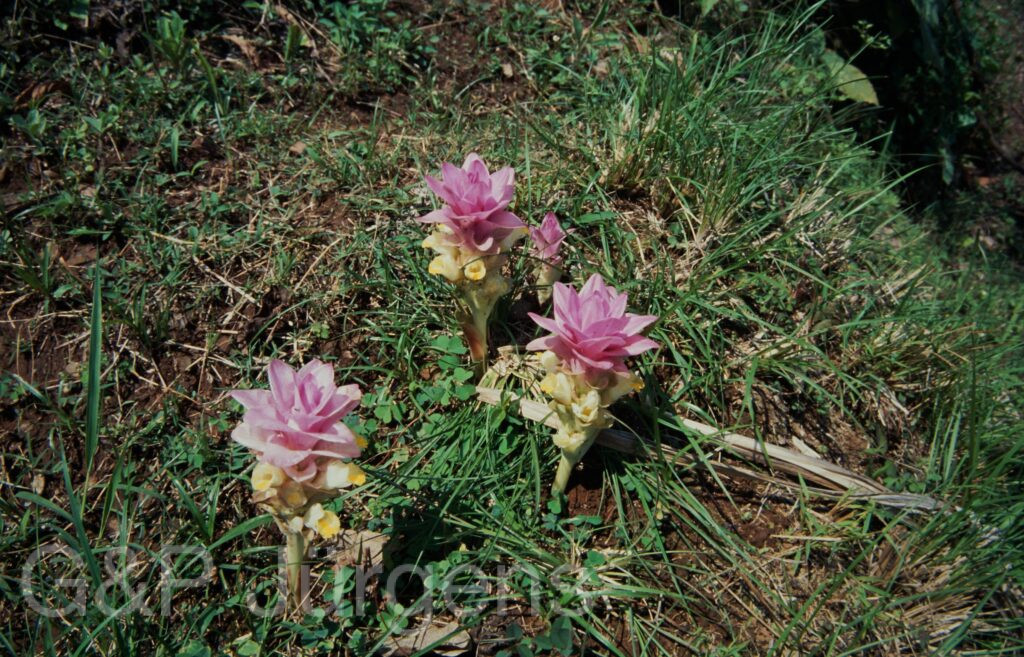
Description
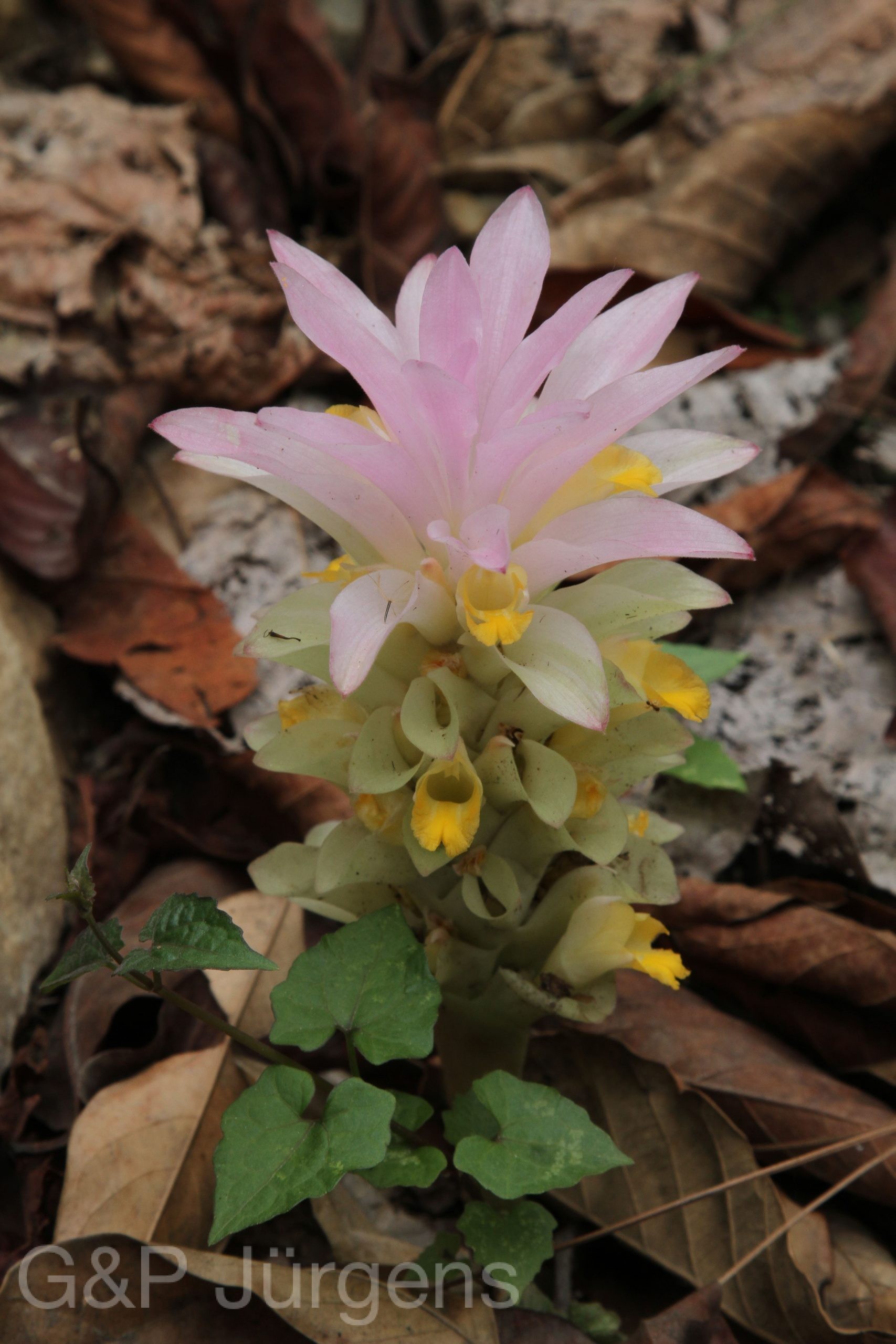
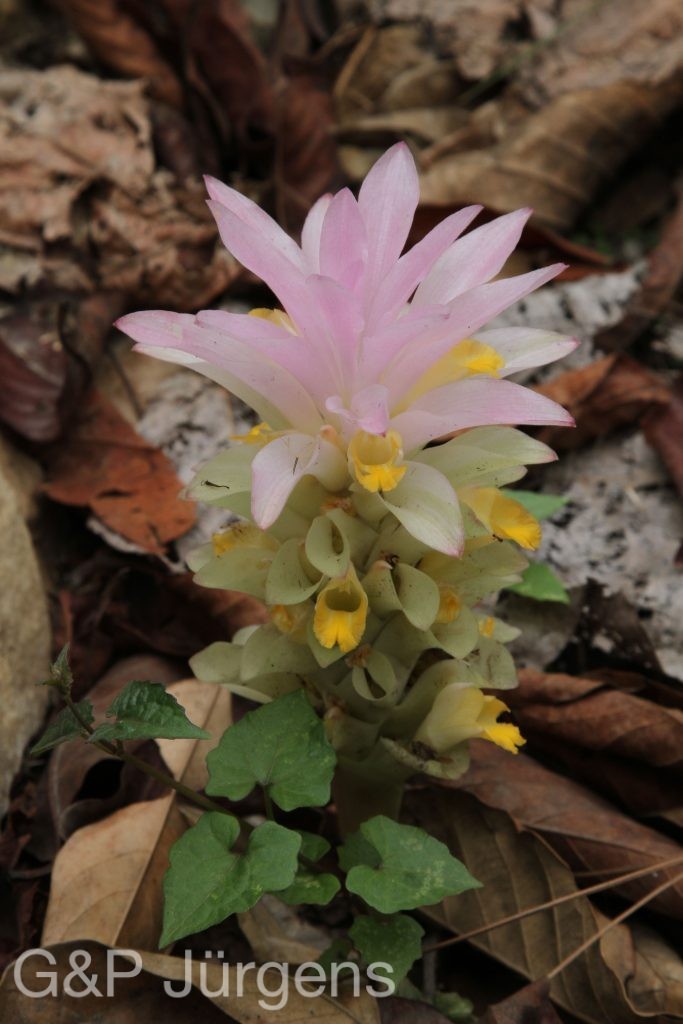
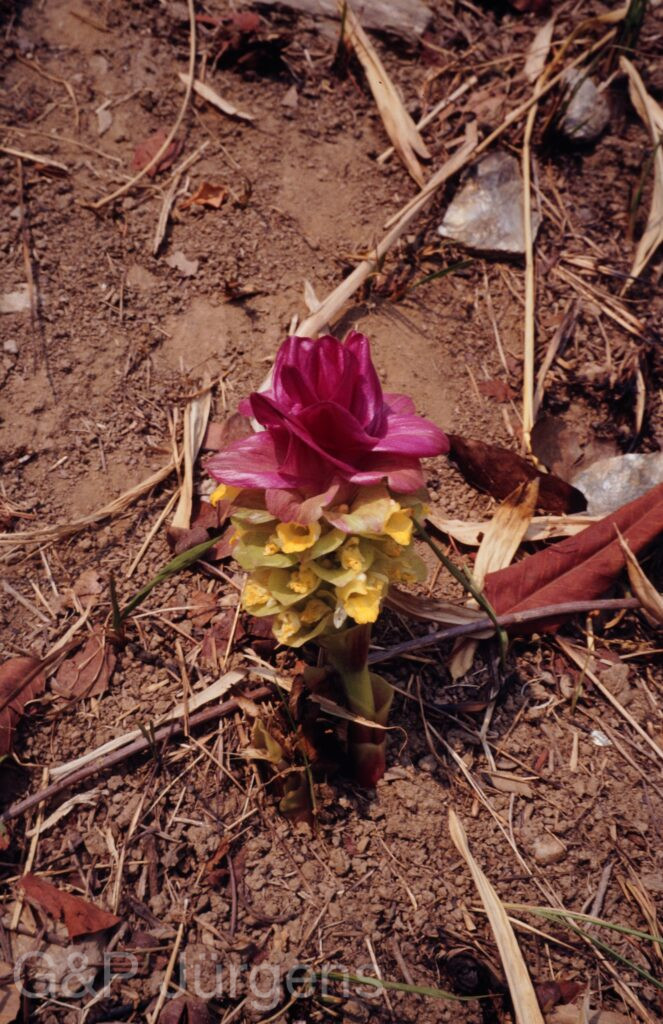
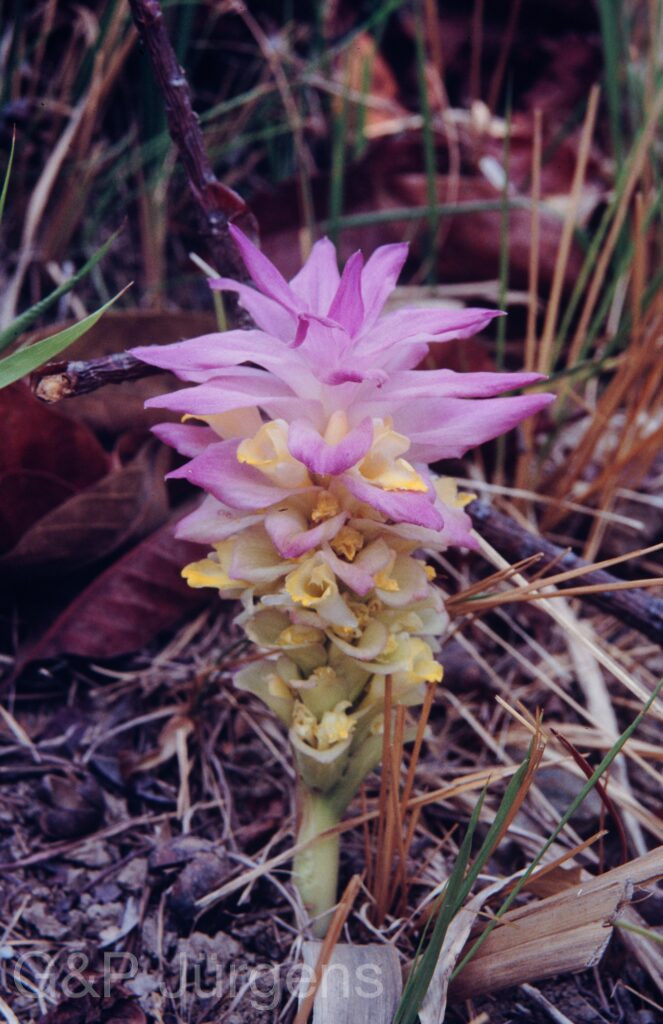
Curcuma aromatica, wild or yellow zedoary, is a South and Southeast Asian rhizomatous herb with a broad distribution documented by 490 GBIF occurrences across China (CN), India (IN), Hong Kong (HK), Bhutan (BT), Sri Lanka (LK), Myanmar (MM), Thailand (TH), Nepal (NP), Vietnam (VN), Bangladesh (BD), Laos (LA), Pakistan (PK), Indonesia (ID), Korea (KR), Malaysia (MY) and Taiwan (TW), with cultivated records in Japan (JP), Colombia (CO) and Britain (GB). It grows in moist deciduous and semi-evergreen forest, scrub and forest margins, often near habitation as a semi-cultivated medicinal plant. The illustrated collections span Bhutan at Trithangebe near a farmhouse at 800 m in May and the Nepalese sites of Banyang at 2100 m in March and Korong in East-Nepal at 1150 m in April.
It is a stout perennial arising from a fleshy, aromatic, internally orange-yellow rhizome bearing sessile and stalked tubers. The pseudostem supports large oblong to oblong-lanceolate leaves, pubescent beneath. The inflorescence appears before or with the leaves as a lateral spike, its lower fertile bracts green and the upper sterile coma bracts tinged pink to rose; the flowers are pale yellow with a tubular calyx, a hooded dorsal corolla lobe and a deflexed, emarginate yellow labellum. Fruit is a capsule, though spread is mainly clonal.
Widely employed in traditional medicine and as a cosmetic and culinary turmeric substitute, C. aromatica is rich in aromatic essential oils and curcuminoids. It is frequently confused with C. zedoaria, from which it differs in floral and rhizome characters. The family is cited verbatim as Zingiberacaea (Zingiberaceae).
Author: Salisb. · Sources: POWO (Kew), GBIF, Flora of China, Flora of Bhutan, Flora of British India, Revision of the genus Curcuma (Skornickova et al.)