
C.B.Clarke
Description
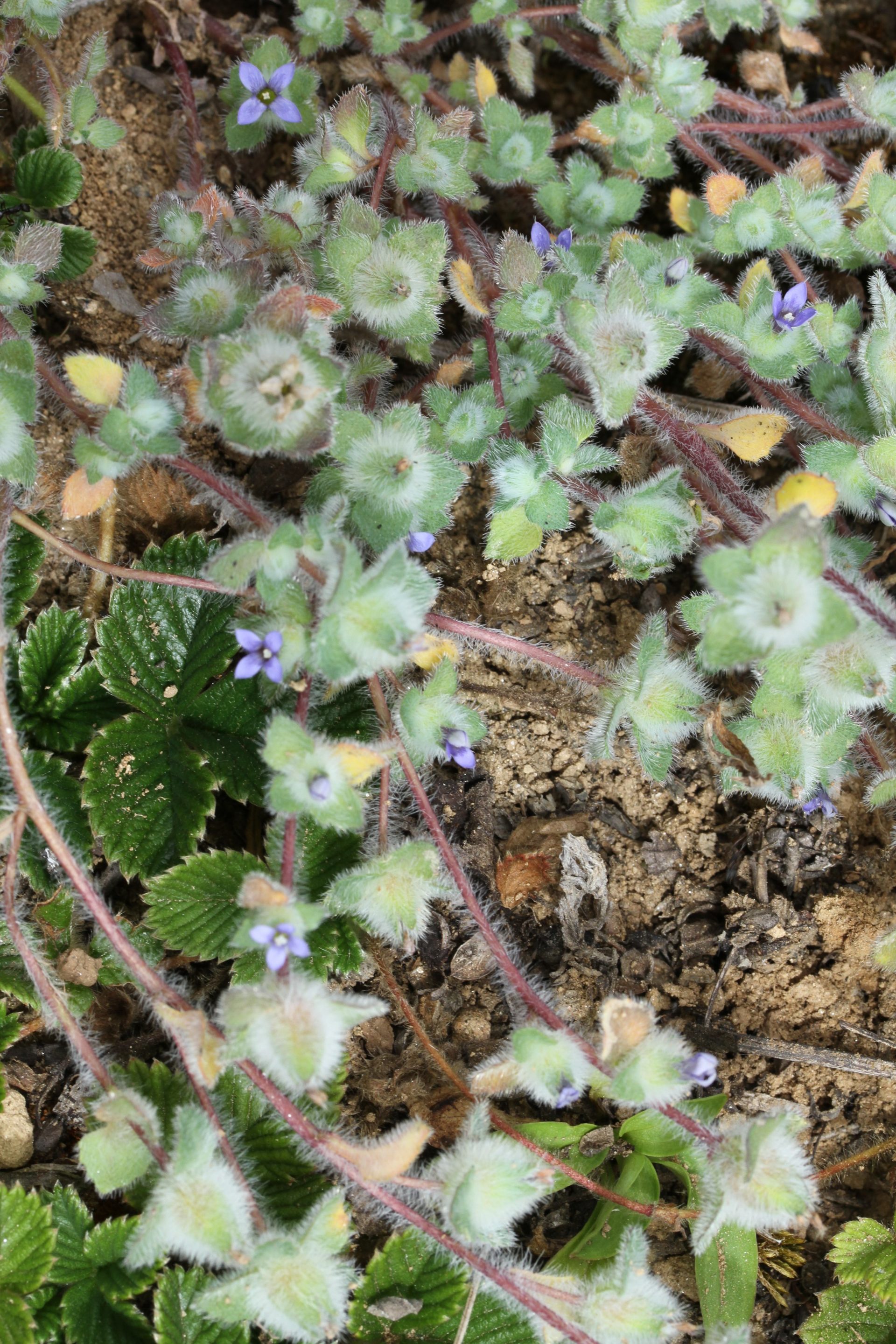
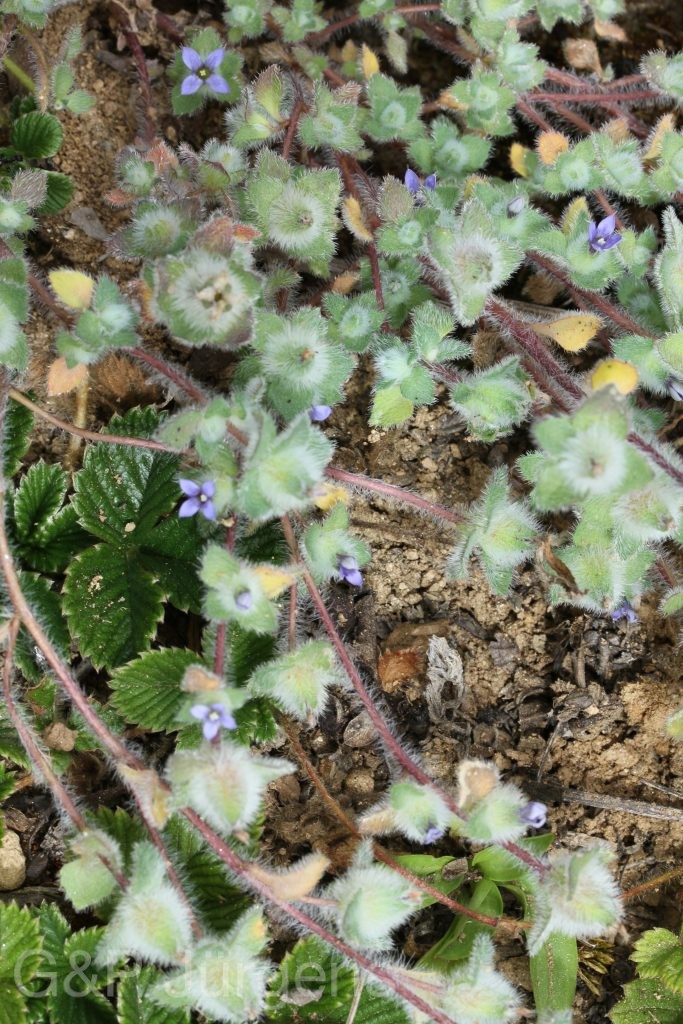
Cyananthus hookeri C.B.Clarke is a small Sino-Himalayan herb recorded by GBIF from China, Nepal, India and Bhutan, with 641 occurrences distributed through the higher Himalaya into south-western China. It grows on open slopes, grassy banks, rocky ground and trail margins in the temperate to subalpine zones, typically between about 2200 and 4000 m. The plant photographed at Jakar in central Bhutan, at roughly 2200 m in October, marks the lower end of its altitudinal range and illustrates its late-season flowering, the genus being characteristically autumn-blooming in the eastern Himalaya.
The species is a small, slender annual with prostrate to ascending, often branched stems. The leaves are alternate, small, ovate to obovate or oblanceolate, frequently with a few teeth and short hairs. The flowers are terminal and solitary, with a conspicuously inflated, hairy calyx tube; the corolla is broadly funnel- to bell-shaped, blue to pale blue or sometimes whitish, with the throat closed by a tuft of hairs and the lobes spreading. As in all Cyananthus, the fruit is a capsule that, distinctively for the family, dehisces from the apex downward to shed the numerous small seeds.
Cyananthus is an Asian alpine genus of the Campanulaceae centred on the Himalaya and the Qinghai-Tibetan plateau, distinguished by its apically dehiscent capsules and the bearded corolla throat. Among its members, C. hookeri is one of the smaller, annual species, contrasting with the perennial, larger-flowered relatives of the genus. It is pollinated by alpine insects and is not regarded as threatened, being locally frequent and forming a characteristic component of the late-flowering meadow and slope flora of the central and eastern Himalaya.
Author: C.B.Clarke · Sources: POWO (Kew), GBIF, Flora of China, Flora of Bhutan, Flora of Nepal, Sprague revision of Cyananthus