
Hook.f.
Description
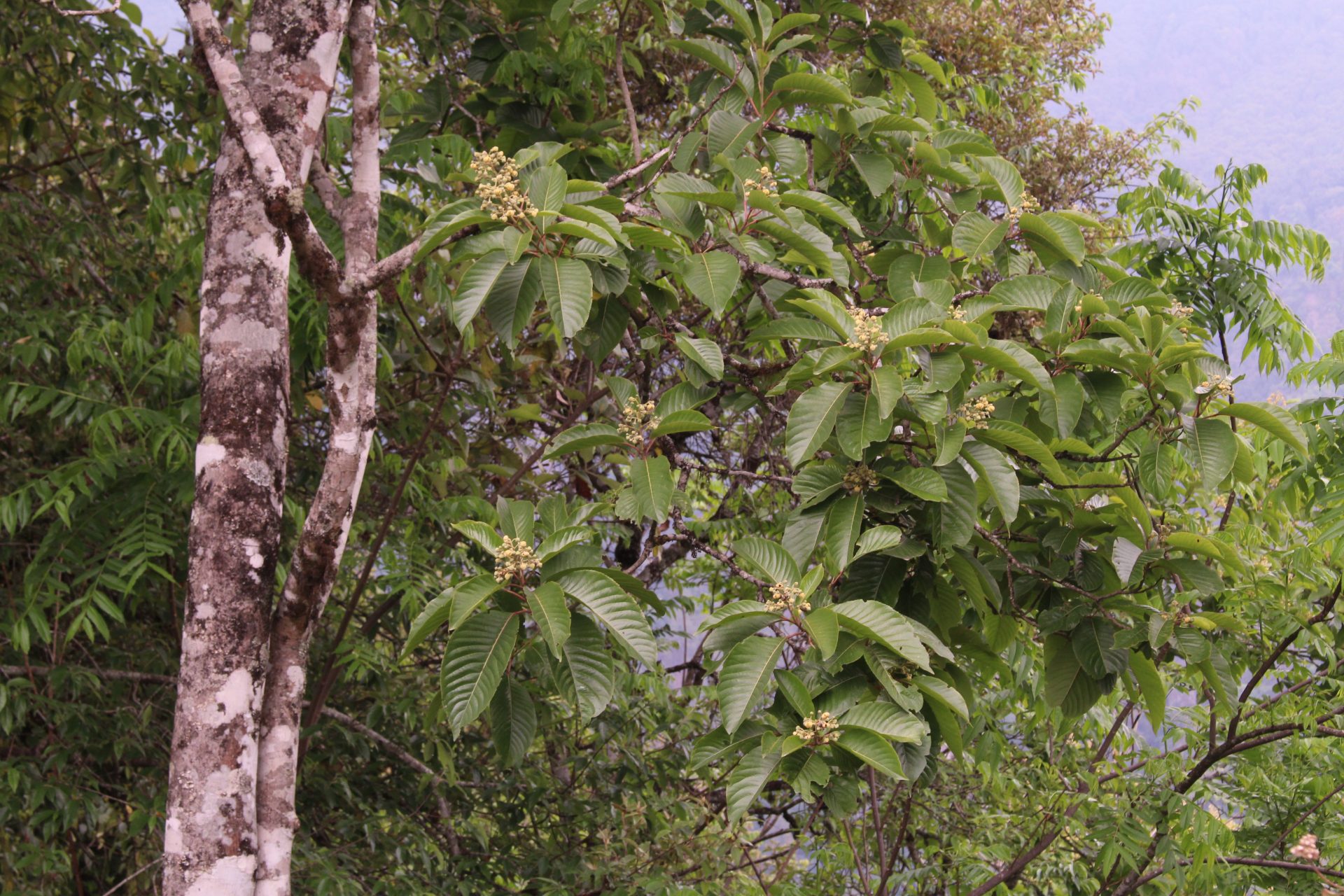
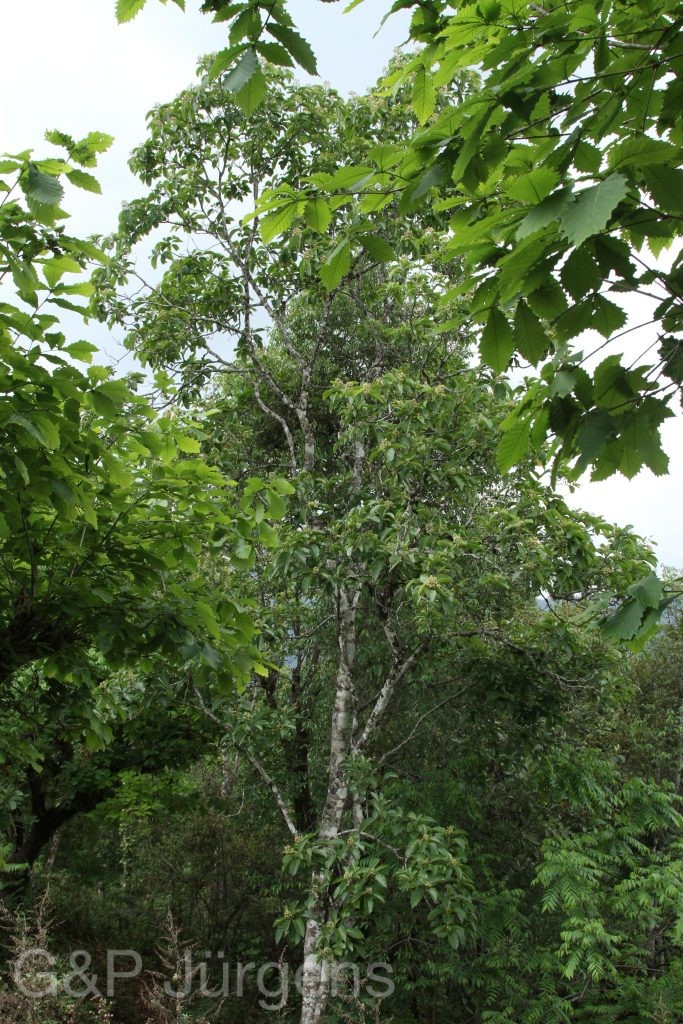
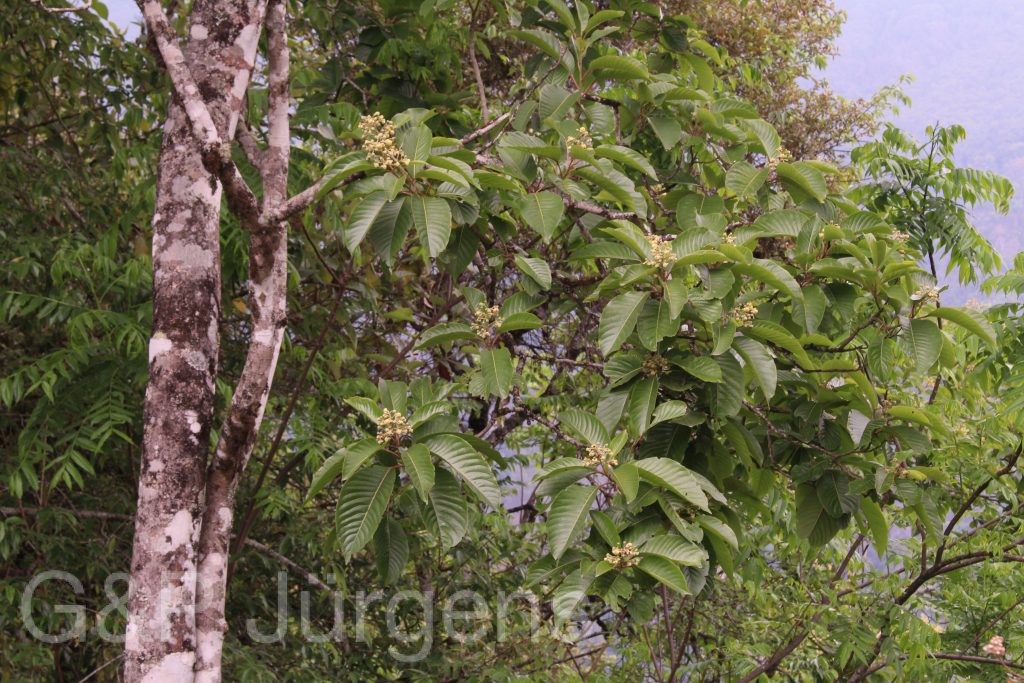
Eriobotrya petiolata is a small evergreen tree of the eastern Himalayan and Indo-Burmese subtropical forests, recorded from India, Bhutan, Myanmar, Bangladesh and China, with cultivated or vagrant records noted from Spain and the United States among the 62 GBIF occurrences. It inhabits warm broadleaved and subtropical hill forest at relatively low elevations. The photographed tree at Trithangebe in southern Bhutan at only 700 m, flowering in May, typifies its preference for humid, frost-free montane foothills well below the alpine plants that dominate the region's high passes.
The species is a tree with stout petiolate leaves, the feature underlying its epithet. The leaves are coriaceous, elliptic to oblong-lanceolate, with a prominent reticulate venation, an acuminate apex, and a margin that is entire to remotely serrate; young growth and the lower surface are typically clothed in rusty tomentum that weathers with age. The inflorescence is a terminal, much-branched, woolly panicle of small white flowers, each with five sepals, five petals, numerous stamens and an inferior ovary. The fruit is a small pome, fleshy at maturity and crowned by the persistent calyx, characteristic of the loquat genus.
GBIF treats the himalayaflora name as a synonym, with Eriobotrya petiolata (Hook.f.) the accepted entity in this dataset; the genus Eriobotrya is itself often submerged within Rhaphiolepis (and broadly within subfamily Maloideae of Rosaceae) in recent molecular treatments, so nomenclature remains in flux. Ecologically the fleshy pomes are dispersed by birds and mammals. As a forest tree of a comparatively restricted Himalayan-Burmese range, it is most threatened by lowland deforestation rather than by any intrinsic rarity.
Author: Hook.f. · Sources: POWO (Kew), GBIF, Flora of Bhutan, Flora of China (Rosaceae), Vidal Eriobotrya revision